Traverse City's Slow Mow May encourages pollinator-friendly yards
More than 1,000 free signs have gone out in Traverse City as Slow Mow May nudged homeowners to mow less, plant more and rethink what a yard can do for pollinators.

More than 1,000 free signs have been distributed across Traverse City as Slow Mow May pushed homeowners to look at lawns as habitat, not just scenery. The campaign started two years ago at the request of Grand Traverse Area Children’s Garden interns, and it has since become a neighborhood-level reminder that small yard choices can affect pollinators block by block.
The effort began as No Mow May, a message that encouraged residents to let grass grow taller and give spring insects more cover and food. Organizers later shifted to Slow Mow May after recognizing that many bloom cycles had already finished by Memorial Day, making a full month of no mowing a less precise fit for the local growing season. This year’s effort was described as an intentional pause so organizers could see how the community reacted, even as residents continued putting signs in yards and talking more openly about pollinators.
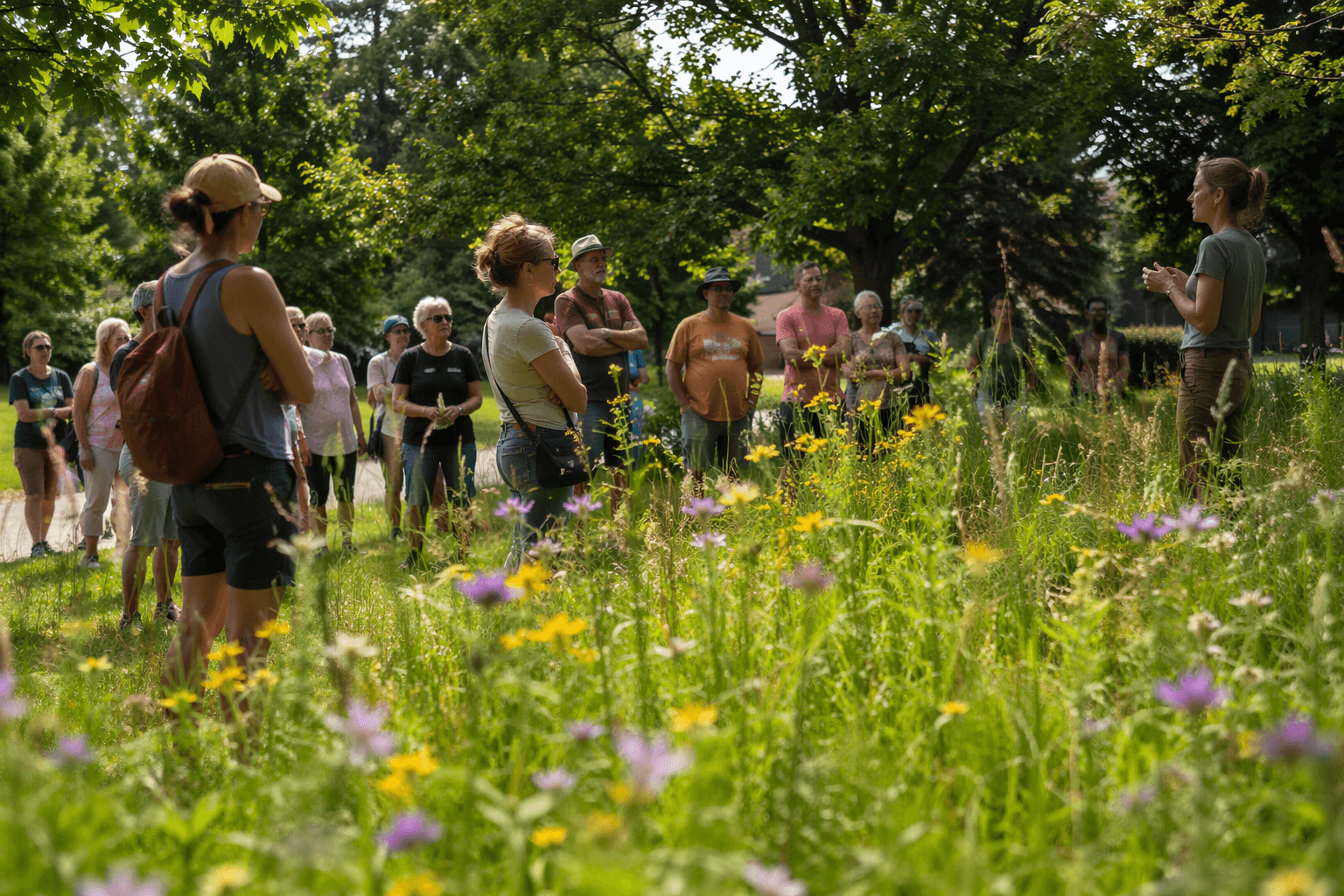
Grand Traverse Area Children’s Garden Executive Director Sarah Kuschell said the point is not to abandon lawn care altogether. “The goal is not to stop mowing, but to pay attention to the habitat and ecosystems in your yard,” she said. That approach matters in Traverse City because a single yard will not carry the load on its own, but many yards that leave a little more height, plant more native species and create more shelter can add up across neighborhoods in Grand Traverse County.
The campaign has also grown through a partnership with the GT Butterfly House and Bug Zoo. Free signs were available at Skegemog Gardens, Wild Birds Unlimited, Traverse Area District Library and the GT Butterfly House & Bug Zoo, making the message visible at local places residents already know. The idea is simple: if people see the signs, they may think twice before reaching for the mower every week in May.

State guidance backs that broader view of pollinator care. Michigan State University says Michigan is home to native pollinators including bees, butterflies, beetles, bats and others. The Michigan Department of Natural Resources says pollinators are essential to healthy forests, thriving food crops and vibrant landscapes, and recommends planting flowering trees and plants, using fewer herbicides and pesticides, providing shallow water and using fallen leaves as mulch.
The local debate is not without tradeoffs. Some Michigan cities have reconsidered No Mow May because of tick concerns and questions about whether a one-month pause does much for pollinators. In Traverse City, the shift to Slow Mow May reflected that tension and the local growing season, turning a slogan into a more practical yard-care message for Northern Michigan homeowners.
This article was produced by Prism’s automated news system from verified source data, official records, and press releases, then run through automated quality and moderation checks before publishing. The system is built and supervised by the people who set the standards it runs under. Read our full AI policy.
Did this article answer your question?


