Volunteers clear Boardman River pickleball courts after historic flooding
Volunteers hauled more than 100 wheelbarrows of silt off the Boardman River pickleball courts, then a local wash crew offered to finish the cleanup for free.
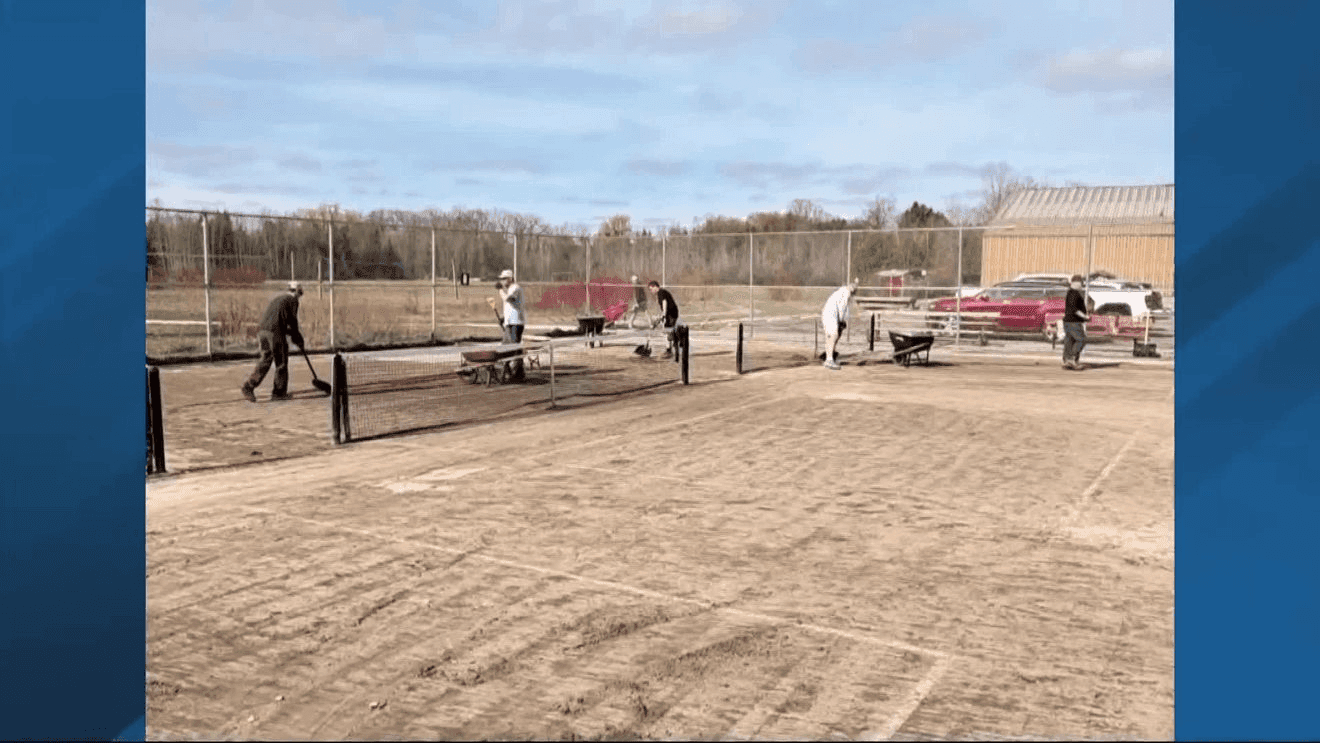
A small volunteer crew spent two hours clearing thick silt and mud from the Boardman River pickleball courts in Garfield Township, hauling away more than 100 wheelbarrow loads after floodwaters receded.
Matt Haberichter, co-president of the Traverse Area Pickleball Association, said a Facebook post asking for help quickly drew about 12 to 14 people to the courts on a Sunday morning. The first group used shovels and wheelbarrows to pull muddy debris off the outdoor courts, which Garfield Township owns and the association manages. A day later, volunteers came back with blowers and brooms and spent another two hours trying to remove as much dust as possible.
The cleanup did not end there. Northern Lightning Wash volunteered to finish the job with a free power wash, a sign that the recovery from the historic flooding was still playing out in very local ways, not just along roads and storm drains but at recreational spaces people use every week.
That matters in Grand Traverse County because pickleball has become one of the area’s fastest-growing recreation activities, and the Boardman River site has long been a central court complex for local players. The Traverse Area Pickleball Association says it was formed in 2014, but pickleball dates back in Traverse City to 1985. Members later helped convert two outdoor tennis courts along the Boardman River into three outdoor pickleball courts, turning the site into a lasting community hub.
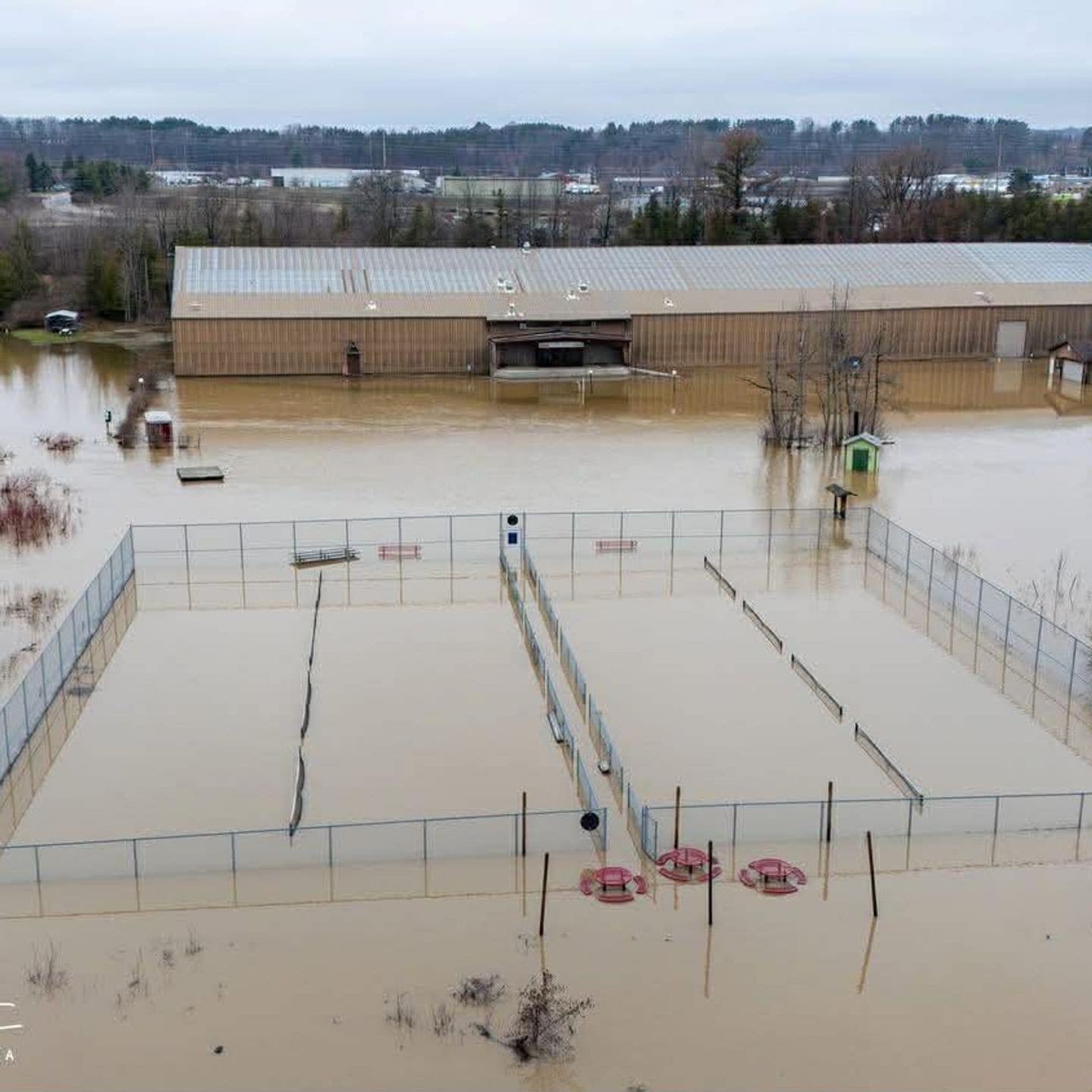
The flooding that pushed silt across the courts was part of a much larger disaster across Northern Michigan. On April 15, 2026, the State of Michigan declared a state of emergency for Grand Traverse County and many other counties after prolonged rainfall, rapid snowmelt and widespread flooding. The City of Traverse City said the Boardman, also called the Ottaway River, surged to 1,120 cubic feet per second on April 14 at the upstream station near Mayfield, 92 percent above the prior record peak of 583 cubic feet per second set in 2014.
The city also said water near FishPass came within half an inch of a 500-year flood level, while a sinkhole in Lot A along East Front Street exposed an abandoned 24-inch sanitary sewer. City officials estimated that without earlier sewer relocation work, about 1.5 million gallons per day of raw sewage could have poured into the river and Grand Traverse Bay. Nearby, the South YMCA in Garfield Township was flooded and closed for the foreseeable future, with reopening updates promised once a timeline is known.
This article was produced by Prism’s automated news system from verified source data, official records, and press releases, then run through automated quality and moderation checks before publishing. The system is built and supervised by the people who set the standards it runs under. Read our full AI policy.
Did this article answer your question?


