Bur-Mil Park offers golf, trails, wildlife education in Greensboro
Bur-Mil Park turns a 250-acre site beside Lake Brandt into golf, trails, wildlife education and event space, showing why one county park can serve Greensboro year-round.
Bur-Mil Park turns a former industrial recreation property into one of Guilford County’s most flexible public spaces. The 250-acre site beside Lake Brandt now combines golf, trails, wildlife education and event rentals in a single Greensboro destination, a mix that keeps the park useful far beyond a weekend picnic.
A park built from a county decision
Bur-Mil was established in 1989 when Guilford County purchased the former Burlington Industries recreation facility. That origin matters because it explains the park’s unusual scale and layout: the county did not build Bur-Mil as a narrow, single-purpose green space, but adapted a site large enough to hold multiple uses at once. Its position next to Lake Brandt gives the park water views, trail connections and wildlife habitat that help separate active recreation from quieter learning spaces.
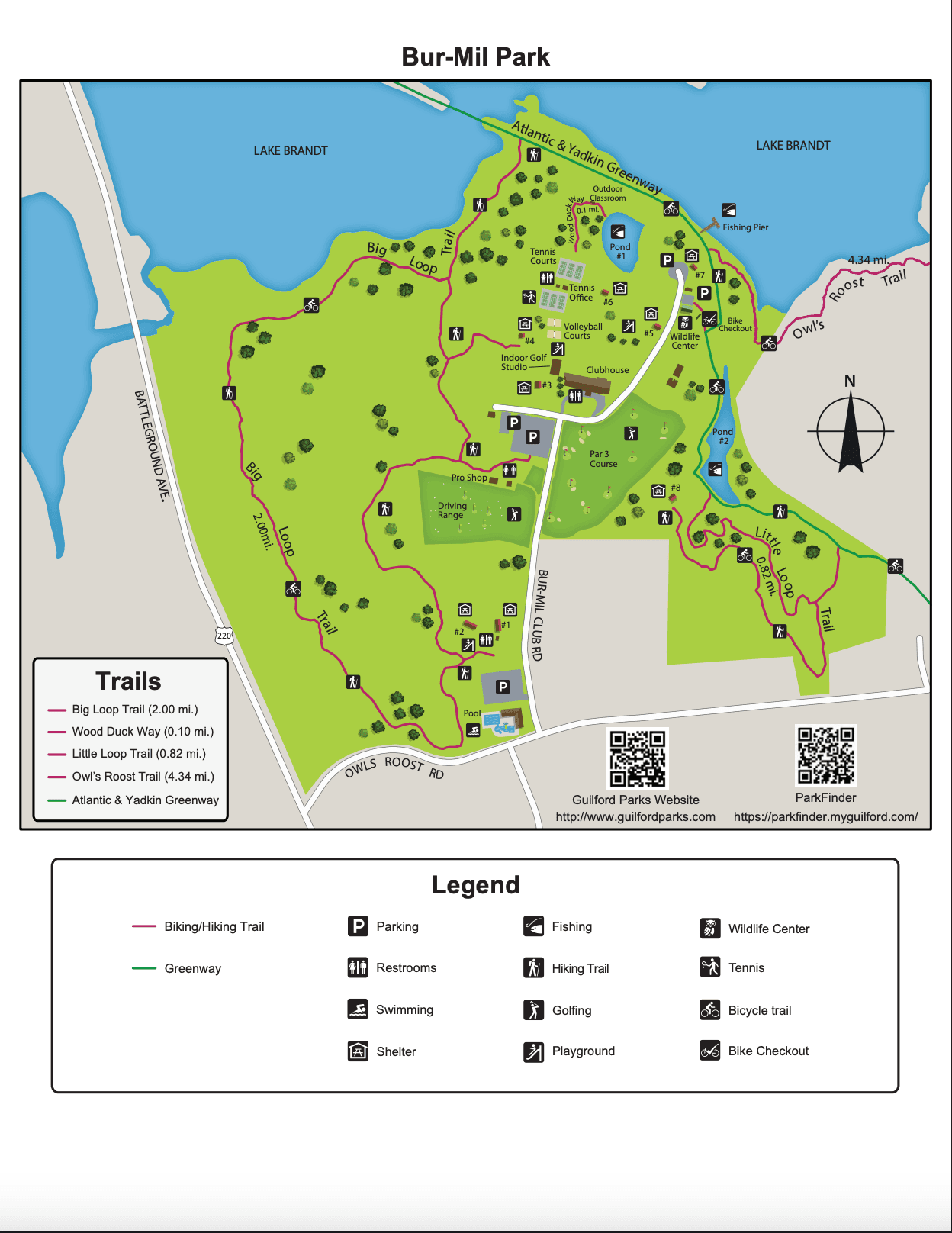
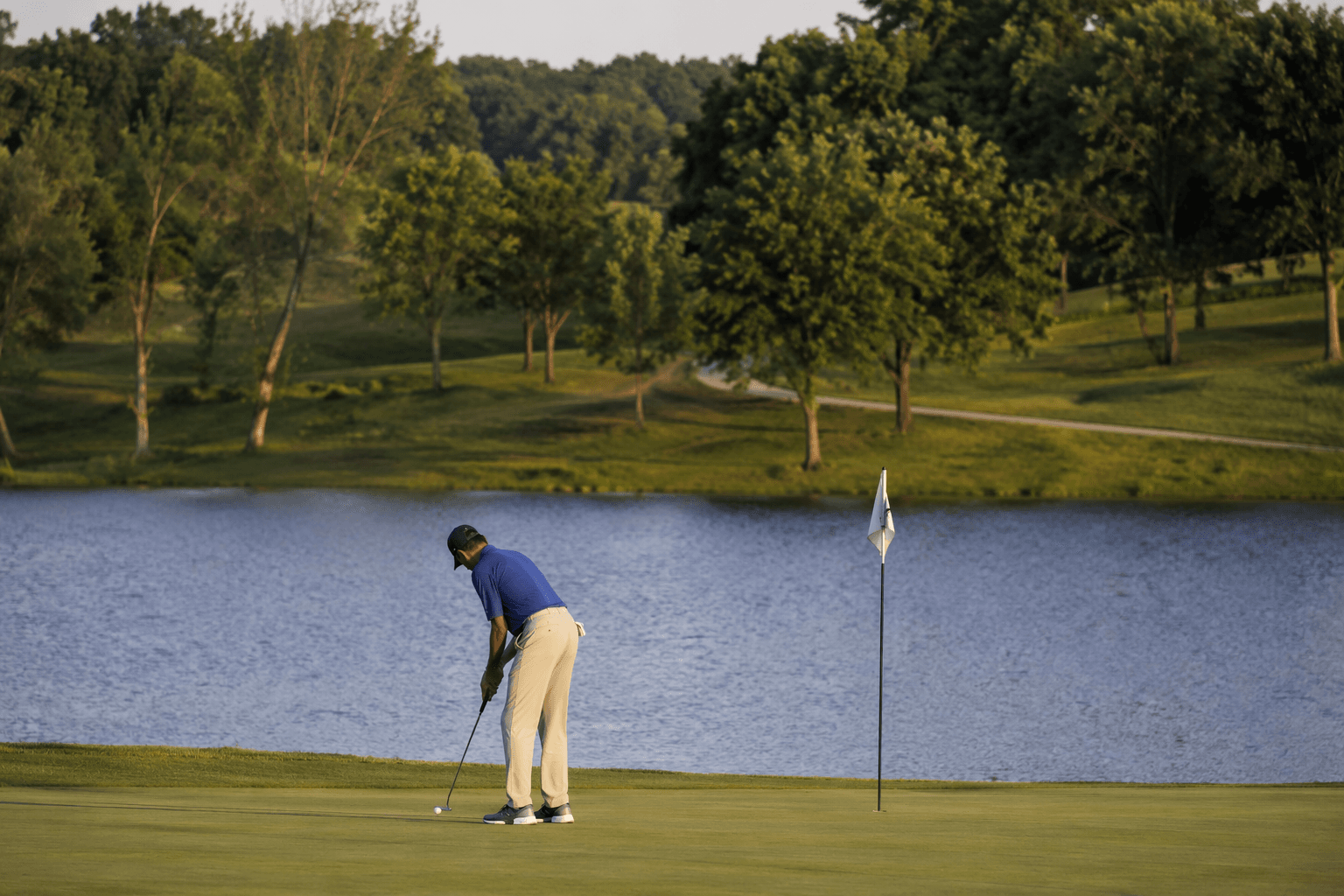
The park map reflects that planning. Parking, restrooms and shelter space support longer visits, while fishing access, hiking trails, playgrounds and swimming give families reasons to stay for a full day. Bur-Mil also includes a clubhouse, a driving range, a pro shop, a par 3 course, tennis courts, an outdoor classroom, bike checkout and a fishing pier, which makes the site useful for golfers, walkers, anglers and anyone looking for a low-friction place to get outside in Greensboro.
Where recreation and education overlap
One of the park’s most important pieces is the Frank A. Sharpe, Jr. Wildlife Education Center. Guilford County places the center at Bur-Mil to educate the public about wildlife and natural resources through programs and displays, giving the park a role that goes beyond exercise and play. That makes Bur-Mil a place where a person can walk the trails, use the greenway connections, watch for wildlife around the ponds and lakefront areas, and then step into a structured learning space without leaving county property.
The center also has a clear public-financing story. The North Carolina Wildlife Habitat Foundation says the Frank A. Sharpe, Jr. Wildlife Education Center was a $300,000 project completed through a joint effort by the City of Greensboro, Guilford County and the foundation itself. Under that arrangement, the foundation contributed $150,000, while the city and county each contributed $75,000, a split that shows how local government and civic partners can share the cost of facilities that serve the broader public.
A park that works on weekdays and weekends
Bur-Mil’s value rises when the calendar fills up. Greensboro city materials describe Camp Bur-Mil as a summer day camp for youth ages 5-14, scheduled from 7:30 a.m. to 6 p.m. on weekdays during the summer session. That places the park inside the region’s youth programming and family support network as well as its recreation system, giving children a place where they can spend long summer days outdoors in a supervised setting.
Seasonal events extend that pattern. Guilford County has also promoted annual Fall Fest at Bur-Mil Park, another sign that the site is used as a community gathering place rather than only as a place for solitary recreation. The Bur-Mil Clubhouse Meeting and Events Center adds still another layer, with Guilford County describing it as an ideal setting for social or corporate events, including weddings and baby showers. In practical terms, that means the same public land can host a morning round of golf, a nature program, a family celebration and a county event without needing a separate facility for each use.
Why Guilford County built this model
Bur-Mil is a useful case study because it shows how one public asset can return value across different parts of the week and different parts of the population. A golfer, a parent with children, a birdwatcher, a group looking for an event venue and a student of local ecology can all use the same county site without requiring separate facilities scattered across Greensboro. That concentration matters when residents think about park spending and land use, because it offers a concrete example of how a single investment can support recreation, education and social gathering space at once.
The public-health payoff is just as practical. Trails, fishing areas, greenway links and an outdoor classroom all encourage time outside, movement and environmental learning in one county-managed location. The social-equity piece is built into the structure too: Bur-Mil serves families, youth, older adults, golfers and event users without forcing them into separate spaces or separate trips across the county.
Bur-Mil’s strength is that it keeps doing different jobs at once, and that is exactly why it remains one of Greensboro’s most useful county parks.
This article was produced by Prism’s automated news system from verified source data, official records, and press releases, then run through automated quality and moderation checks before publishing. The system is built and supervised by the people who set the standards it runs under. Read our full AI policy.
Did this article answer your question?