Greensboro City Council Unanimously Adopts Vision 36 Growth Framework
Greensboro's City Council unanimously adopted Vision 36, a 10-year framework targeting 10,000 new homes, geographic equity gaps, and talent retention through 2036.
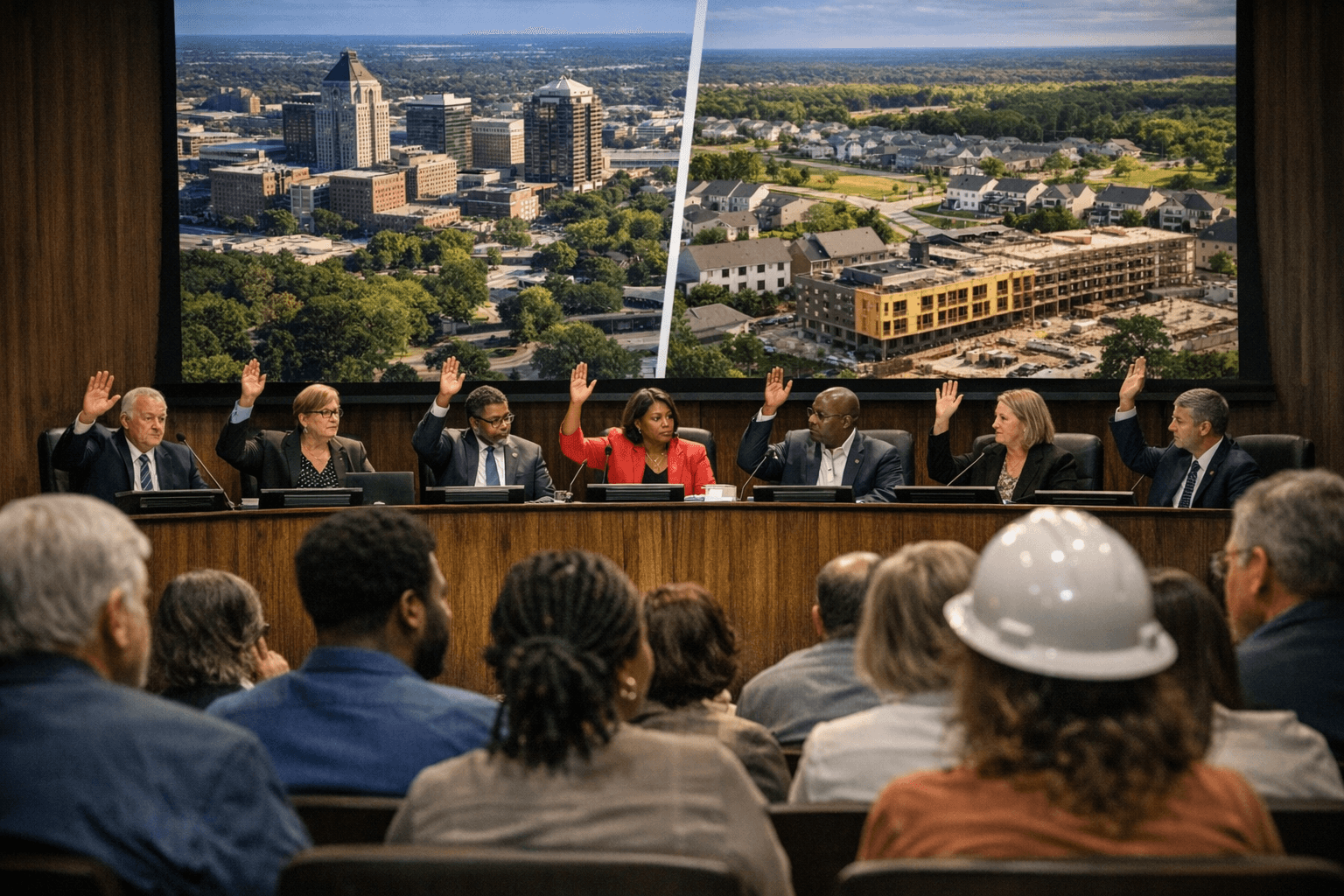
Greensboro's City Council voted unanimously Tuesday night to adopt Vision 36, a 10-year strategic framework that will guide where housing gets built, how capital investments are targeted, and whether the city can hold onto the graduates pouring out of North Carolina A&T and UNC Greensboro.
City Manager Trey Davis, who championed the plan, described its core purpose in direct terms. "Essentially, it's about how Greensboro [city leaders] can create a clear and intentional framework for Greensboro for the long-term. How can we create that and … have talent retention, equitable economic growth? How can we create a situation where we can create an environment where people and businesses can grow?" Davis said.
The framework, about a year in the making, grew out of a two-day City Council retreat and drew input from community members, business leaders and higher education partners. It is designed to knit together existing city plans rather than replace them, with programs like the Road to 10,000 housing units folding into the Vision 36 structure. The plan carries no specific project timelines at this stage; it is built to shape decision-making rather than commit to a project list.
Davis said Greensboro's economic development is "probably the strongest in our state, maybe in our region," and argued that momentum demands a longer planning horizon. With both NC A&T and UNC Greensboro approaching R1 status, the top federal research designation for universities, the city faces a practical problem: graduates who land in a research-anchored job market still need affordable housing and a business ecosystem that gives them a reason to stay.
Closing geographic equity gaps and raising median household income are explicit goals of the framework, alongside adding more homes to a tight housing market. Davis hinted that policy details are coming soon. "You'll see in the near future. We'll come out with strategies and ways that we can engage our council. Whether it's policies that are relevant to building or innovative ways that we look at how we incentivize affordable housing … Part of which you'll see in Vision 36 is where to shape and frame where those houses go," he said.
Under the governance structure Davis outlined, the City Council sets the vision while his office and city departments are responsible for implementation. He said the most immediate visible change will be more intentional decision-making: sharper scrutiny of where housing is sited, where capital flows, and how growth is managed across Greensboro's neighborhoods.
By 2036, Davis said he hopes the city stands out for job growth, stronger transportation systems and enough opportunity to keep people from leaving, a benchmark that Vision 36 will now be measured against.
This article was produced by Prism’s automated news system from verified source data, official records, and press releases, then run through automated quality and moderation checks before publishing. The system is built and supervised by the people who set the standards it runs under. Read our full AI policy.
Did this article answer your question?