Greensboro Fire Department Plans 11 New Stations Across City by 2040
Greensboro Fire Department plans 11 new stations by 2040, with land already secured for five; Station 62 on Short Farm Road is next in line.
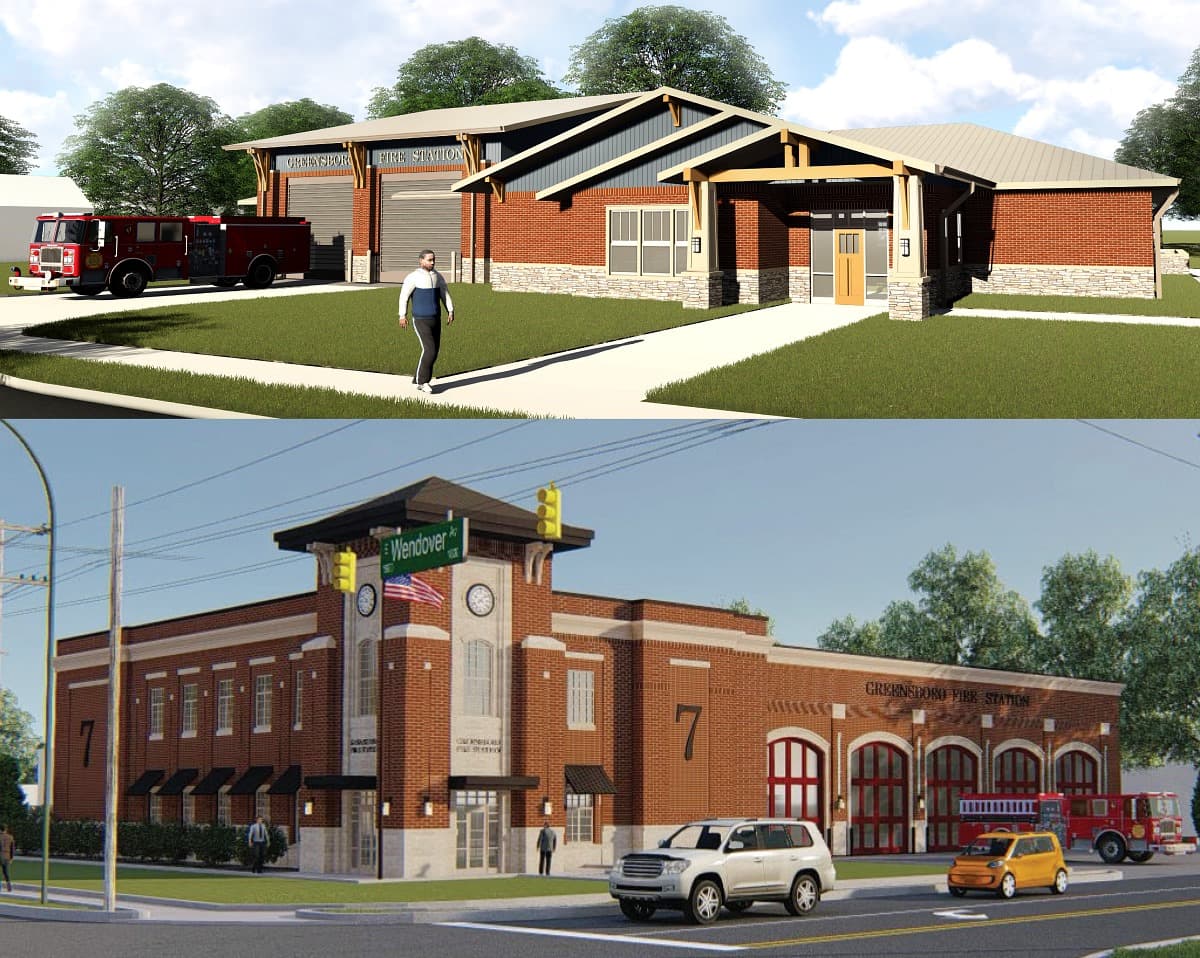
Greensboro Fire Department is building toward a significantly expanded network of stations, with plans to add 11 new facilities by 2040 and land already secured for five of them. Station 62 on Short Farm Road is next in the construction queue, part of the department's alignment with the city's long-range 2040 Plan.
The department currently operates 27 stations staffed by 613 personnel, including 588 sworn firefighters and 25 civilian employees. The 11 new stations would represent a roughly 40 percent expansion of that physical footprint, driven by population growth, annexations, and the challenge of maintaining fast response times across a city that is approaching 300,000 residents.
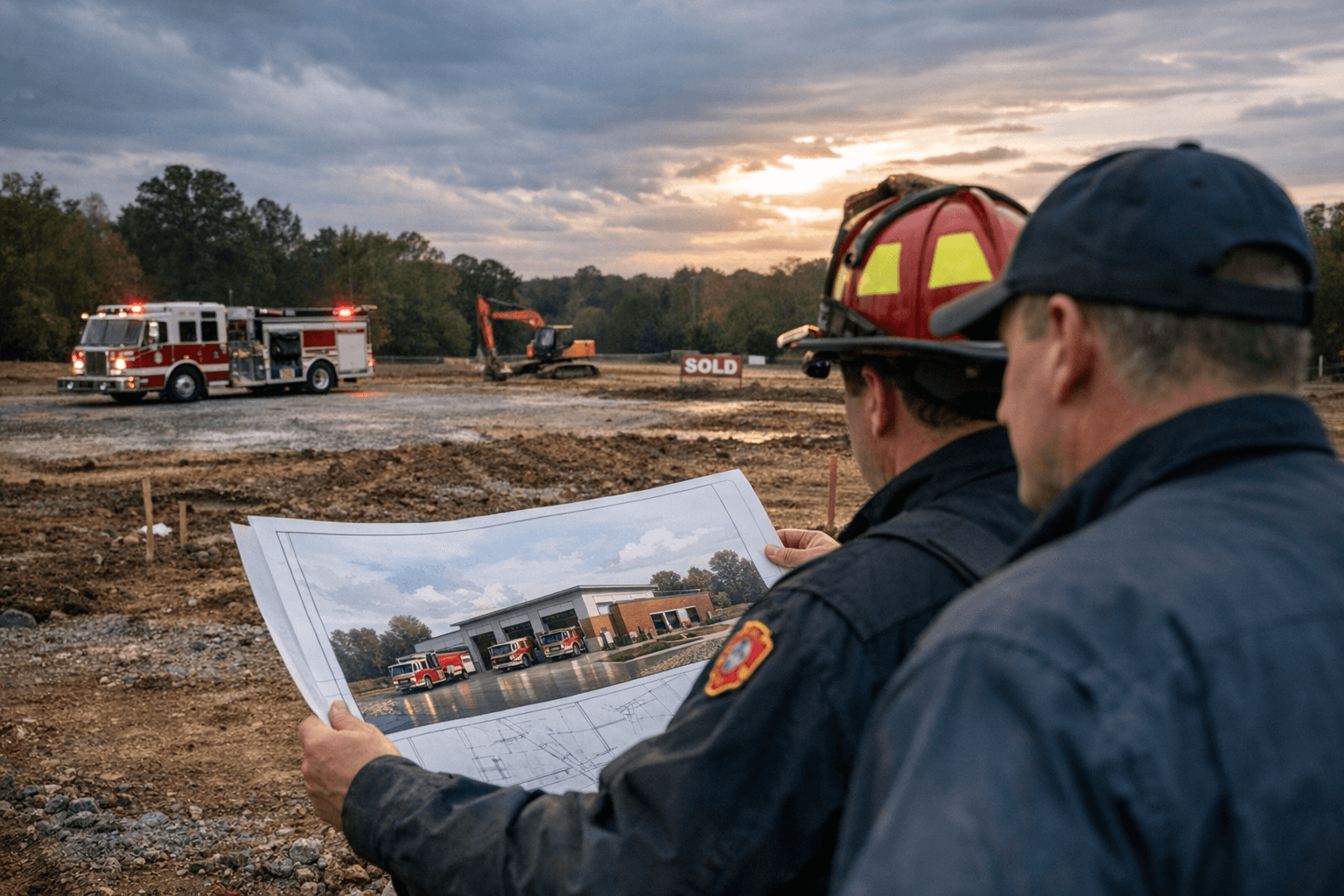
Those response-time targets are exacting. The department's "standard of cover" requires the first fire unit, staffed with four firefighters, to arrive at a residence within four minutes of travel time 90 percent of the time. For a moderate structure fire, the goal is 17 firefighters on scene within eight minutes, also 90 percent of the time. Department officials say maintaining four firefighters on every apparatus is critical for both safety and effectiveness, a standard backed by the department's own effectiveness data: five-person crews were 100 percent effective, four-person crews 65 percent effective, and three-person crews only 38 percent effective.
The demand on existing stations is considerable. Station 4 on Gorrell Street near downtown logged 3,803 calls, the highest of any station, followed by Station 10 on West Gate City Boulevard in west Greensboro with 3,560 calls and Station 5 on Westover Terrace in northwest Greensboro with 2,943 calls. Station 8 on Coliseum Drive near the Greensboro Coliseum handled 2,808 calls, while Station 1 on North Church Street just north of downtown recorded 2,727. Station 14 on Summit Avenue in northeast Greensboro and Station 48 on Vandalia Street in south Greensboro rounded out the busiest list with 2,416 and 1,937 calls respectively.
The highest fire-risk territories are those served by Stations 52, 7, and 4, particularly in winter. January is the highest-risk month citywide, Saturday is the highest-risk day, and fires peak between 10 a.m. and 5 p.m. Those patterns, combined with Greensboro's 16.7 percent poverty rate, 50 percent homeownership rate, and median age of 34, shape where the department concentrates resources. Older housing stock, limited household resources, and reliance on alternative heating and cooking methods elevate fire risk in specific neighborhoods, factors that fire officials say directly influence deployment decisions alongside ongoing annexations.
The department's 2024-25 fiscal year report, which disclosed the expansion plan, also highlighted fire and life-safety education as a priority. With Greensboro's diverse population, the department is emphasizing accessible outreach to reach all residents regardless of background or language. Six of the 11 planned stations remain in the planning phase, with no confirmed locations yet made public beyond Station 62.
Know something we missed? Have a correction or additional information?
Submit a Tip