Greensboro police investigate July 4 shooting on Corliss Street
A disorder call on Corliss Street ended with one person shot and the block shut down between South Elm-Eugene Street and Fieldale Road. Police have not said what sparked the gunfire.
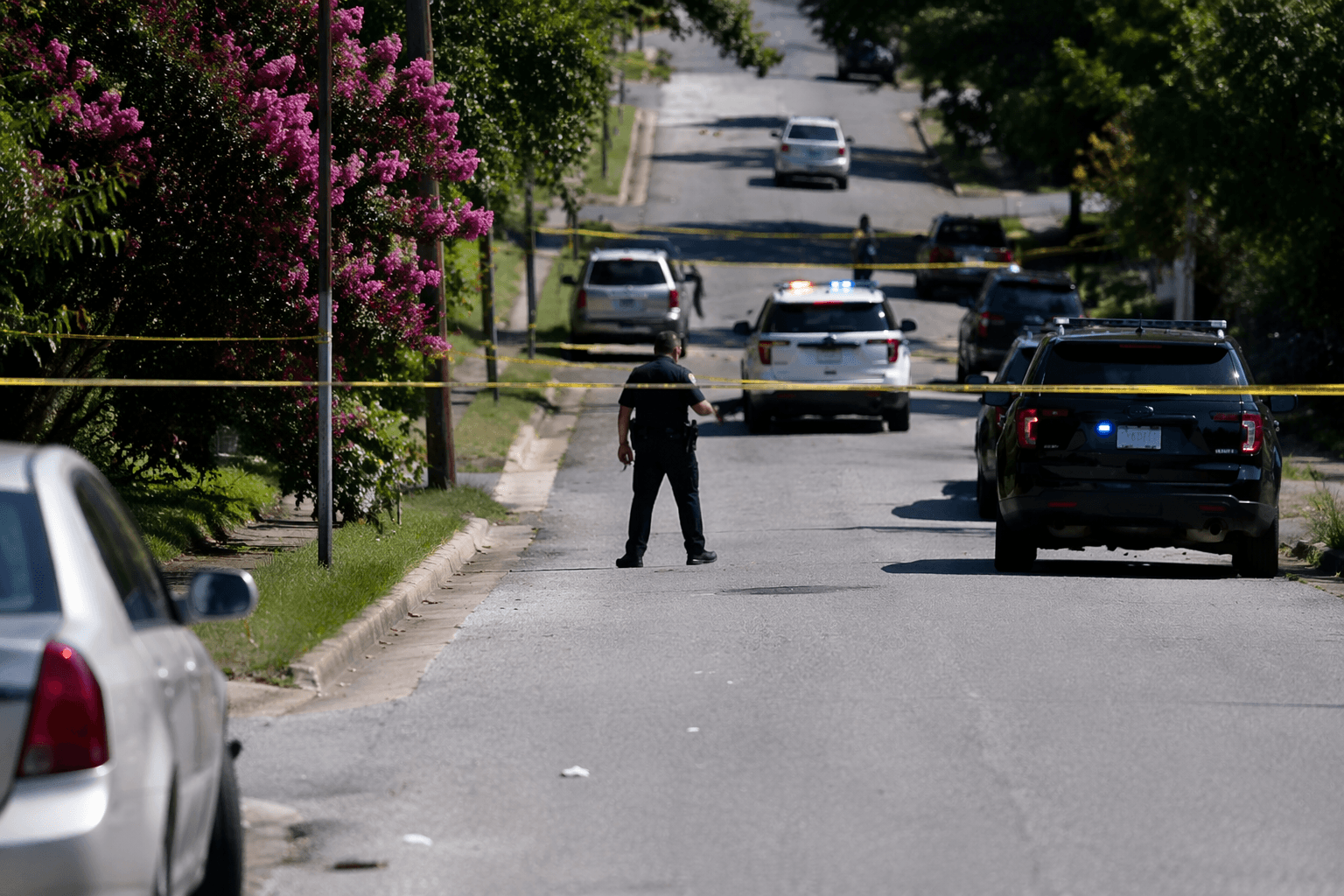
Greensboro police closed a stretch of Corliss Street after a July 4 disorder call turned into a shooting scene in the 100 block. Officers were sent around 5:30 p.m. and found one person who had been shot, then arranged for the victim to be taken to the hospital.
The shutdown covered Corliss Street between South Elm-Eugene Street and Fieldale Road, forcing drivers to reroute while investigators worked the block. The timing made the response more disruptive on a holiday weekend, when traffic and neighborhood gatherings can already be harder to manage, and it put another public-safety burden on a corridor that neighbors had to navigate without knowing how long the closure would last.
Police have not released additional details about what led from the disorder call to the gunfire, and the investigation remained active. That leaves key questions unanswered for the neighborhood, including what triggered the disturbance, whether more than one person was involved, and whether the shooting connects to other violence nearby. For now, the only confirmed sequence is that officers responded to a reported disorder, then found a gunshot victim at the scene.
The same incident was described as happening in the 100 block of Corliss Street, placing the shooting squarely in a residential area rather than at a large venue or commercial site. The immediate impact was both medical and logistical: the victim needed hospital treatment, police had to secure the street, and people traveling through the area had to find another route while the scene was processed.
Greensboro police maintain weekly crime data and historical records on violent and property crimes, and the City of Greensboro also operates a crime-mapping system that can be used to look for patterns on a neighborhood level. City public-records guidance says victim-identifying information is protected, and 911 audio recordings are purged after 60 days, leaving later official records and crime data as the main tools for measuring whether Corliss Street has seen repeated trouble or whether Friday’s shooting was an isolated rupture on an otherwise ordinary block.
This article was produced by Prism’s automated news system from verified source data, official records, and press releases, then run through automated quality and moderation checks before publishing. The system is built and supervised by the people who set the standards it runs under. Read our full AI policy.
Did this article answer your question?