Greensboro Repairs Over 1,200 Potholes Since January as Pothole Season Begins
Greensboro has patched 1,200+ potholes since January, on pace to surpass 2022's full-year total of 4,344 as spring's freeze-thaw damage arrives across all 2,500 miles of city streets.
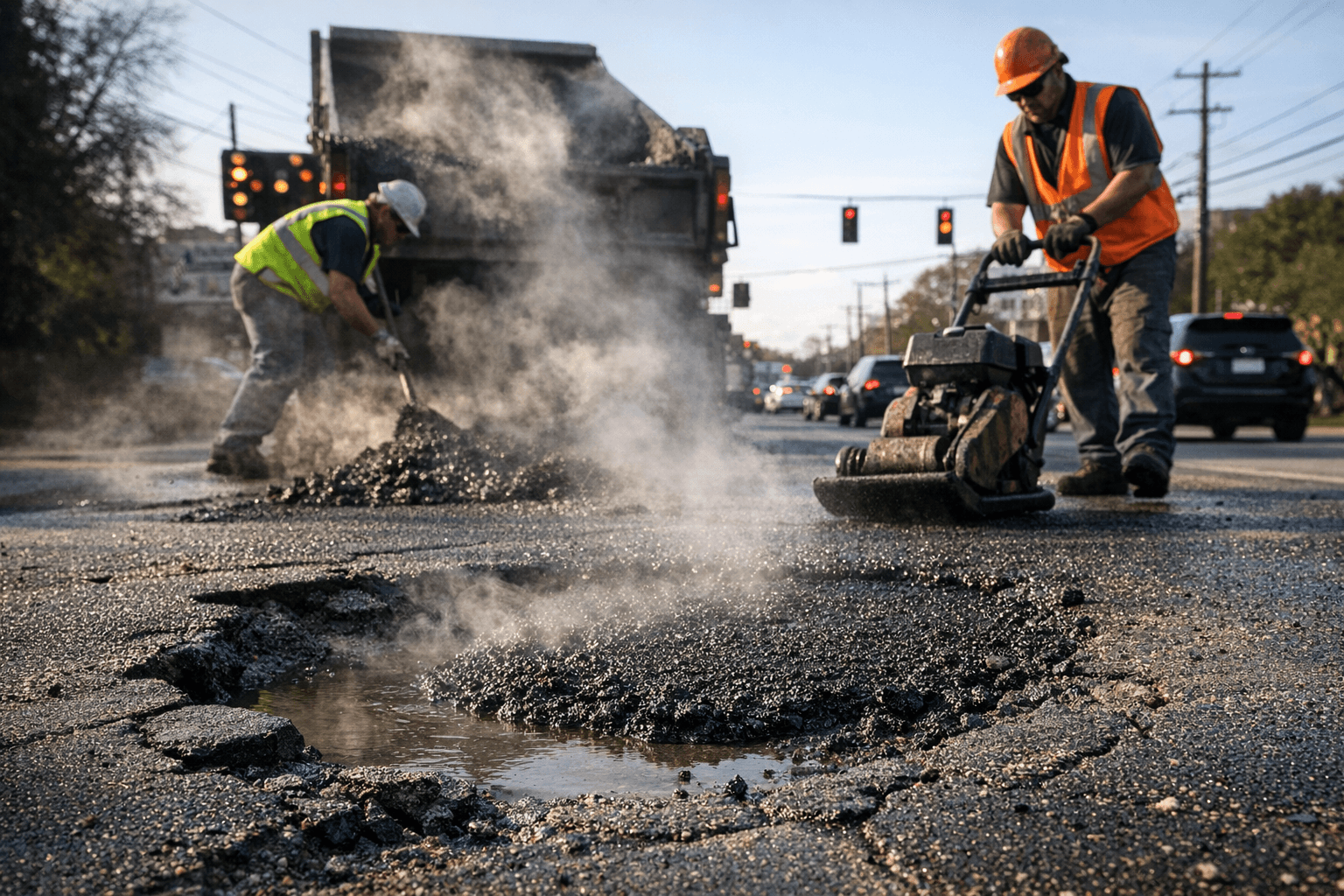
Greensboro road crews have filled more than 1,200 potholes since January, a pace that could eclipse the 4,344 repairs the city logged across all of 2022 if the current rate holds through the warmer months. The surge follows a punishing winter that culminated in a historic January 31 snowfall, which sent crews plowing all 1,180 miles of Greensboro's Priority 1 roads multiple times in a single event.
On April 1, Greensboro Department of Transportation officials held a live demonstration at the 800 block of South Elm Street, showcasing the equipment at the center of their repair operation: a vehicle the city calls a "total patch unit," a single truck carrying everything needed to seal a pothole on the spot without additional support. Nathanael Moore, GDOT's Deputy Director of Transportation, led the demonstration. Moore oversees street paving, pothole repair, and the city's snow removal program.
Moore explained that spring marks the formal start of what his department considers pothole season, rooted in the physics of water and asphalt. Water seeps into surface cracks, freezes, expands, thaws, and refreezes, widening those cracks until traffic loads break away chunks of pavement. "We want to be able to fix and cap that void that could collect water that could potentially degrade the road bed underneath," Moore said. "Driving in a vehicle, you know, hitting that is not great for your car, so we want to make sure that we're getting to those in a timely manner."
That financial exposure is real. Auto service professionals estimate that axle damage from a pothole strike can run a driver roughly $3,000 in repairs, an outcome GDOT's repair pace is aimed at preventing across Greensboro's approximately 2,500-mile street network.
The city does not triage its road network by neighborhood or traffic volume when it comes to pothole response. Every street feeds into a single queue. "We view the network as a whole, so we try to address those as they come in, as they're reported," Moore said. In 2022, the average time from report to repair ran less than one and a half days per incident.
Alongside reactive pothole filling, GDOT's 2026 Spring Paving List calls for repaving 23 miles of streets, with projects selected based on pavement condition analysis, traffic volume, safety considerations, and utility construction schedules.
Crews monitor roads daily, but Moore emphasized that resident reports remain critical to keeping up with new damage. Potholes can be reported by calling 336-373-CITY (2489) during business hours, through the GSO Collects App, via Live Chat on the City of Greensboro website, or through an Online Service Request. "I encourage everyone to please use 3-7-3-CITY," Moore said. "If you have a location, that definitely helps us, just a close address or even a close intersection so we can narrow down where the location is." Officials are also asking drivers to reduce speed near active repair crews and give workers room to operate safely.
This article was produced by Prism’s automated news system from verified source data, official records, and press releases, then run through automated quality and moderation checks before publishing. The system is built and supervised by the people who set the standards it runs under. Read our full AI policy.
Did this article answer your question?