Guilford County Budget Tracking as Expected Seven Months Into Fiscal Year
Guilford County's property tax collections hit 60% of the annual budget through January, tracking in line with prior years as the county's fiscal year hits the seven-month mark.

Seven months into its fiscal year, Guilford County's revenues and expenditures are largely on track, according to the Fiscal 2025-2026 Budget Performance Report through January, which county budget staff presented to the Guilford County Board of Commissioners at their March 5 meeting.
Property taxes, the county's largest revenue source, have come in at about 60 percent of the amount budgeted for the full year through January, a pace the report describes as roughly in line with collections at this same point in previous years. The fiscal year runs July 1 through June 30, meaning the report captures roughly the first seven months of activity against the budget commissioners adopted last June.
The report notes that many county departments spread spending throughout the year and that some major expenditures occur later in the budget cycle, which means mid-year figures rarely match final annual totals. That pattern makes the current snapshot difficult to read as either alarming or reassuring on the spending side without the full-year picture.
The Rhino Times, which summarized the report on March 9, offered pointed context for why the county has remained solvent despite what the paper described as commissioners "spending money like crazy in recent years." The paper attributed the county's fiscal breathing room largely to the revenue windfall produced by the 2022 property revaluation, when the Board of Commissioners chose to hold the tax rate steady even as rising assessments pushed individual tax bills up by roughly 25, 30, or 35 percent for many property owners.
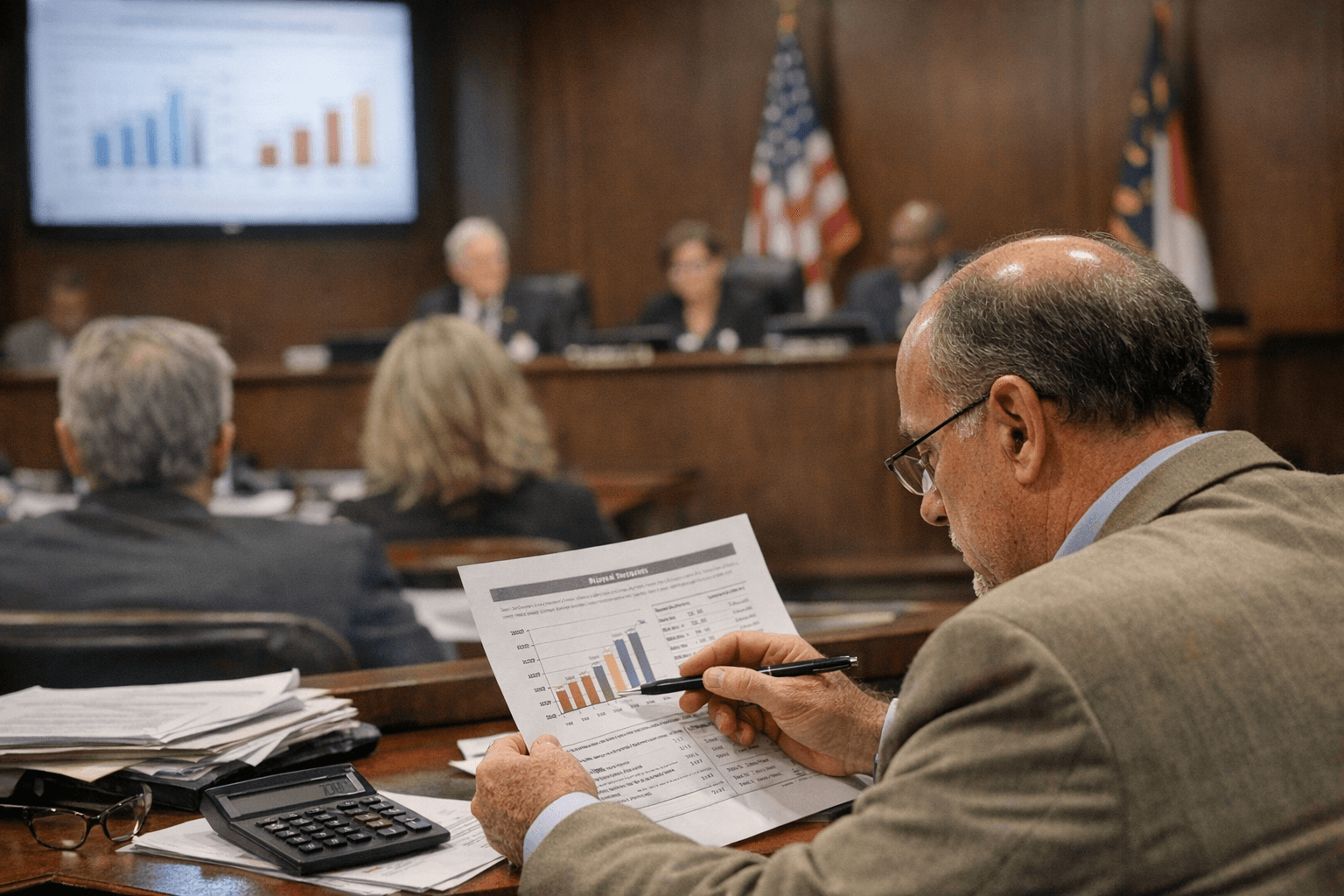
One factor quietly shaping both the spending numbers and mid-year budget flexibility is the county's vacancy situation. The report noted that Guilford County currently carries several hundred unfilled positions across its departments. The Rhino Times reported that commissioners have used the unpaid salary savings from those vacancies as a type of slush fund, directing that money toward mid-year spending on items not included in the budget adopted each June. The report acknowledged that while vacancies can temporarily reduce personnel costs, they also reflect the broader hiring challenges that local governments across the country have faced in recent years.
The next scheduled budget cycle will bring commissioners back to a full spending plan for fiscal year 2026-2027, with adoption expected in June.
This article was produced by Prism’s automated news system from verified source data, official records, and press releases, then run through automated quality and moderation checks before publishing. The system is built and supervised by the people who set the standards it runs under. Read our full AI policy.
Did this article answer your question?