Guilford County explains how historic landmark designation works
A roof repair, window swap or addition can trigger Guilford County landmark review before a permit is issued, and missing paperwork can stall the job.
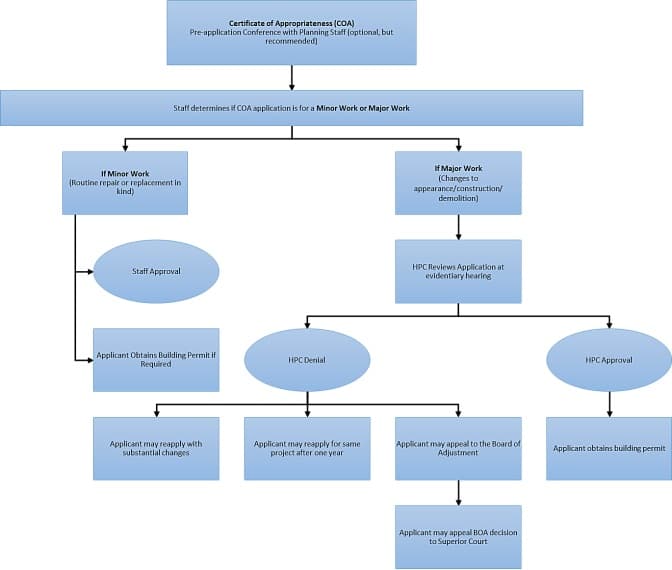
In Guilford County, a Certificate of Appropriateness can be required for work on a local historic landmark even when no building permit is otherwise needed. Historic landmark status can control what you change, when you change it, and which paperwork has to be approved first.
When landmark review is triggered
Guilford County’s Unified Development Ordinance requires a Certificate of Appropriateness for all major and minor work inside Historic District Overlays and inside the boundaries of any local Historic Landmark property.
The trigger is not simply the age of the house or its architectural style. It is local historic designation under the county’s system. If your property is already a designated landmark, or it sits inside a historic district overlay, the county can require preservation review before work begins.
What changes need approval
The review can be broad. Items reviewed by the Historic Preservation Commission include new construction, additions to structures, removal or addition of architectural features such as porches and balconies, demolition of contributing structures, relocation of contributing structures, and alterations to building elevations.
The list also reaches beyond big additions. Visible decks, patios and pools can require review when they are seen from the public right-of-way. Replacement of windows, doors or other architectural elements is also part of the process, along with changes to historic roof materials and features.
What the landmark application asks for
The application for historic landmark designation asks for enough information to identify the property precisely and define what part of it would be covered by the designation.
The form asks for:
- The historic and or common name of the landmark
- The property address or location
- The tax parcel number
- The deed book and page number
- The plat book and page number
- The specific features to be designated, such as the lot, interior, exterior or other parts of the property
It also asks for the applicant and owner names, mailing addresses, phone numbers, email addresses, signatures and date. In Guilford County, the designated resource can include specific parts of the property.
The Historic Landmark Application can be obtained through Guilford County Planning and Development or by contacting staff at the Planning and Development Department, 400 W. Market Street, Greensboro, NC 27401, 5th floor of the Independence Building. The office uses Contact_Planning@guilfordcountync.gov and 336-641-3334 for direct questions.
How the process moves, and where delays happen
The county’s landmark process runs through the Historic Preservation Commission in a formal public process. A local example is Poplar Hall at 409 and 411 Sunset Drive in Greensboro, where the commission recommended local historic landmark designation to Greensboro City Council on October 17, 2022.
The instructions require all information on the application and all supplemental materials at the time of submittal. An incomplete packet is the easiest way to slow a project, because the review cannot move forward cleanly until the file is complete.
The biggest scheduling mistake is assuming preservation review is the same as a building permit or that one can substitute for the other. Guilford County’s rules make COA approval a separate requirement, so a contractor timeline, window order, exterior paint plan or addition design should be checked against landmark rules before money is committed. If the work starts first, the project risk is not just delay. It can also mean redesign, added fees and a stop-and-start schedule that costs more than the original scope.
A practical scenario for a Guilford County homeowner
Imagine a Greensboro homeowner who wants to replace original windows, build a rear addition and add a deck visible from the street. If the house is a local historic landmark, every one of those choices has to be checked against the county’s COA rules before work begins. If the property is in a historic district overlay, the same caution applies.
The owner would start by confirming whether the property is designated, then gathering the parcel number, deed reference and plat reference for the application. Next comes contact with Guilford County Planning and Development, which can point the owner to the Historic Landmark Application and the COA process. Only after the preservation review is resolved should the owner lock in a contractor schedule, order materials or assume the project can move like an ordinary renovation.
For buyers and sellers, the same rule applies at the front end of a sale. A landmark designation can affect the cost and timing of future improvements, so due diligence should include a check on whether the parcel is already designated or subject to historic district review.
This article was produced by Prism’s automated news system from verified source data, official records, and press releases, then run through automated quality and moderation checks before publishing. The system is built and supervised by the people who set the standards it runs under. Read our full AI policy.
Did this article answer your question?