Guilford County second in state for prisoner releases under Cooper policy
Guilford County logged 431 releases under the Cooper policy, behind only Wake, while a new tracker says 2,412 of 4,234 statewide releases later reoffended.

Guilford County’s 431 prisoner releases under the Cooper-era policy place it second in North Carolina, behind Wake County’s 562, but the raw total leaves the harder question untouched: what kinds of cases were released, when they left custody, and what happened afterward in Guilford and across the state.
A new searchable database, CooperReleasedHim.com, launched May 6 and was published by independent journalist Stephen Horn. Its analysis says 4,234 prisoners were released under the 2021 COVID-era settlement tied to former Gov. Roy Cooper, and 2,412 of those people have since reoffended. After Wake and Guilford, the other largest county totals listed are Mecklenburg with 395, Cumberland with 289, Forsyth with 285, New Hanover with 277, Buncombe with 254 and Johnston with 238.
The release policy traces to a February 25, 2021 settlement in NC NAACP v. Cooper. The North Carolina General Assembly’s settlement materials said the state would carry out an early reentry process for 3,500 people in custody within 180 days, including at least 1,500 within 90 days. Civil rights advocates, including the ACLU of North Carolina, described the deal as a landmark settlement and one of the largest prison releases in the country achieved through COVID-19 litigation.
That broader history has become newly charged in 2026. Cooper is running for the U.S. Senate against Republican Michael Whatley, and Republican legislative leaders in Raleigh announced an oversight subcommittee in April to examine the early-release decisions. The release debate has also sharpened because the original settlement did not bar all violent cases outright, turning a pandemic-era legal remedy into a lasting political argument over public safety, discretion and accountability.
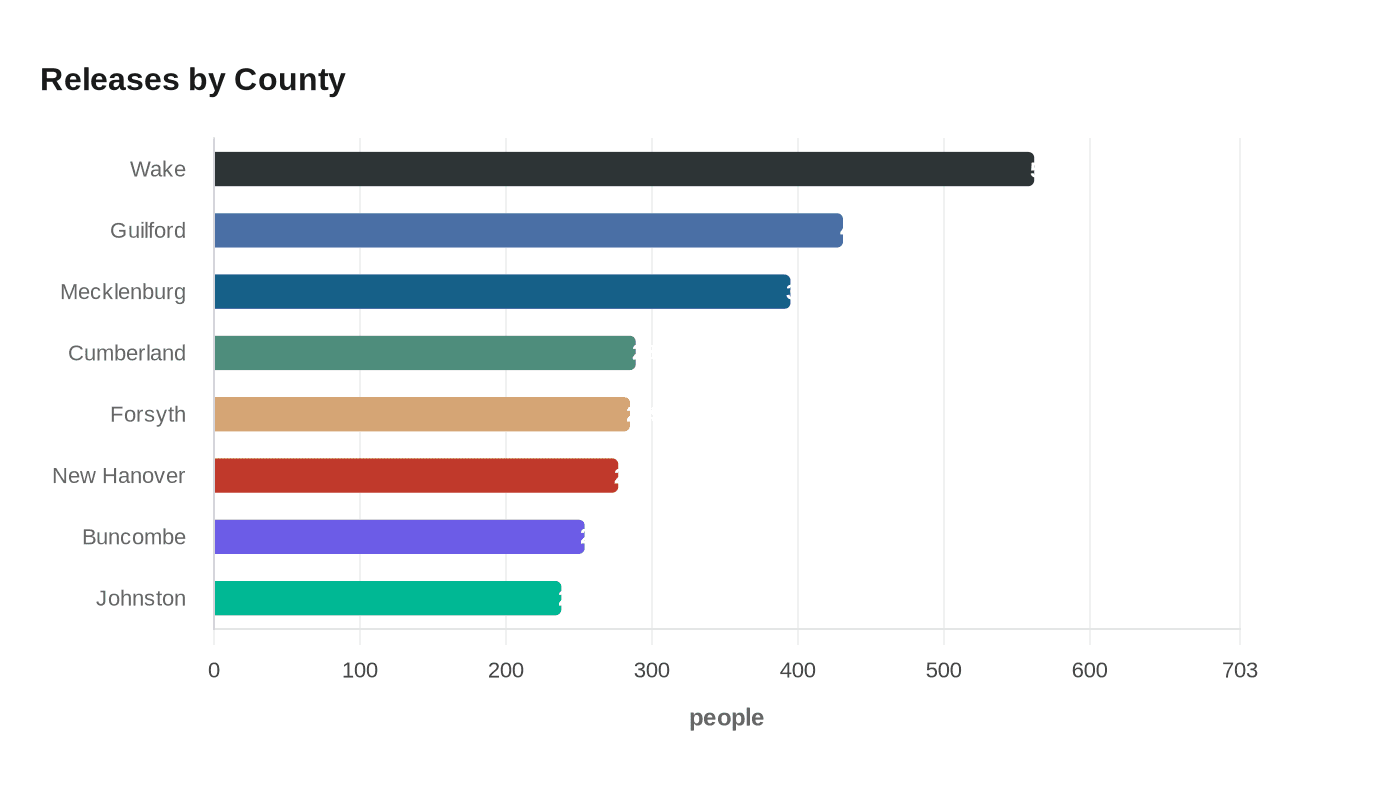
For Guilford County, the key issue is not just that 431 people were released. It is whether those releases reflected low-level offenses, sentence reductions, medical risk, or other factors, and whether the outcomes in Greensboro, High Point and the county’s smaller towns matched the fears now attached to the policy. With Wake County at 562 and Mecklenburg County at 395, Guilford’s place near the top of the list ensures local prosecutors, judges, sheriff’s officials and reentry advocates will keep facing the same question: what did those releases actually represent, and did they make the county safer or simply more politicized?
This article was produced by Prism’s automated news system from verified source data, official records, and press releases, then run through automated quality and moderation checks before publishing. The system is built and supervised by the people who set the standards it runs under. Read our full AI policy.
Know something we missed? Have a correction or additional information?
Submit a Tip