Guilford County Set to Back Regional Water Plan Amid Growth Pressures
Guilford County will vote March 19 on backing a regional water master study, with officials warning that without infrastructure, Toyota and Boom Supersonic jobs could flee to neighboring counties.
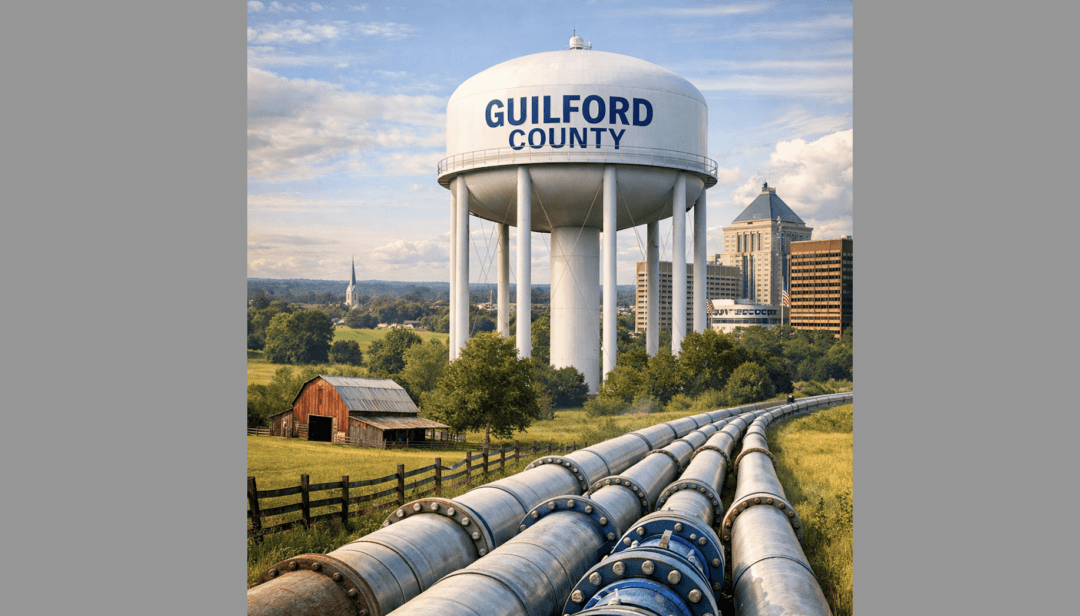
Guilford County is days away from formally committing to a regional water-planning effort, with the Board of Commissioners scheduled to adopt a resolution of support for a Piedmont Triad Regional Water Authority Master Study at its March 19 meeting. The vote would mark the county's first official backing of a coordinated Piedmont Triad approach to water infrastructure at a moment when two transformative economic projects are reshaping expectations for how many people will need to live and work here.
The pressure behind the resolution became clear at the Board's annual retreat on March 7, where officials framed water capacity not as a utility question but as an economic development imperative. Investments from Boom Supersonic and the Toyota megasite are expected to bring thousands of jobs to the Guilford County area, and Assistant County Manager Erris Dunston drew a direct line between water resources, housing supply, and whether those jobs actually benefit the county.
"If we're sending people to live in other counties we're not fully actualizing those investments as an economic development driver here in Guilford County," Dunston said at the retreat.
The concern is practical: without adequate water and sewer capacity to support new housing inside Guilford County, workers drawn by Boom Supersonic or Toyota could end up settling in Alamance, Forsyth, or Randolph counties instead, draining the tax base and workforce concentration that makes major industrial investments worthwhile.
Greensboro's role in any regional arrangement carries its own complications. Mayor Nancy Vaughan attended the retreat and signaled the city is prepared to participate in regional cooperation, but placed firm conditions on what that partnership would look like. The city's sewer capacity is limited, and Vaughan made clear that Greensboro cannot absorb the burden of growth happening outside its own boundaries without financial accountability.

"We have to make sure that we will be compensated accordingly, and that the city of Greensboro won't be responsible for the growth in other municipalities when we foot the bill," Vaughan said.
Her comments point to one of the harder negotiations ahead: how costs get allocated when regional infrastructure serves multiple jurisdictions with different growth rates, different tax revenues, and different levels of existing capacity. No specific compensation mechanism or cost-sharing formula has been publicly detailed.
The PTRWA Master Study that Guilford County will be asked to endorse is separate from a state-conducted regional water study expected to be completed in May. That state study could inform next steps and provide additional data on regional supply and demand, though officials have not publicly specified which state agency is leading the work or what its formal scope includes.
If the Board votes as scheduled on March 19, the resolution would align Guilford County formally with the PTRWA's planning framework just weeks before the state study lands, potentially giving regional officials a coordinated position from which to respond to its findings.
This article was produced by Prism’s automated news system from verified source data, official records, and press releases, then run through automated quality and moderation checks before publishing. The system is built and supervised by the people who set the standards it runs under. Read our full AI policy.
Did this article answer your question?