High Point weighs future town center plan for historic First Baptist Church
High Point’s $11 million church property is now a test of whether downtown can grow without erasing one of its oldest landmarks.
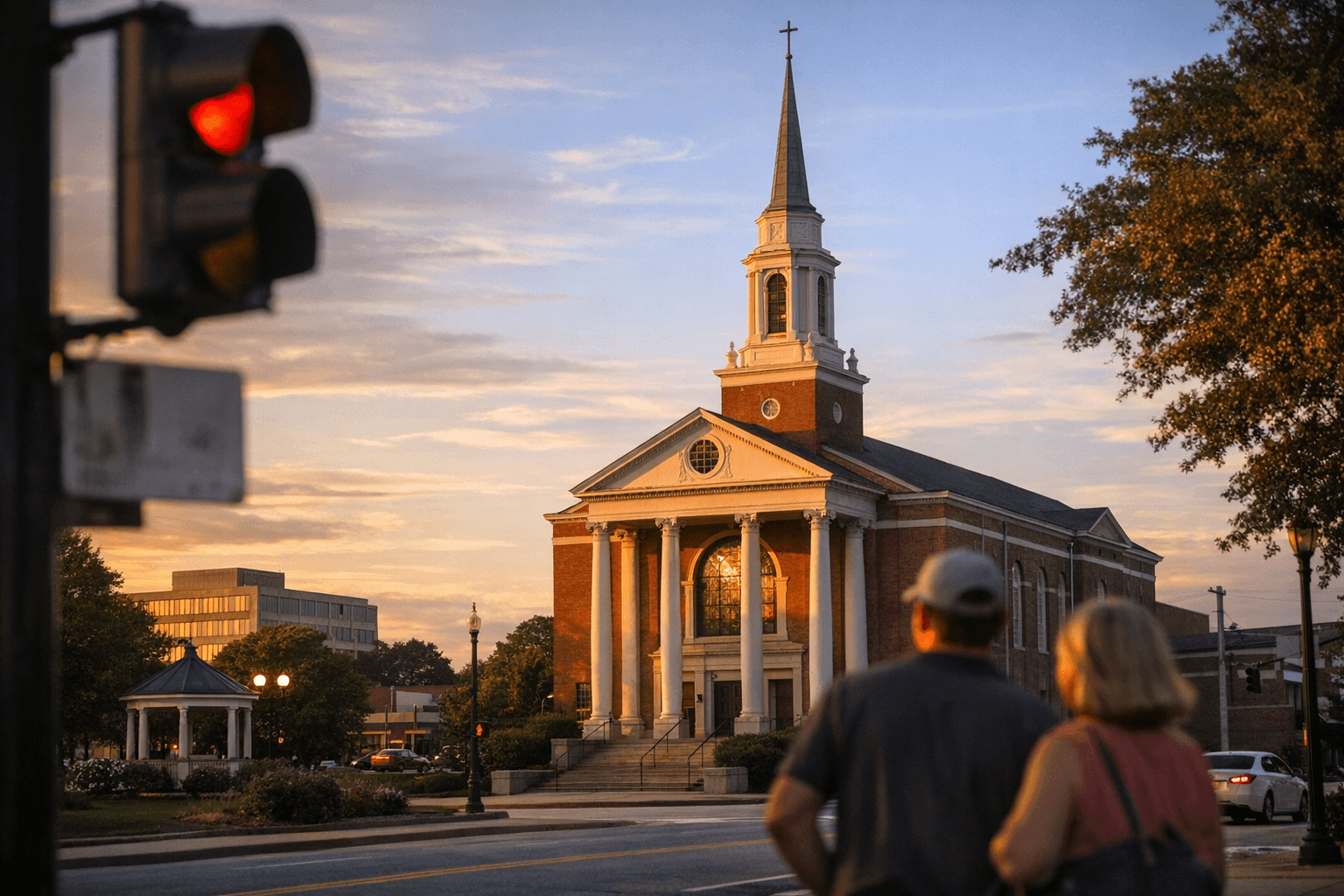
High Point’s plan for a new town center has put a 1825 church site at the center of a downtown gamble: build the next generation of civic space, or preserve a landmark that has anchored the city for more than a century and a half.
The City of High Point bought First Baptist Church at 405 N. Main St. in 2023 for $11 million and now owns about 3.7 acres at North Main Street and Church Avenue. The congregation leases the building back while it searches for a new home, leaving city leaders to decide how far redevelopment should go on a parcel long tied to downtown memory and civic identity.
First Baptist’s history stretches back to Jamestown, where about 25 worshippers organized in 1825 as Jamestown Baptist Church after years as an arm of Abbott’s Creek Baptist Church. The congregation moved to High Point in 1859 at the crossroads of the North Carolina Railroad and the Old Plank Road, and the city’s historical marker identifies the site as the oldest organized church in High Point’s city limits. The building also carried the scars of the Civil War, serving for a time as a Confederate hospital because of its proximity to the railroad and the Bellevue Hotel. The church marked its 200th anniversary with a worship service on Sept. 7, 2025.
City Hall’s needs are driving much of the discussion. High Point’s current municipal building at 211 S. Hamilton St. is 53 years old, and city leaders have spent about a decade studying whether it still works for modern space, security, accessibility and operations. Earlier plans envisioned a new municipal facility on the church property, with city discussions citing a possible 100,000-square-foot building, plus retail, business space and possibly housing as part of a larger downtown town center.
That vision has collided with preservation concerns. Architects told council members that the sanctuary’s volume, slope and interior layout create major challenges, especially if the city tries to fit a new headquarters and parking next to the existing structure. A consultant who studied downtown parking later suggested the property could hold up to 290 surface parking spaces, rather than moving quickly toward a deck or multifamily development. City-commissioned architects also advised against incorporating the sanctuary into a municipal headquarters plan, saying it would make the site harder to develop.
Mayor Pro Tem Monica Peters has said she wants the church incorporated into future plans, but city officials have paused the city hall effort and sent the designs back for reconsideration. For High Point, the choice is plain: the redevelopment could bring a stronger civic core and new economic activity to North Main Street, but if the church is altered or erased, the city risks losing one of its clearest links to its own history.
This article was produced by Prism’s automated news system from verified source data, official records, and press releases, then run through automated quality and moderation checks before publishing. The system is built and supervised by the people who set the standards it runs under. Read our full AI policy.
Did this article answer your question?