Online Shopping Drives Holiday Sales, Guilford County Sees Surge
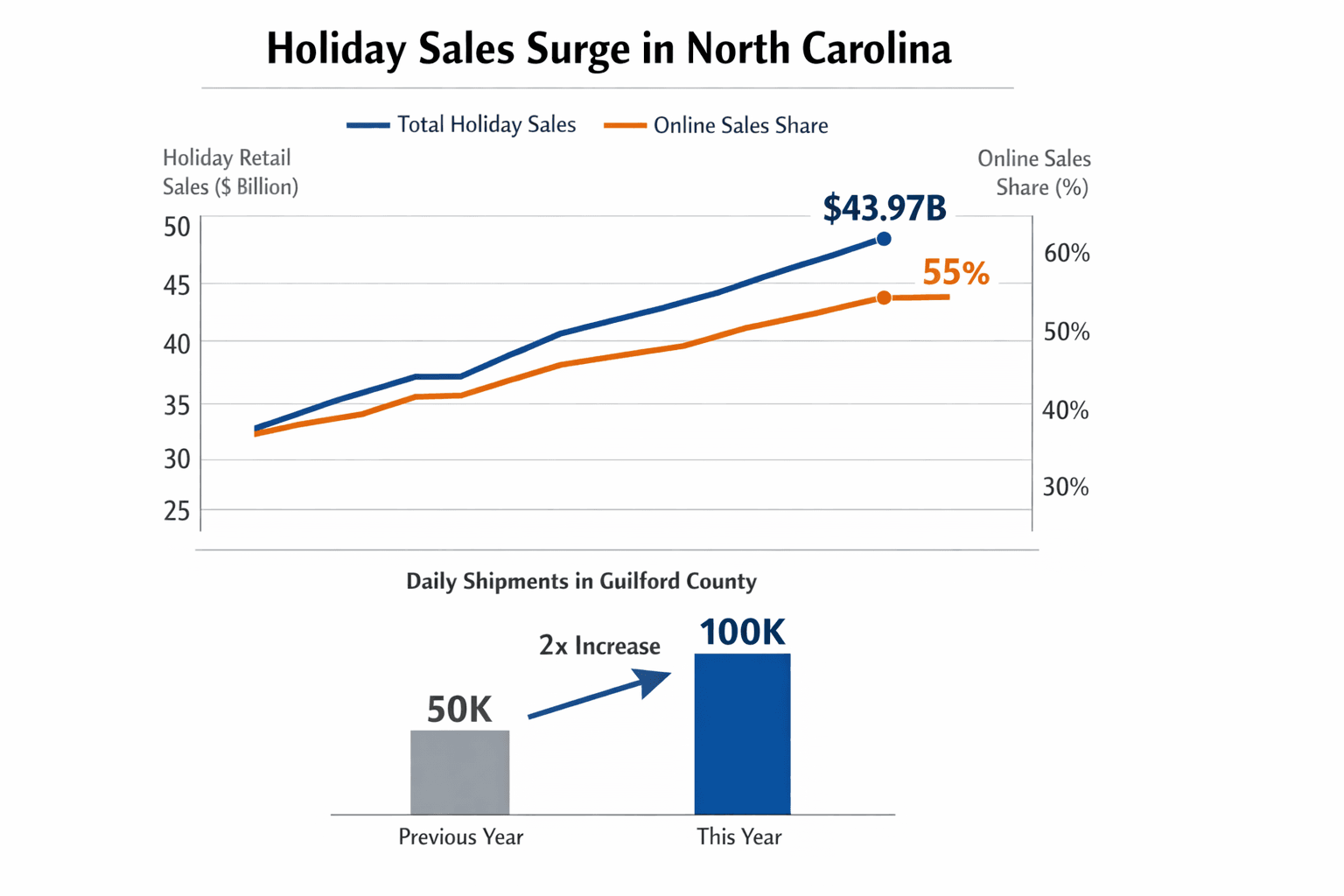
New data released December 23 shows online shopping outpaced other channels for holiday purchases in North Carolina this season, with projected November and December sales near $43.97 billion. The shift boosted shipping activity in Guilford County, where fulfillment centers such as Replacements Limited in Greensboro reported daily shipments roughly doubled during the peak period, affecting jobs, traffic, and local logistics.

New statewide projections and industry surveys released December 23 confirmed that e commerce led holiday buying in North Carolina this season. Appalachian State University’s Center for Economic Research and Policy Analysis together with the North Carolina Retail Merchants Association estimated holiday sales for November and December 2025 at about $43.97 billion. The National Retail Federation’s October survey showed 55 percent of shoppers planned to purchase online, making online the single most used channel this season.
The surge translated directly to Guilford County distribution activity. Local fulfillment centers and warehouses, including Replacements Limited in Greensboro, reported that daily shipments roughly doubled during the peak holiday period. That spike increased demand for seasonal workers and overtime for existing staff, intensified warehouse floor activity, and added pressure to local roads used by freight and courier vehicles.
Retailers and distribution workers across the Triad adjusted operating plans to handle the seasonal cadence. Stores expanded curbside pickup and extended hours to support online order fulfillment, while warehouses adjusted shift patterns to meet higher parcel volumes. For residents this meant faster hiring windows for seasonal roles, potential delivery delays in congested corridors, and heightened traffic around industrial parks during peak hours.
Market implications extend beyond the holiday season. A 55 percent online buying intent combined with nearly $44 billion in statewide holiday sales underscores a durable shift in consumer behavior that can affect downtown retail foot traffic, commercial real estate demand, and the mix of jobs available locally. Guilford County stands to gain from increased logistics activity through payroll and sales tax receipts, but it also faces costs in terms of road wear, congestion, and the need for workforce training.
Policy responses at the county level can smooth the transition. Investments in workforce development for logistics skills, targeted infrastructure upgrades on key freight routes, and planning for truck loading zones and parking can mitigate congestion while supporting job growth. As retailers and warehouses process returns and settle operations in January, local officials and business leaders will be watching whether this holiday season represents a short term spike or another step in a long term move toward online dominated retail.
This article was produced by Prism’s automated news system from verified source data, official records, and press releases, then run through automated quality and moderation checks before publishing. The system is built and supervised by the people who set the standards it runs under. Read our full AI policy.
Did this article answer your question?