Op-ed proposes North Carolina, Virginia redistricting reform compact
Guilford County voters could see their congressional lines shaped by a deal with Virginia, not just Raleigh, as Andy Jackson pushes a cross-state redistricting truce.
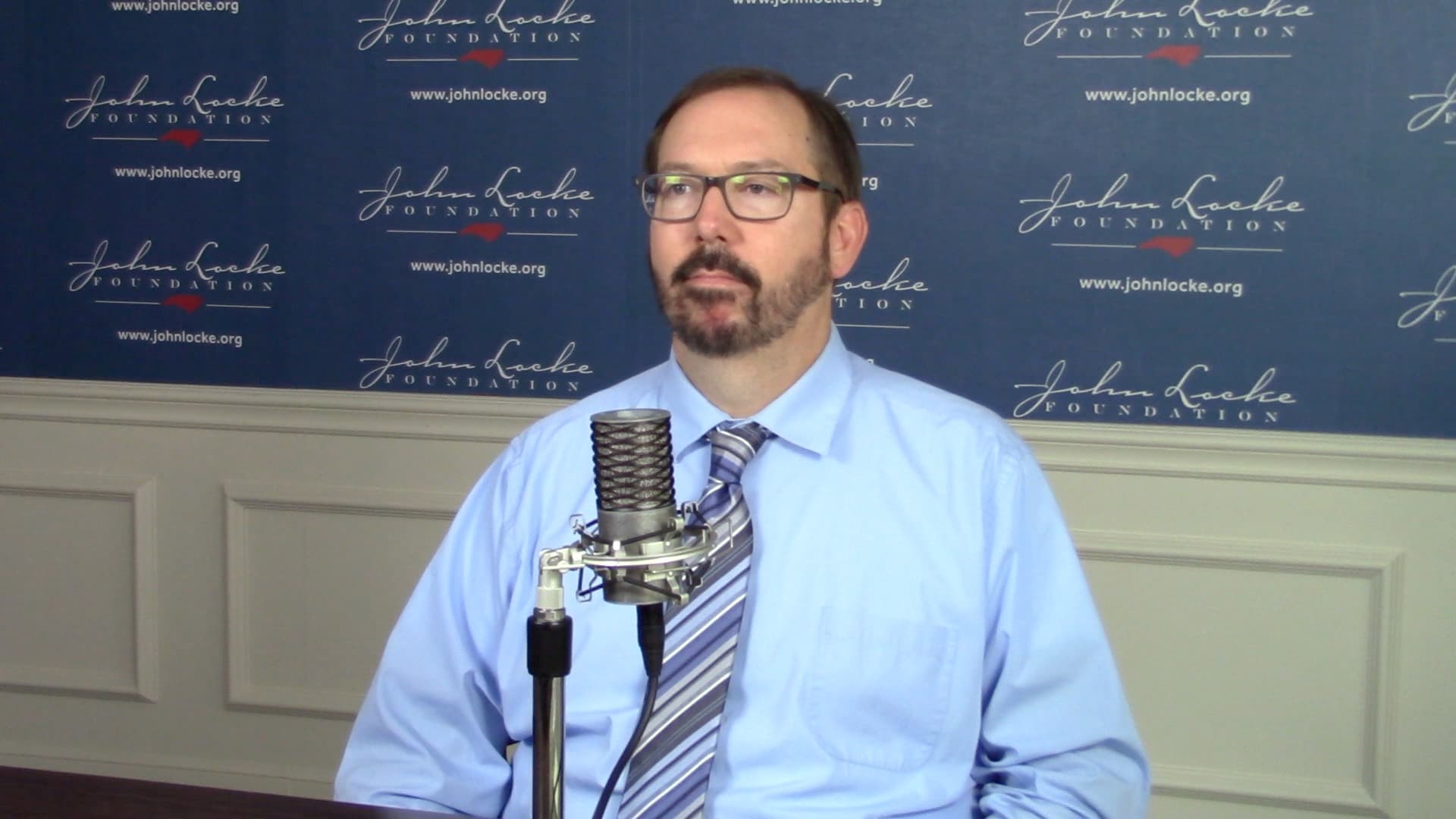
For Guilford County voters, the next fight over congressional lines could be decided as much in Richmond as in Raleigh. Andy Jackson, director of the Civitas Center for Public Integrity at the John Locke Foundation, argues that North Carolina and Virginia should lock in a redistricting compact so neither state can keep rewriting maps every time the political winds shift.
Jackson’s op-ed, carried in the Greensboro News & Record and the Richmond Times-Dispatch, casts the idea as a kind of “gerrymandering truce” or “mutually assured democracy.” The basic pitch is simple: if a red state and a blue state both agree to the same rules, neither side has to fear unilateral disarmament when the other redraws first. For voters in Greensboro, High Point and the rest of Guilford County, that could mean fewer cycles in which district lines change before an election, fewer court fights over the lines, and less uncertainty about whether local races are being engineered to favor one party before a single vote is cast.
The timing is sharp. North Carolina approved a new congressional map in October 2025 for use in the 2026 elections, and state election officials say it is the operative map now. The plan shifted the state’s 14-member congressional delegation from 10 Republicans and four Democrats to an 11-3 Republican advantage. The North Carolina Senate passed it on Oct. 21, 2025, and the House followed on Oct. 22.
That map immediately became a new front in a long-running legal and political war. Common Cause North Carolina and other democracy groups sued, calling it the fifth congressional map in six years and a retaliatory redraw aimed at punishing Black voters in the state’s historic Black Belt. The broader battle has already been shaped by the U.S. Supreme Court’s 2019 ruling in Rucho v. Common Cause, which left partisan gerrymandering claims to politics rather than federal courts.
Virginia is in its own redistricting turmoil. Voters approved a special election referendum on April 21, 2026 that would have temporarily let lawmakers redraw congressional districts if another state did so for reasons other than routine decennial redistricting or a court order, with the power shifting back to the Virginia Redistricting Commission in 2031. Ballotpedia reported that the Virginia Supreme Court later ruled on May 8 that procedural requirements had been violated and the amendment was overturned.
North Carolina already has one interstate compact with Virginia through the Virginia-North Carolina Interstate High-Speed Rail Compact Commission, giving the two states a precedent for formal cooperation. Jackson’s proposal puts that same machinery in service of an even more combustible question: who gets to draw the lines that decide political power in places like Guilford County.
This article was produced by Prism’s automated news system from verified source data, official records, and press releases, then run through automated quality and moderation checks before publishing. The system is built and supervised by the people who set the standards it runs under. Read our full AI policy.
Did this article answer your question?