UNC Greensboro researchers study mite resistance threatening local bees
UNCG researchers are tracking Varroa mite resistance as Guilford County beekeepers face a pest tied to major colony losses and tighter honey supply.
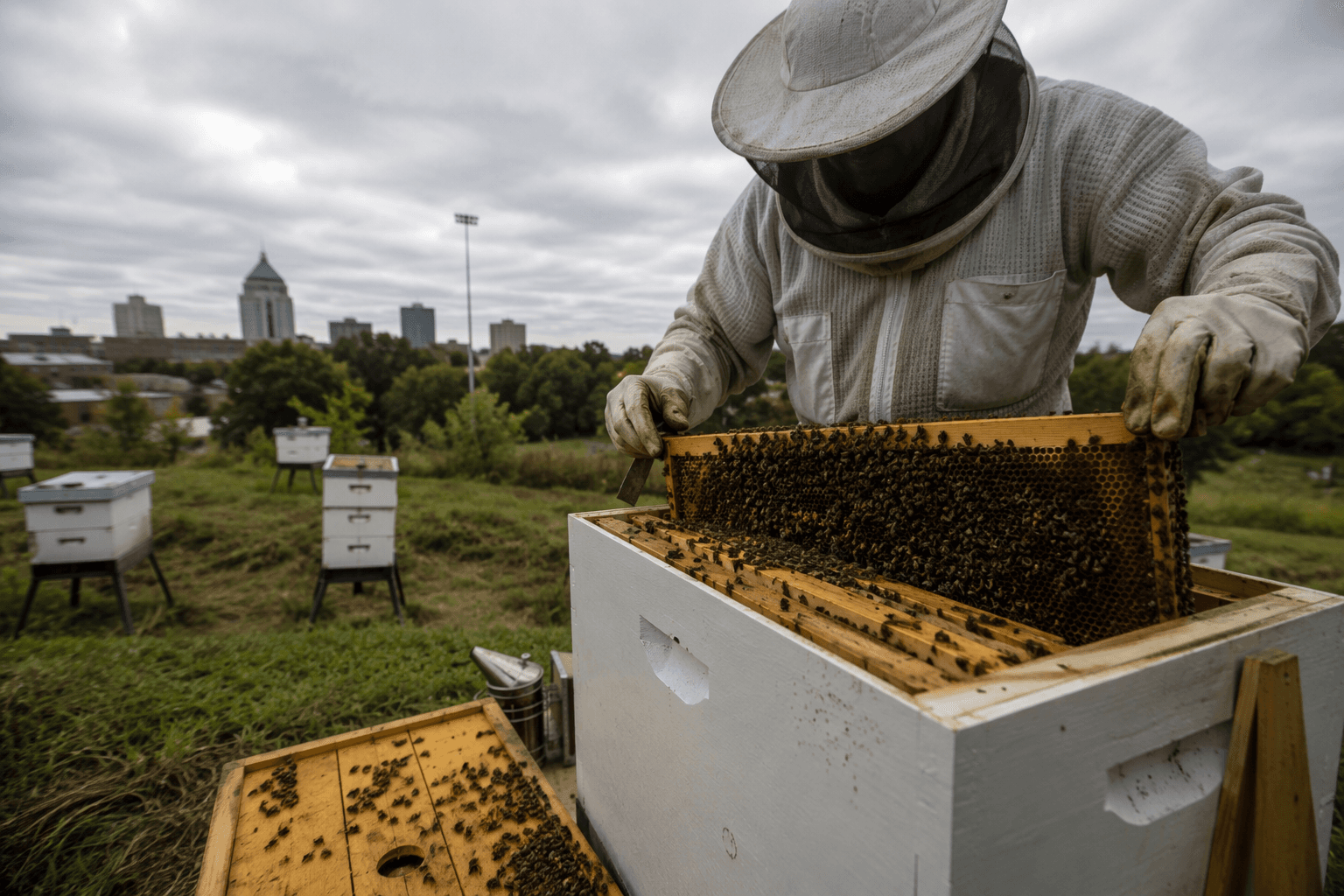
UNC Greensboro scientists are studying how Varroa mites are evolving after the parasite was linked to losses of 60% of commercial honey bee colonies nationwide. The work has direct stakes for Guilford County beekeepers, honey sellers and farms that depend on pollination.
NC State Extension calls Varroa destructor the most serious pest of honey bee colonies worldwide and says the mite was first detected in North Carolina in 1990 after arriving in the United States. A CBS17 and WGHP report said the UNC Greensboro Pollinator Center has been working with a beekeeper to test honey and hives for mites, while experts warn the pests are becoming resistant to the pesticides beekeepers use.
Researchers are also trying to breed bees that can naturally fight off the mites, a strategy that could matter far beyond campus if colonies keep losing ground. The U.S. Department of Agriculture Agricultural Research Service said researchers in Beltsville, Maryland found two promising candidates to manage Varroa mites, underscoring that mite control remains an active national race between chemistry and bee biology.
UNCG’s bee work is not new. On May 9, 2017, UNC Greensboro Research and Engagement said Ramesh Sagili Rueppell had been awarded $1 million for honey bee research, and Innovate UNCG has highlighted work on methods and compositions for inducing hygienic behavior in honey bees. In Guilford County, that research reaches places like Guilford County Beekeepers, which lists mentor help and swarm removal, and the Greensboro Farmers Curb Market, where Quaker Acre Apiaries has a listing at 501 Yanceyville Street with Saturday hours from 8 a.m. to noon and a Tuesday weekday market from 4 p.m. to 7 p.m.
That local connection matters because bees are not just a campus research subject. Pollinators help underpin food production, and worldwide they are linked to about one out of every three mouthfuls of food. If Varroa mites keep outpacing pesticides and weakening colonies, the effects can show up in less honey on local shelves and more pressure on the pollination supply that North Carolina growers rely on for fruit and vegetable crops.
This article was produced by Prism’s automated news system from verified source data, official records, and press releases, then run through automated quality and moderation checks before publishing. The system is built and supervised by the people who set the standards it runs under. Read our full AI policy.
Did this article answer your question?