City Declares Park on Westview Apartments Public Nuisance, Orders Demolition
City declares Park on Westview Apartments a public nuisance and orders demolition after repeated fires and safety complaints affecting west Houston-Spring neighbors.
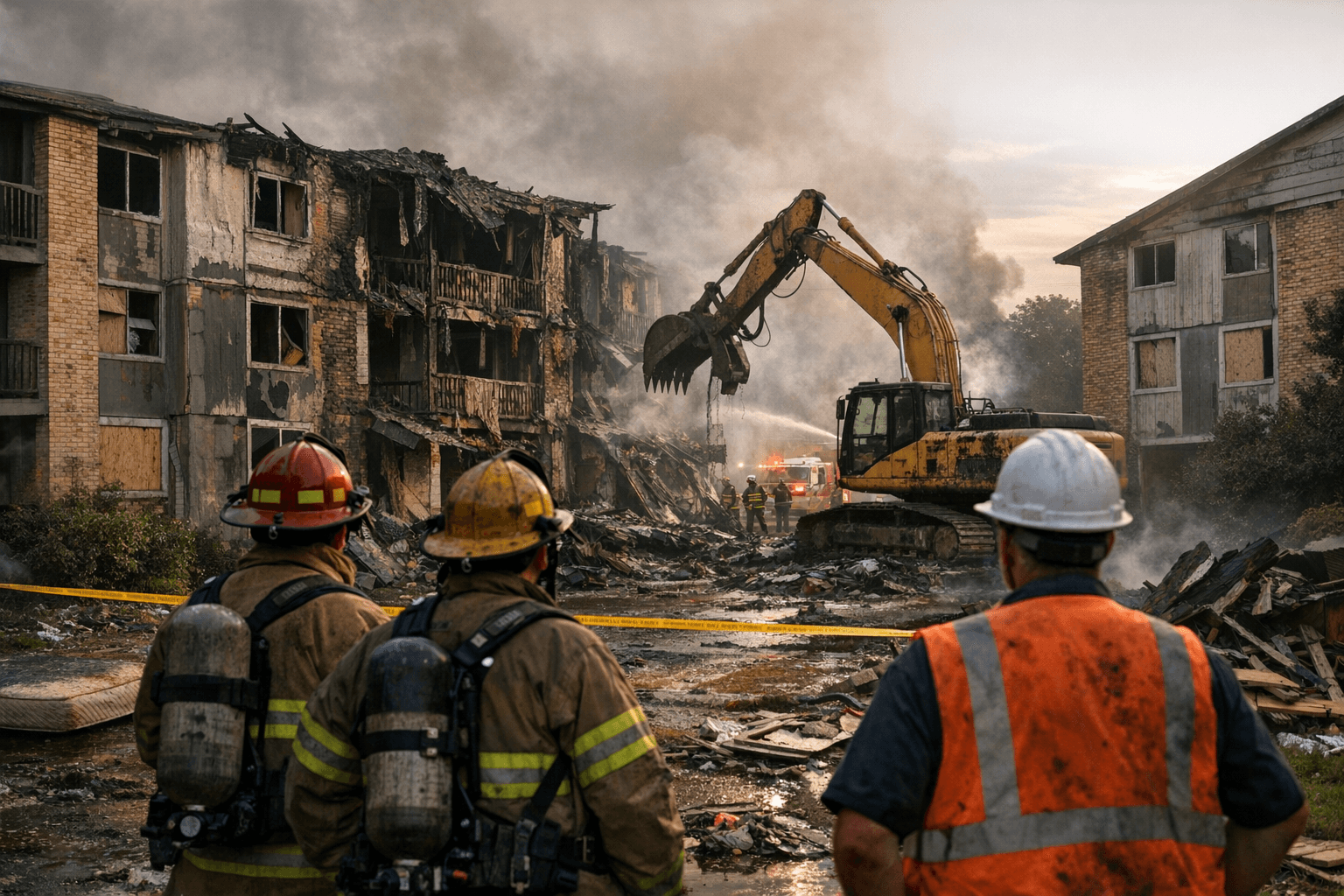
City officials declared the vacant Park on Westview Apartments a public nuisance and ordered the building demolished after a string of fires and a persistent pattern of complaints that officials say created immediate risks for nearby residents. The declaration, issued January 20, 2026, follows at least 18 311 complaints over two years and multiple fires reported in under six months.
Municipal leaders cited ongoing fire hazards, repeated trespassing and numerous code violations as the basis for the nuisance finding and the removal order. The city announced removal actions and said it would coordinate with public safety agencies to carry out demolition work safely and to reduce hazards for the surrounding neighborhood. The property sits in the west Houston and Spring area of Harris County and had been vacant for an extended period.
The sequence of 311 reports and emergency responses underlines how chronic code enforcement problems can evolve into acute public-safety threats. Repeated fire events strain fire department resources and heighten risks of structural collapse and spread to adjacent properties. Neighbors reported concerns about arson, criminal activity and hazardous conditions that persisted despite prior complaints, prompting the city to move from enforcement notices to an abatement order.
The demolition order raises immediate questions about execution and accountability. The city will control removal operations and public-safety coordination, but the decision also spotlights institutional capacity: how quickly code enforcement and fire prevention efforts can address vacant properties before they become community hazards, how abatement costs are allocated, and how property owners are held to account. For Harris County residents, those are governance and budget choices that intersect with local elections and council priorities.
Community impact will be both short-term and lasting. In the near term, residents should expect demolition-related activity - including heavy equipment, truck traffic and public-safety staging - as the city coordinates with first responders to mitigate risk. In the longer term, clearing a persistently hazardous site can reduce criminal activity, lower fire risk and stabilize nearby property conditions, but only if the site is rehabilitated or redeveloped once demolition is complete.
The Park on Westview case also reflects local civic engagement: at least 18 311 complaints document sustained neighborhood reporting that helped push officials to act. That pattern suggests residents can influence enforcement outcomes, but it also calls attention to whether city resources and policies are adequate to prevent repeat incidents.
What comes next for neighbors is a demolition process overseen by city agencies and coordinated with public-safety partners, followed by decisions about site cleanup and future use. Residents should watch for official city notices about timing and safety advisories as the work proceeds.
Know something we missed? Have a correction or additional information?
Submit a Tip

