Driverless 18-wheeler completes inaugural Houston to Dallas freight run
A Bot Auto rig ran Houston to Dallas with nobody in the cab, then rolled into a reminder: I-45 is already Texas’s busiest freight choke point.
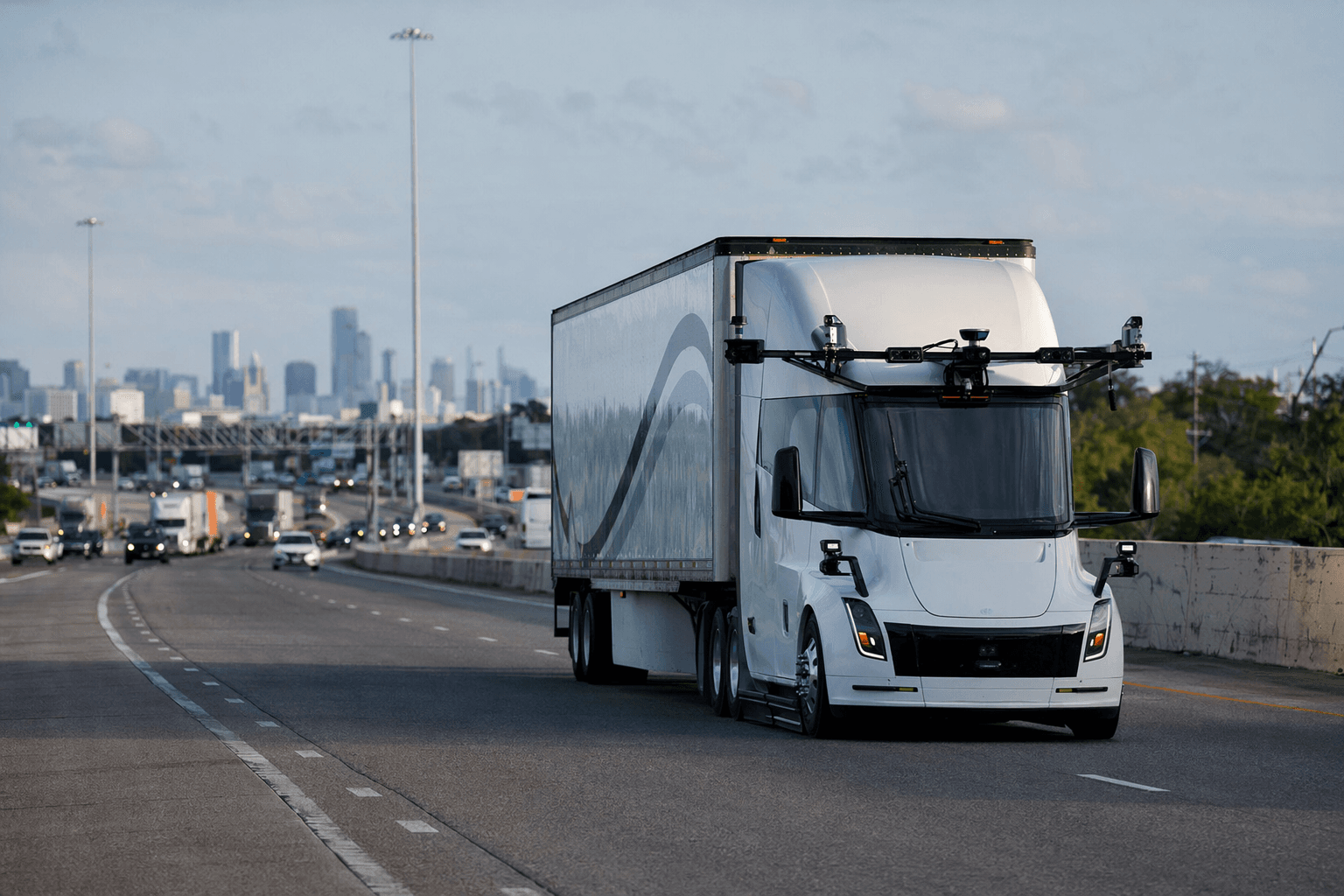
A “ghost truck” with no one behind the wheel startled drivers on Interstate 45, but the bigger story was what it carried: a fully humanless freight load that moved overnight from Houston to the Dallas area and arrived on schedule. The run put an autonomous 18-wheeler on the corridor that links Harris County to North Texas and raised the stakes for freight jobs, highway safety and liability on one of the state’s most important roads.
Bot Auto said it completed the 231-mile haul on April 29, moving a commercial load from Riggy’s Truck Parking in northeast Houston to Safe Stop in Hutchins, just south of Dallas. Trade coverage put the departure shortly after 1 a.m. and the arrival before 5 a.m. The company said the truck had no safety driver, no in-cab observer and no remote operator or low-latency human feedback. The shipment was booked through Ryan Transportation and, according to Axios, was a paid delivery to a customer loading dock rather than a pilot or demonstration.
The route matters as much as the technology. Texas transportation officials describe I-45 as the most heavily traversed multimodal freight corridor in Texas and one of the nation’s most congested freight highways. That makes the Houston-to-Dallas lane a high-profile test for autonomous trucking because it sits at the center of the state’s supply chain, from Port of Houston cargo to distribution centers serving North Texas.
The company’s milestone comes as autonomous trucking companies push to prove they can operate commercially, not just stage demos. Aurora Innovation began regular driverless customer deliveries between Dallas and Houston in 2025 and said its heavy-duty trucks had logged more than 1,200 miles without a driver when it launched that service. Bot Auto’s run adds another player to a race that could reshape how freight moves through Houston, where drivers already spend hours on packed freeways feeding warehouses, ports and retail networks.
Texas law is already setting the ground rules. The Texas Department of Motor Vehicles says commercial automated vehicles need TxDMV authorization to operate on Texas roads, and automated vehicles remain subject to the same traffic laws and public safety standards as any other vehicle. That means the next phase of driverless trucking will not be decided only by engineers and shippers, but also by regulators, insurers and law enforcement officials who will have to sort out responsibility when a truck on a public highway does not have a human in the cab.
This article was produced by Prism’s automated news system from verified source data, official records, and press releases, then run through automated quality and moderation checks before publishing. The system is built and supervised by the people who set the standards it runs under. Read our full AI policy.
Did this article answer your question?