Former MD Anderson Researcher Sentenced for Stealing Cancer Secrets to China
Yunhai Li, 35, was sentenced to 364 days in Harris County jail after stealing 90 gigabytes of cancer research from MD Anderson and trying to fly it to China.

Yunhai Li knew exactly what he was doing. "I know these research files are very sensitive and that I was not allowed to leave the U.S. with them," the 35-year-old Chinese national wrote in a statement to investigators. He tried to take them anyway.
Li, a former researcher at MD Anderson Cancer Center, was sentenced to 364 days in Harris County jail after pleading guilty to attempted theft of trade secrets. The court credited him with 196 days already served. Records indicate he is expected to be deported after his release.
The case broke open at George Bush Intercontinental Airport on July 9, 2025, when U.S. Customs and Border Protection and Homeland Security Investigations stopped Li as he attempted to board a flight to China. Agents found two phones and a laptop loaded with MD Anderson material, including 90 gigabytes of unpublished cancer research. Li had been working at MD Anderson on a breast cancer vaccine project funded by the National Institutes of Health and the Department of Defense since 2022, employed on a U.S. State Department research scholar visa.
According to court documents, Li had uploaded confidential research data to his personal Google Drive while still employed at MD Anderson. When security officials grew concerned he planned to take the material to China, Li deleted it from Google Drive. He then transferred it to a Baidu account, a Chinese cloud storage service, without informing anyone at MD Anderson. He told investigators he used Baidu to "prevent U.S. government officials from discovering that he was in possession of them." He deleted the files from his hard drive before heading to the airport but left them intact on Baidu.
A Texas Department of Public Safety complaint reviewed by the Houston Chronicle alleged Li was simultaneously being funded by the National Natural Science Foundation of China and conducting research for Chongqing Medical University, despite signing confidentiality agreements for his work in the United States. Li had resigned from MD Anderson on July 1, 2025, after being confronted about downloading restricted data. That same day, MD Anderson confirmed his departure in a statement: "As of July 1, 2025, Yunhai Li is no longer employed by The University of Texas MD Anderson Cancer Center. Institutional leaders are working with relevant authorities on this matter."
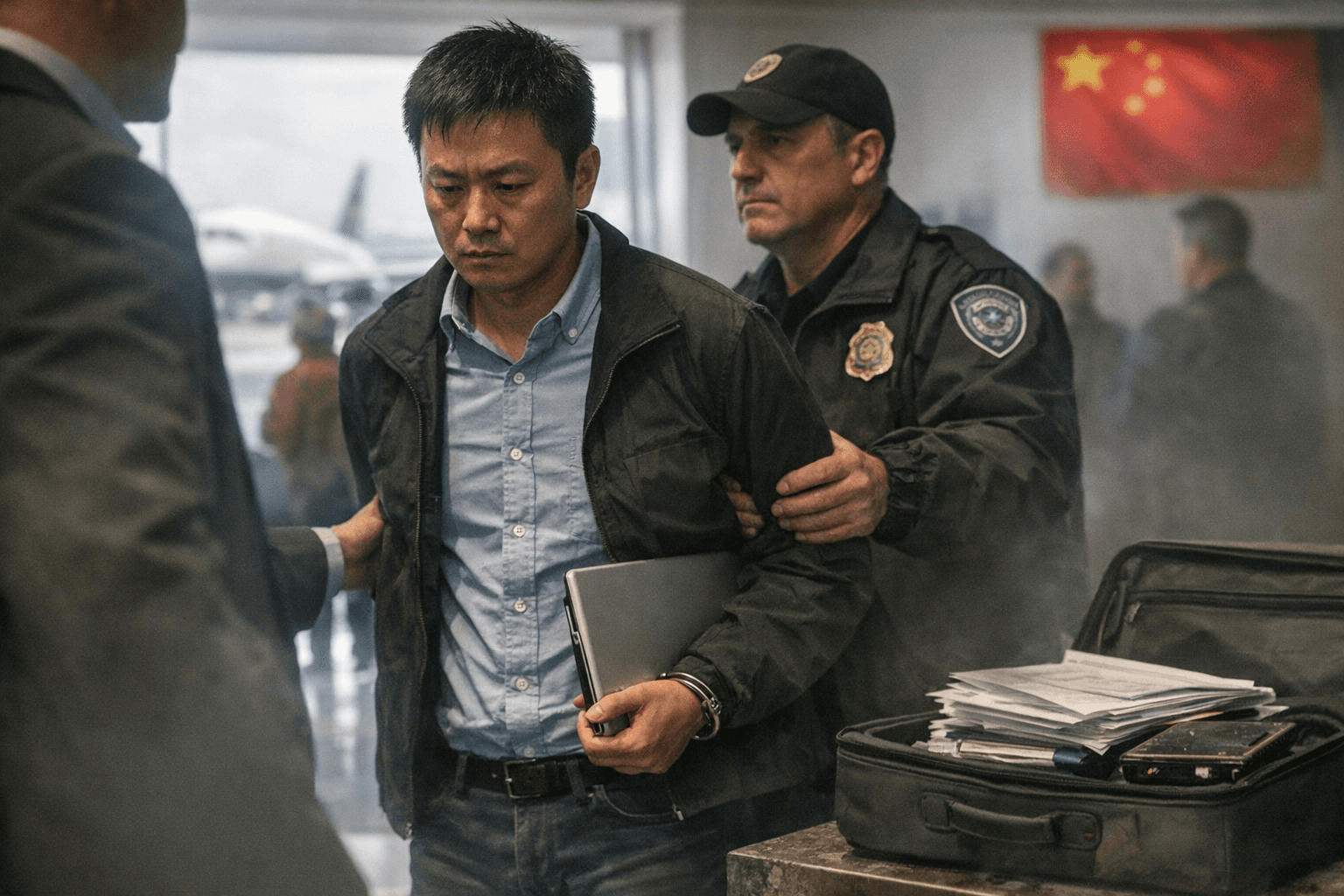
After the July 9 airport inspection, Li was initially allowed to leave. Investigators continued examining his devices and arrested him on August 22. He was released on a $5,000 bond before it was revoked on August 29.
Harris County District Attorney Sean Teare said the timing of the airport stop was critical. "There was a pretty good chance that he was going to get deported or leave the country, so we needed to file something," Teare said. "We needed to make sure that he was going to stay here, the information was going to stay here, and he was going to be held accountable."
Li originally faced a third-degree felony theft-of-trade-secrets charge, which carries two to ten years in prison and fines up to $10,000, along with a tampering-with-a-government-record count. He pleaded guilty on March 6 to a reduced state-jail felony. The tampering count was dropped as part of the deal.
The case drew broader attention to research security at Texas universities. A December 2024 Texas House committee report had already flagged the need for stricter protocols. Texas House Bill 127, which took effect September 1, 2025, raises the penalty for the type of offense Li committed from a maximum of 10 years to 20 years and elevates the charge from a third-degree to a second-degree felony. The Harris County District Attorney's Office did not respond to questions about how the new law affects its approach to Li's case.
Know something we missed? Have a correction or additional information?
Submit a Tip