Harris County Enters Moderate Drought After Warm, Dry Winter
A warm, dry winter pushed all of Harris County into moderate drought, a classification now covering 89% of Texas and raising wildfire and outdoor water-use concerns.
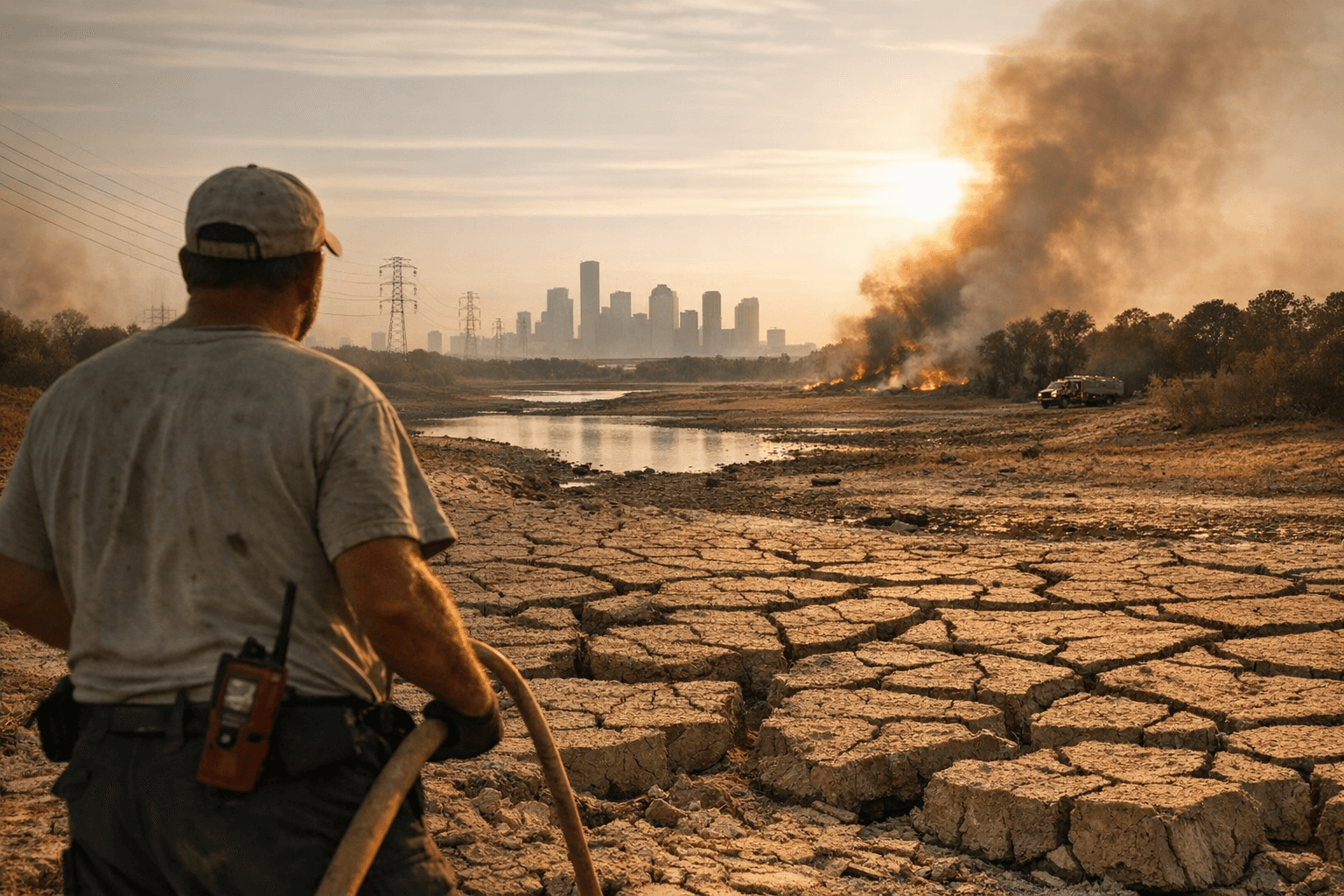
All of Harris County entered moderate drought as of the April 2 U.S. Drought Monitor map, a designation that now stretches across nearly 89 percent of Texas and carries immediate consequences for water use, fire preparedness, and the health of urban landscapes heading into spring.
The drought traces directly to winter. Texas State Climatologist John Nielsen-Gammon, based at Texas A&M University, tied the current conditions to a seasonally warm, dry winter that eroded statewide precipitation totals over months. A storm on the first weekend of April deposited 1.35 inches at Hobby Airport, a respectable single-event total that nonetheless left the underlying deficit intact. National Weather Service meteorologist Andy McNeel, while noting a rising chance of storms later in the week, cautioned that incremental rainfall is unlikely to erase the cumulative dryness built up across the season.
The practical stakes for Harris County homeowners arrive on several fronts at once. Drought stress raises irrigation costs and frequency, weakens shallow-rooted landscaping, and puts particular pressure on urban tree canopies that can take years to recover from a single dry season. Harris County's extensive bayou network, which depends on groundwater interaction and surface runoff, carries reduced flow under prolonged dry conditions. In the county's outer corridors, where undeveloped and grassy terrain meets suburban edges, dried vegetation creates elevated wildfire fuel loads that fire departments monitor closely when relative humidity falls and wind increases.
Houston Public Works, which administers the city's water system under a formal Drought Contingency Plan, had not announced a new drought stage as of the April 2 map. The city rescinded Stage 1 in May 2024 following a wet period. If dryness worsens and a stage is activated, the plan assigns mandatory outdoor watering days by street address: odd-numbered addresses are designated Sundays and Thursdays, while even-numbered addresses fall on Saturdays and Wednesdays. Regardless of any formal trigger, Houston Public Works encourages customers to inspect and repair leaks, dripping faucets, and running toilets now, and to check that sprinkler heads are directing water into root zones rather than streets or storm drains.
The 89 percent figure is the starkest indicator in the April 2 snapshot. Moderate drought sits at the third tier of the Drought Monitor's five-level intensity scale, above abnormally dry conditions but below severe, extreme, and exceptional classifications. Nielsen-Gammon's framing of the winter baseline as the root cause suggests the current classification will not break through isolated storms. McNeel's forecast offers the possibility of near-term relief; what it cannot offer is a structural reset of a deficit that accumulated across months.
This article was produced by Prism’s automated news system from verified source data, official records, and press releases, then run through automated quality and moderation checks before publishing. The system is built and supervised by the people who set the standards it runs under. Read our full AI policy.
Did this article answer your question?