Harris County leans on drone fleet after Verizon outage highlights communication gaps
A Verizon outage left many without service, prompting a councilmember-funded drone pilot to deliver emergency messages when networks fail. This matters as officials weigh funding and oversight.
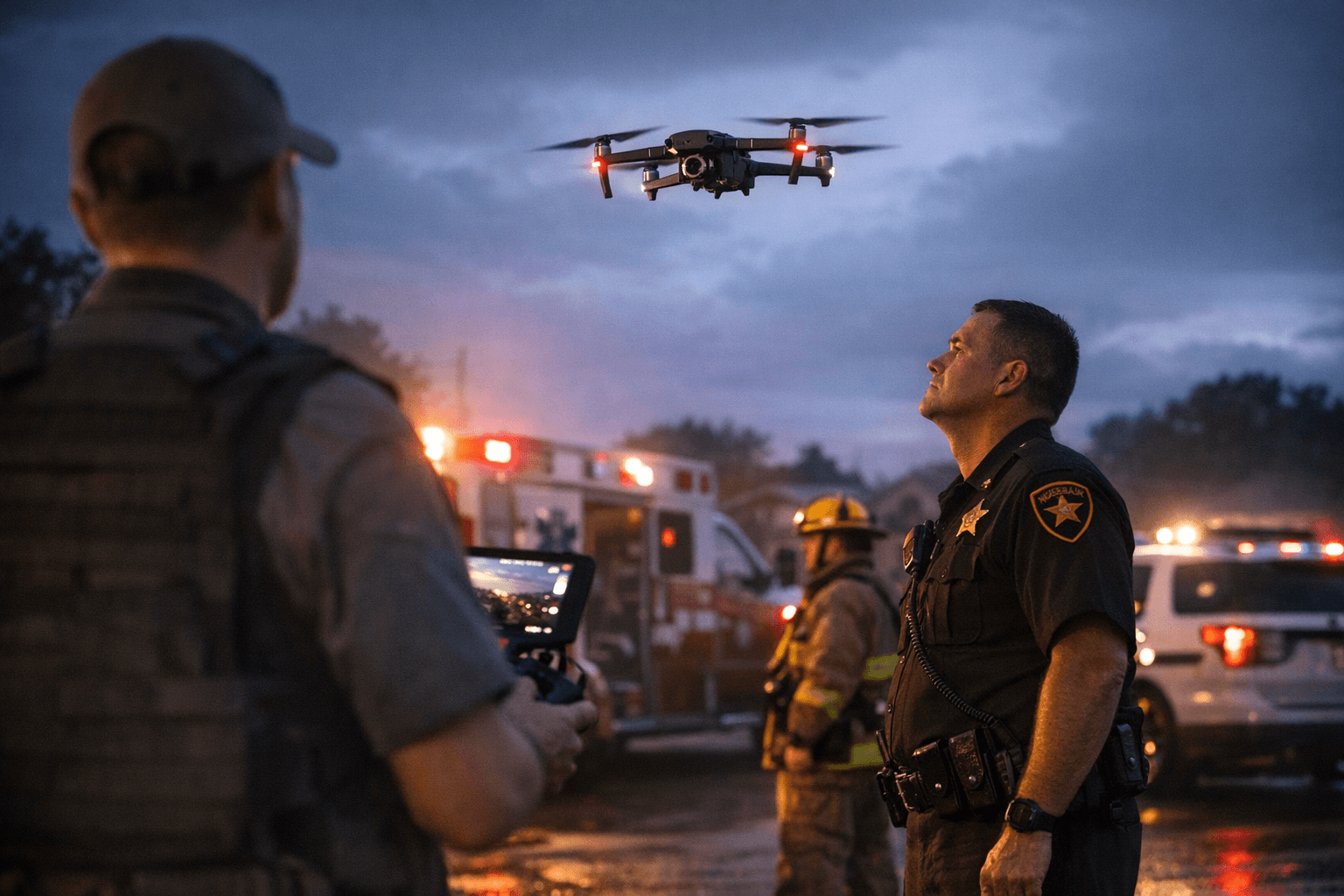
A widespread Verizon outage that left Harris County residents without reliable cell or internet service renewed scrutiny of municipal emergency communications and the city's ability to reach people when private networks go dark. The disruption on Jan. 14 affected voice and data access across the region and prompted city leaders to point to an existing pilot program that can step in during communications blackouts.
Councilmember Abbie Kamin allocated roughly $60,000 to purchase a five-drone fleet designed to carry loudspeakers and other equipment to broadcast public-safety messaging when cell or internet service is unavailable. The drones are configured to announce shelter locations, issue shelter-in-place instructions and relay other critical directions. City officials also reported the technology has supplied real-time imagery during recent large fires, supplementing situational awareness for first responders.
The program is small in dollar terms but significant in function. A five-drone fleet can provide localized, line-of-sight messaging in neighborhoods cut off from cellular alerts, offering an alternative channel for time-sensitive instructions. For residents in parts of Harris County where fixed infrastructure is vulnerable to storms, outages or infrastructure failures, that redundancy can be the difference between timely evacuation guidance and dangerous uncertainty.
The outage underscores broader policy and institutional questions. Local governments depend largely on privately owned telecom networks to disseminate emergency alerts, leaving municipal officials to plan for contingencies when those networks fail. The pilot program signals one municipal approach to resilience, but expanding that capacity would require coordination across city public-safety departments, budget officials and regulators overseeing unmanned aircraft operations.
There are governance and civic-engagement implications as well. Decisions about funding, deployment rules and oversight for drones touch on budget priorities, public safety strategy and privacy concerns. These are matters that typically come before City Council and relevant committees, where voters and neighborhood groups can scrutinize proposed expansions and influence how the technology is used and regulated.
For Harris County residents, the immediate takeaway is practical: the city has a limited drone capability that can deliver emergency messages and imagery when commercial networks fail, but that capability is currently a pilot supported by a modest allocation. What comes next will depend on technical assessments, interagency coordination, funding choices and public input. Expect debate at upcoming council meetings and follow-up reporting on whether officials pursue a larger, formally integrated municipal communications strategy.
Know something we missed? Have a correction or additional information?
Submit a Tip

