Houston Boy, 4, Hospitalized After Eating Neighbor's THC Gummies
Denia Ramos-Velasquez, 42, faces child endangerment charges after a boy she was watching on Glenmont Drive ate her THC gummies and was found unable to stand.

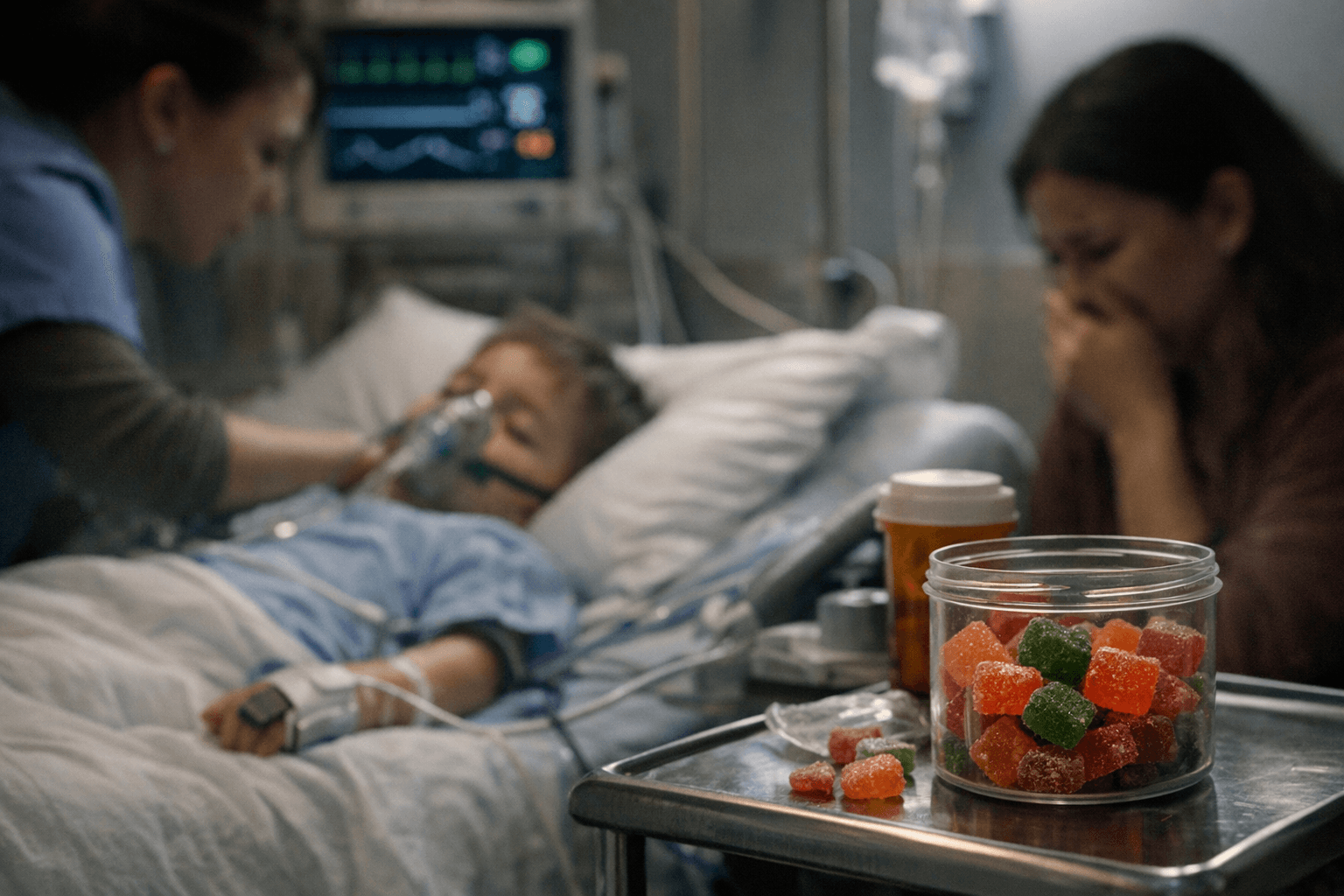
Denia Ramos-Velasquez, 42, was watching a neighbor's 4-year-old son at a home in the 5900 block of Glenmont Drive when the boy consumed her THC gummies and was found by his mother unable to stand. Both Houston firefighters and police responded to the scene. The child was hospitalized, and Ramos-Velasquez now faces a charge of endangering a child.
The incident fits a pattern that Texas poison control data has been tracking for years. The Texas Poison Control Center recorded a 495% increase in marijuana-related calls involving children age 5 and under between 2017 and 2022. Statewide, edibles account for 36% of all cannabinoid-related calls to the poison control network. Research drawing on Texas and national poison-data systems finds that roughly one-third of cannabinoid exposure cases involve children under 6.
The pull of gummies toward small children is not accidental. Kids encounter these products because the packaging is often attractive to them, resembling colored cereal bars or candy. Pediatric emergency physicians note that given gummies' resemblance to candy, "when children come across them, most children are going to put that in their mouth and ingest it." Unlike prescription medications, which have long required childproof containers, THC edibles have historically carried no such mandate. New Texas regulations that took effect March 31 now require child-resistant packaging for consumable hemp-derived THC products, but that rule governs retailers going forward and does nothing to secure the supply already sitting in Houston homes.
The Glenmont Drive case also exposes a gap that recurs in Harris County apartment settings: informal neighbor-to-neighbor childcare carries none of the legal obligations of licensed providers. Texas-licensed childcare facilities are required to keep medications and hazardous substances locked and inaccessible to children. A neighbor watching a child next door faces no equivalent inspection, no storage standard, and no oversight body to answer to if something goes wrong.
Any parent whose child may have ingested a THC product should call the Texas Poison Control Network at 1-800-222-1222 immediately, even before symptoms appear. Poison control specialists advise calling regardless of whether symptoms are present, because signs may not occur immediately after consumption. If a child is already unresponsive, unable to stand, or breathing abnormally, call 911 first, as those were exactly the conditions that triggered the emergency response on Glenmont Drive.
On prevention, physicians recommend treating THC edibles with the same discipline applied to firearms and prescription medications: stored in a locked container, out of reach and out of sight, never in an unlocked purse, on a counter, or in a low cabinet. Every adult entering a home where children are present, including relatives, neighbors, and occasional sitters, should be told those same rules apply to whatever they bring inside.
Ramos-Velasquez's case is pending in Harris County. The boy's current condition has not been publicly disclosed by authorities.
This article was produced by Prism’s automated news system from verified source data, official records, and press releases, then run through automated quality and moderation checks before publishing. The system is built and supervised by the people who set the standards it runs under. Read our full AI policy.
Did this article answer your question?