Houston dog rescue seeks adopters after screwworm rules block transport
Sixteen Houston rescue dogs are stranded after screwworm rules shut down their transport, and Sunnyside Street Dogs needs Harris County adopters and fosters now.

Sixteen Houston rescue dogs are stuck in Harris County after Texas screwworm rules shut down the transport pipeline that had already lined up homes for them out of state. Sunnyside Street Dogs Houston says the dogs were ready to go, with health certificates and spay-neuter care already completed, when the movement restrictions stopped the trip.
Mike Hood, the rescue’s co-founder, said the halt has thrown the operation into disarray and forced a fast local scramble for help. Hood said the dogs already had approved homes waiting outside Harris County, but the transport was blocked anyway, leaving the foster-based nonprofit to look for adopters, foster families and donations to keep the animals moving through vet care and placement. Hood called it “a real mess” for the rescue.
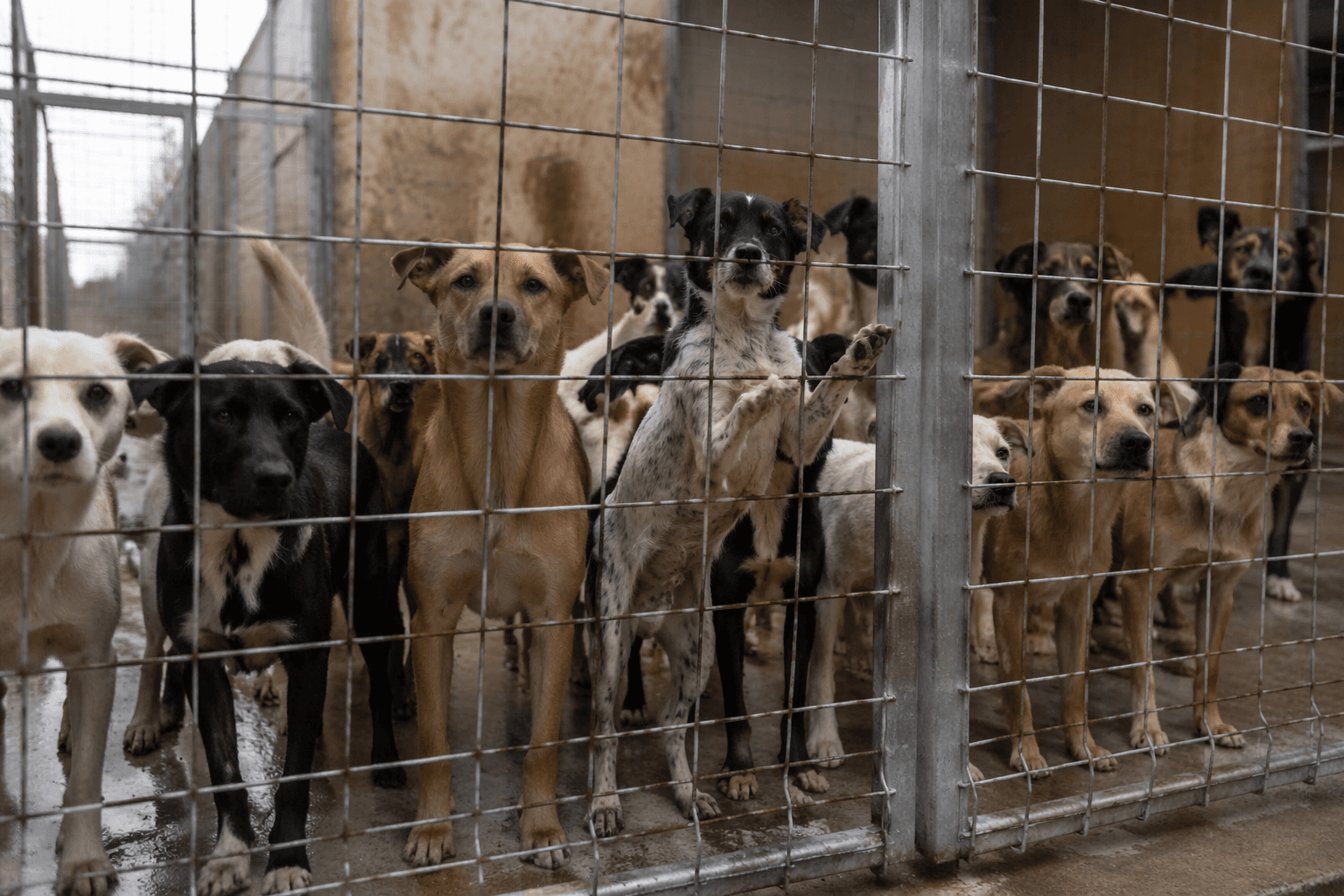
Sunnyside Street Dogs depends on volunteers, donations and foster homes to care for dogs before adoption, and its normal model includes sending animals to homes beyond Houston. That system is now jammed at the worst possible moment for the rescue, which needs local families to step in and take some of the 16 dogs off its hands so they do not sit in limbo while the state’s screwworm response continues.
The transport problems stem from Texas’ broader response to New World screwworm, which officials say was first confirmed in the state on June 3 in a three-week-old calf in Zavala County with an umbilical lesion. The Texas Animal Health Commission says an infested zone now covers parts of Uvalde and Zavala counties, where warm-blooded animals cannot move out without prior authorization and inspection under the June 5 modified order. Officials later reported more confirmations, including a dog in Andrews County on June 8 and a calf in La Salle County.
The parasite matters because it can affect livestock, pets, wildlife and, rarely, people. The U.S. Department of Agriculture says screwworm was eradicated from the United States in 1966 using the sterile insect technique, but sterile fly dispersal is now underway again as part of the response. Federal officials have said a Texas outbreak could carry steep economic consequences, with one historical estimate putting a 1976-scale outbreak at about $732 million a year for Texas producers and about $1.8 billion for the state economy in 2024 dollars.
For Harris County, the immediate consequence is simpler and more urgent: 16 dogs need places to go now. Sunnyside Street Dogs is asking residents who can take in a foster or finalize an adoption to step forward, and donors to help absorb the cost of the disruption while the rescue tries to clear the bottleneck.
This article was produced by Prism’s automated news system from verified source data, official records, and press releases, then run through automated quality and moderation checks before publishing. The system is built and supervised by the people who set the standards it runs under. Read our full AI policy.
Did this article answer your question?