Merged Parades Unite Thousands at Houston’s First MLK Unity Parade
Thousands gathered downtown as two separate MLK parades combined into a single unity parade, drawing roughly 340 entries and signaling stronger civic and corporate collaboration.
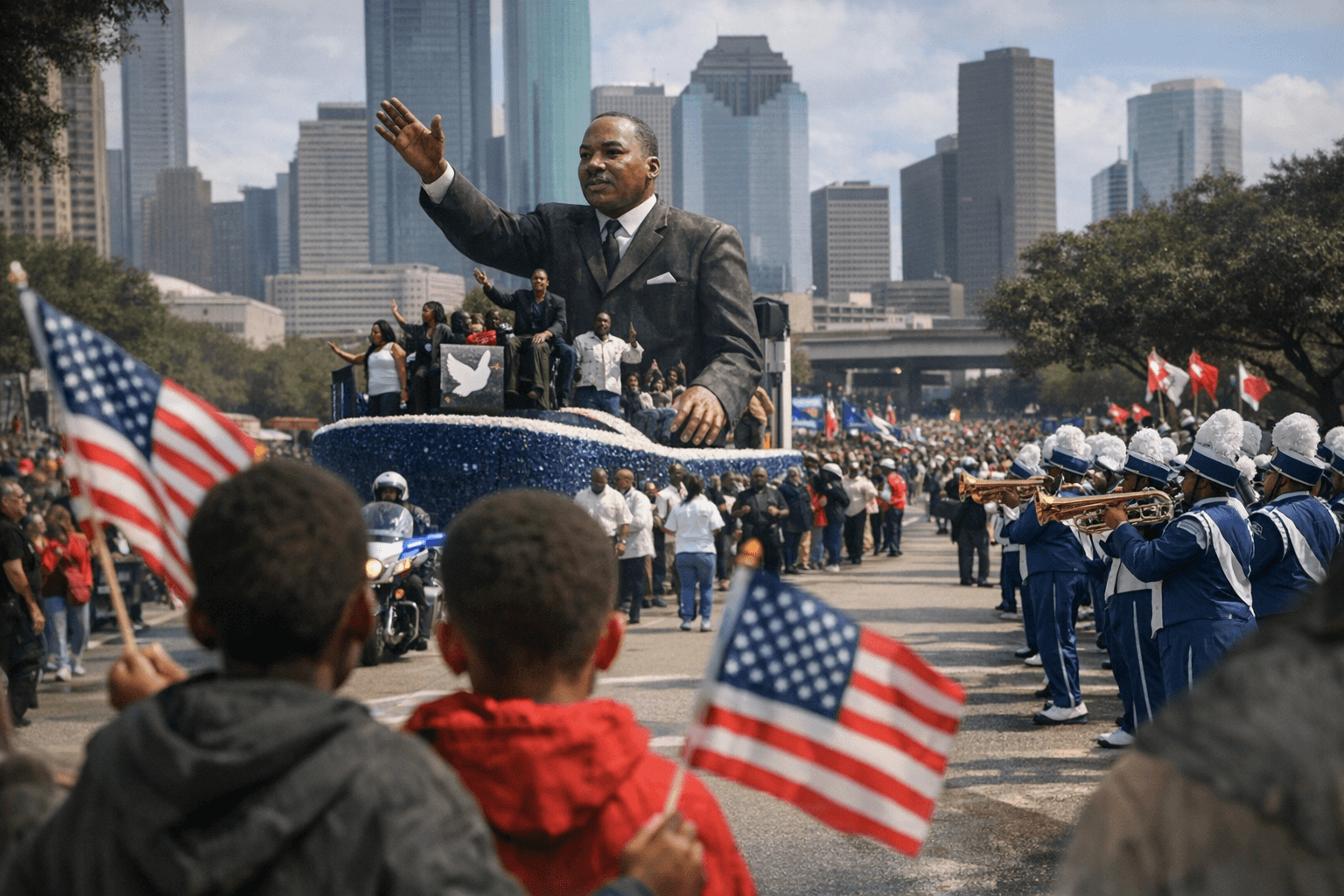
A consolidated Martin Luther King Jr. celebration brought thousands of residents into downtown Houston as two long-running parades merged for the city's first MLK Unity Parade. The unified march featured roughly 340 entries, including marching bands, dance teams, civic groups, school programs, corporate representatives and elected officials, and set a tone of cross-generational solidarity.
The event, held on January 19, 2026, positioned Mayor John Whitmire as one of the grand marshals and included participation from high-profile local organizations such as the Houston Texans and H-E-B. Students from area schools and neighborhood groups provided visible intergenerational turnout, reinforcing traditions of civic engagement that local organizers said they wanted to preserve while streamlining logistics by combining two previously separate parades.
For downtown businesses and the municipal budget, consolidation presents practical implications. A single, larger parade concentrates foot traffic and potential customer spending over a defined route and timeframe, which can boost sales for restaurants and retailers near the procession. At the same time, the city can focus public-safety resources, street closures and sanitation services on one coordinated event, potentially reducing duplication of staffing and equipment across multiple events. Those efficiencies matter to Harris County taxpayers and to small business owners who depend on predictable planning windows for staffing and inventory around major events.
Corporate participation from the Houston Texans and H-E-B signals growing private-sector engagement in civic commemorations. Such involvement can provide sponsorship revenue, logistical support and amplifying platforms for outreach, but it also raises questions about the balance between civic ceremony and branding in public commemorations. Local elected officials and nonprofit leaders will need to negotiate those trade-offs as the Unity Parade becomes part of Houston’s annual calendar.
Beyond near-term economic and logistical effects, the merged parade points to a broader trend of consolidating community events to maximize reach and shared resources. Combining parades can strengthen collective messaging around civil rights, while concentrated participation by schools and civic groups helps transmit historical memory to younger generations.
For Harris County residents, the new Unity Parade offers a clearer, single occasion for remembrance and celebration and creates a focal point for civic programming. Organizers and city officials now face decisions about how to sustain attendance, manage public-safety demands and ensure the event remains accessible and meaningful across neighborhoods. The parade’s success this year suggests the merged approach will shape future MLK commemorations and downtown event planning in the years ahead.
Know something we missed? Have a correction or additional information?
Submit a Tip