Meyerland trail network expands with 4.4 miles and underpasses
Houston Parks Board completed 4.4 miles of trails and seven underpasses in Meyerland, improving safe access to shops, jobs and the Texas Medical Center.
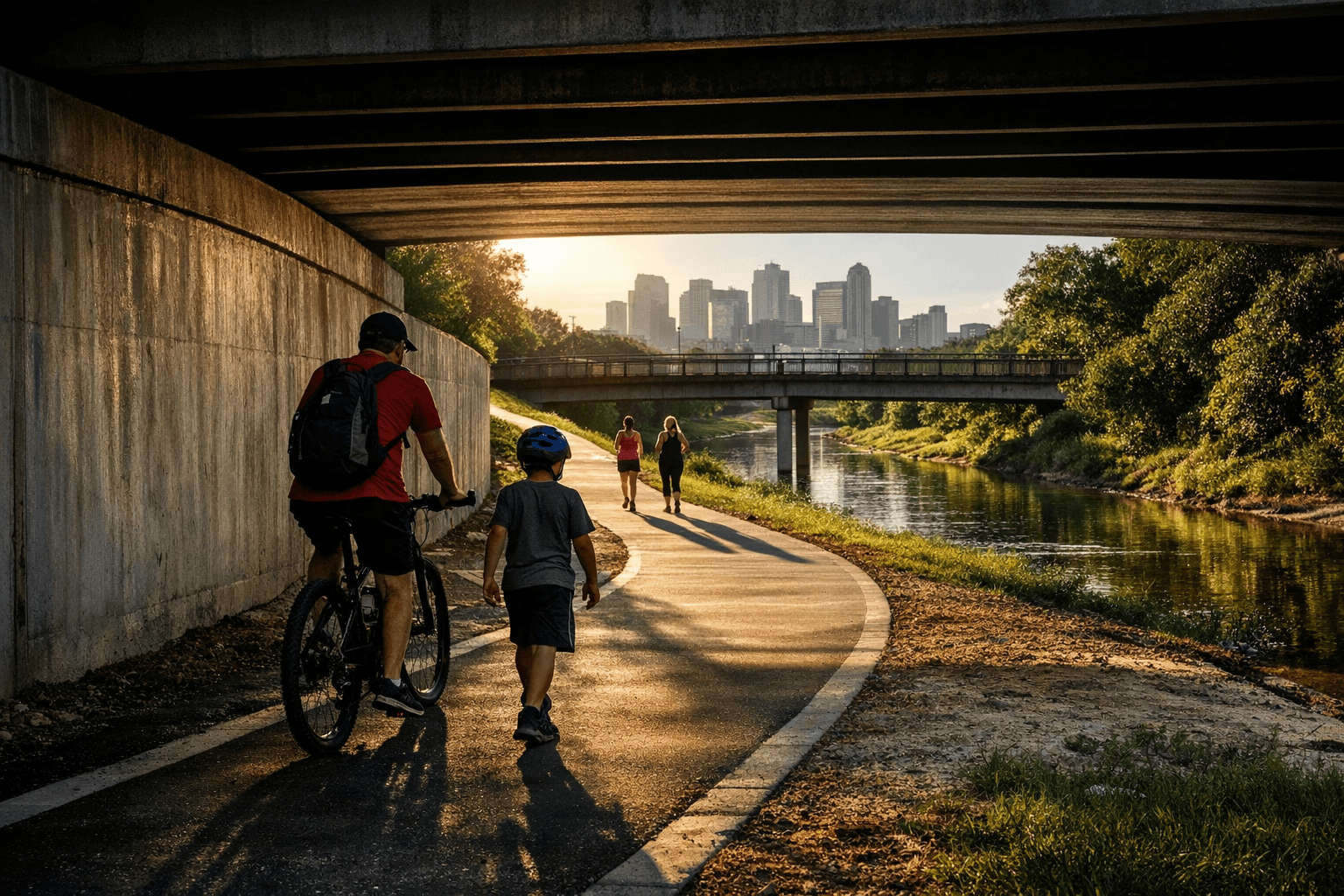
The Houston Parks Board and its partners have completed roughly 4.4 miles of new trails and undercrossings in Meyerland, delivering a mix of safety and connectivity improvements that matter to neighborhood residents and workers commuting to nearby commercial centers and the Texas Medical Center. The project, finished in early January, adds a one-mile, 10-foot-wide hike-and-bike trail, seven new underpasses and replacement of an older asphalt trail extending from Loop 610 to South Gessner Road.
The undercrossings remove the need for pedestrians to cross busy streets such as South Rice Avenue, Hillcroft Avenue and Braeswood Boulevard, creating continuous, signal-free crossings at key north-south corridors. That directly affects everyday trips to grocery stores, retail centers and transit stops, and gives more people a viable walking or biking route to career hubs without the risk and delay of navigating heavy automobile traffic.
Work is ongoing. Houston Parks Board is out to bid on a project to build a new lower-shelf trail from South Rice Avenue to Stella Link Road that will include a pedestrian bridge over Willow Waterhole Bayou and eventually tie into the Texas Medical Center. A separate planned segment would link downstream from Buffalo Bayou Speedway to Hermann Park. The ultimate aim is a seamless trail system from Gessner Road to the Texas Medical Center and Hermann Park, a scope that encompasses about 10 miles of additional trails and underpasses.
Funding for the Meyerland work and the planned extensions is shared among Houston Parks Board, Harris County Precinct 4 and the city of Houston. The Parks Board is targeting completion of $25 million worth of trails and pedestrian bridges by 2030 and continues to seek public and private dollars to expand the Bayou Greenways system and nearby parks. If the targeted $25 million is applied across the roughly 10-mile expansion, the projects would average about $2.5 million per mile, a rough metric that helps frame the scale of investment required for continuous, grade-separated pedestrian connections.
For Harris County, the projects matter beyond recreation. Improved walkability can boost foot traffic for small businesses along Rice and Braeswood, reduce short driving trips, and expand safe, car-free commuting options to a major employment center in the Texas Medical Center. Neighborhood connectivity also affects household decisions about transportation, health and property use as the region grows.
The takeaway? These new paths are more than sidewalks and bridges; they are practical shortcuts that can shave risk and time off daily trips. If you live in Meyerland or commute to the Medical Center, expect safer, more direct walking and biking routes over the coming years and watch for construction updates as the network fills in.
This article was produced by Prism’s automated news system from verified source data, official records, and press releases, then run through automated quality and moderation checks before publishing. The system is built and supervised by the people who set the standards it runs under. Read our full AI policy.
Did this article answer your question?