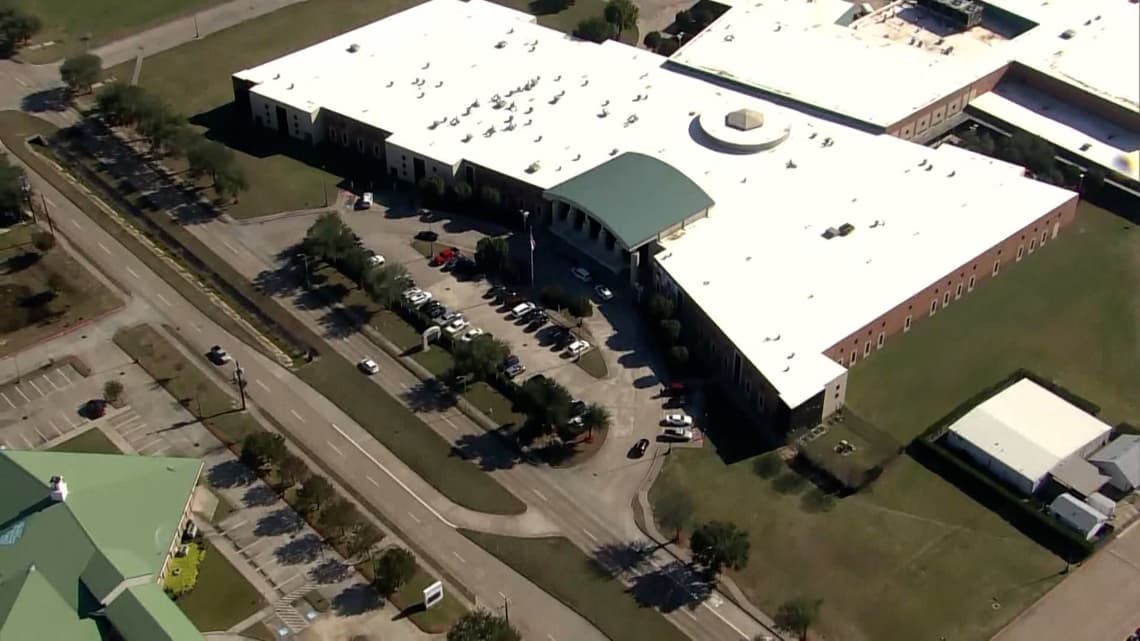
Spring Branch ISD earns national recognition as Texas reading scores slip
Texas students slipped farther behind in reading, but Spring Branch ISD climbed enough to earn national recognition as one of 108 districts on the rise.

Texas students are still losing ground in reading, but Spring Branch ISD is moving the other way. In a national education scorecard built from state test data and NAEP results, Texas ranked 25th out of 35 states in reading growth and 28th out of 38 states in math, while Spring Branch was named one of only 108 districts nationwide, and the only district in Texas, recognized as a District on the Rise.
The contrast matters for Harris County families because the statewide slide is not small. Before the pandemic, Texas students were roughly half a grade level behind the national average in reading. Six years later, they had slipped to about three-quarters of a grade level behind. Harvard’s Tom Kane said the pandemic was “the mudslide” after years of erosion in student achievement, and said the learning recession began about a decade ago.

Spring Branch’s numbers point in a different direction. In the Education Recovery Scorecard’s district report, the district’s 3-8 reading performance improved from minus 0.53 grade-level equivalents relative to the 2019 national average in 2019 to 0.19 in 2024, a gain of 0.72. Math moved from 0.22 to 0.64 over the same period, a gain of 0.42. The district outperformed similar systems and was identified as rising in both subjects faster than its peers.
That progress did not happen in a vacuum. Since Dr. Jennifer Blaine became superintendent in 2019, Spring Branch ISD has centered its work on literacy, numeracy, English learners, student supports, and Career and Technical Education. District leaders say that strategy has been paired with data-driven instruction, research-based best practices, early literacy and numeracy, and stronger instructional leadership. Blaine tied the recognition to teachers, principals, support staff, and campus leaders, and to the district’s T-2-4 vision for preparing students for a technical certificate, military training, or a two- or four-year degree.
Spring Branch’s comparison set in Texas included Northside ISD, Austin ISD, North East ISD, Midland ISD, and Calallen ISD. The broader scorecard, produced by researchers at Harvard University, Stanford University, and Dartmouth College, covered 8,719 districts in 43 states and about 35 million students in grades 3-8. It also flagged chronic absenteeism, defined as missing more than 10% of the school year, as one of the biggest barriers to recovery. For Houston-area districts, Spring Branch now offers a concrete example of what steady reading and math gains can look like when instruction stays tightly focused.
This article was produced by Prism’s automated news system from verified source data, official records, and press releases, then run through automated quality and moderation checks before publishing. The system is built and supervised by the people who set the standards it runs under. Read our full AI policy.
Did this article answer your question?