Texans’ Toro District plan raises traffic, taxpayer concerns in Harris County
The Texans’ 83-acre Toro District could bring 17,000 jobs, but Harris County taxpayers may still help pay for roads, drainage and a county hub in Bridgeland.
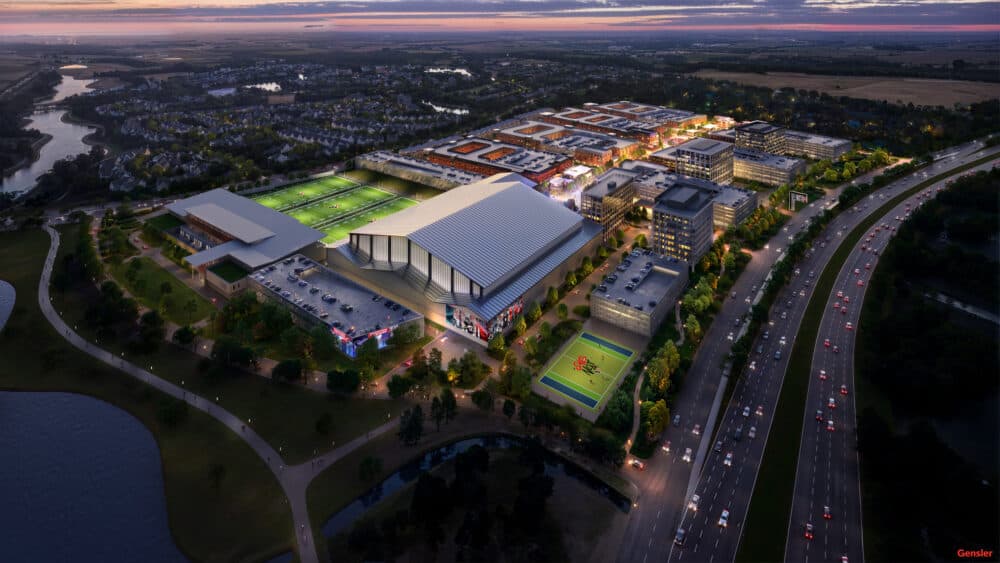
The Texans’ planned Toro District could put county tax dollars into roads, drainage and a community services hub in Bridgeland, even as the team says its own headquarters and practice facility will not be publicly financed. For northwest Harris County, the question is no longer just where the Texans will train. It is how much public infrastructure will be built to support a privately branded development that is expected to reshape traffic west of the Grand Parkway and off Peek Road.
The project covers 83 acres in Bridgeland, with a 22-acre headquarters and training complex at its core. The Texans said on Feb. 12 that the district could produce about $34 billion in long-term economic impact and more than 17,000 jobs over time. First public renderings were unveiled on Feb. 25, showing a mixed-use district tied to the club’s new global headquarters. The package goes far beyond football: restaurants, shopping, hotels, healthcare facilities, parks, county offices, youth sports fields, residences and the team’s new headquarters and practice facility are all part of the plan. Public reporting has said the project is expected to open in 2029.

The public-money issue is where the pitch gets sharper. Houston Public Media reported that Harris County officials said no taxpayer money would be used to build the Texans’ facilities, but county taxpayers would help pay for infrastructure tied to the project, including roads, drainage improvements and a community services hub inside the complex. The total cost of the broader mixed-use district has not been revealed, leaving residents to judge the scale of the public commitment without seeing the full price tag.
That matters in Cypress, where Bridgeland sits in one of the county’s fastest-growing corridors. Harris County Precinct 3, led by Commissioner Tom S. Ramsey, covers much of the area, and Precinct 4 also has a role in local coordination. One report said Harris County is projected to grow nearly 40 percent over the next 25 years, which helps explain why county leaders and the Texans are selling Toro District as a growth play. It also explains why neighbors are watching closely for the cost of congestion, road work and additional strain on already busy suburban infrastructure.
For supporters, the promise is jobs, amenities and a new civic-commercial center in northwest Harris County. For taxpayers, the ledger is less clear: public roads, drainage and county facilities on one side, and a private sports franchise’s long-term economic claims on the other. The true test will be whether Toro District delivers enough lasting local value to justify the traffic and infrastructure burden it will bring.
This article was produced by Prism’s automated news system from verified source data, official records, and press releases, then run through automated quality and moderation checks before publishing. The system is built and supervised by the people who set the standards it runs under. Read our full AI policy.
Did this article answer your question?