Brooksville Garage Fire on Easter Sunday Caused by Battery Charger
A battery charger set a Brooksville garage ablaze on Easter Sunday morning, the kind of incident tied to more than half of all residential battery fires in the U.S.
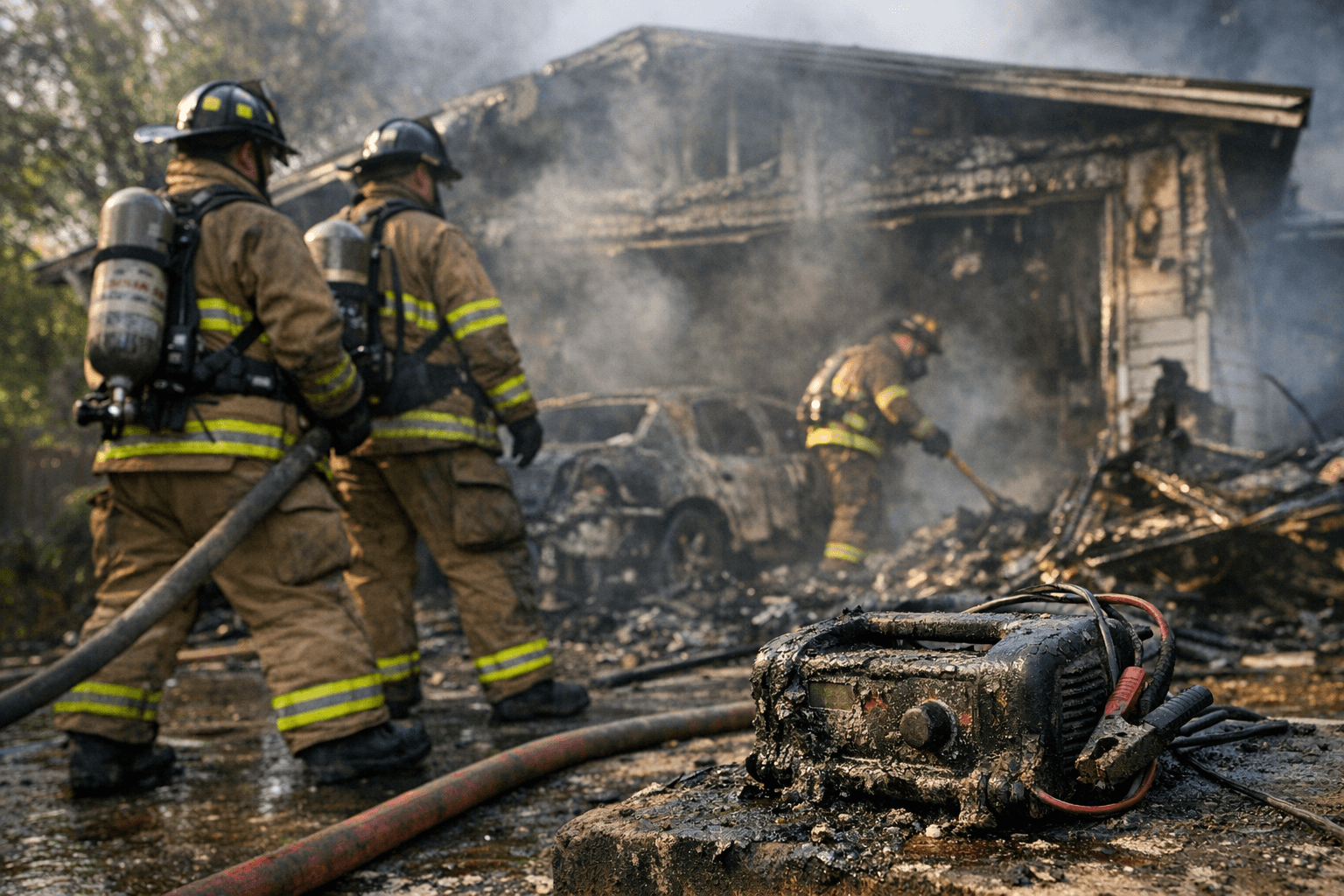
A battery charger ignited a garage fire early Easter Sunday at a home in the 2000 block of Dog Leg Court in Brooksville. Hernando County Fire Rescue crews contained the blaze to the garage, and no occupants were injured.
The Dog Leg Court fire is far from an anomaly. The Consumer Product Safety Commission has found that roughly 54% of residential fires involving batteries stem from overcharging or the use of incompatible chargers. What makes these fires especially dangerous is their speed and heat: while a standard house fire burns at around 1,000 degrees Fahrenheit, a failing lithium-ion battery can spike to 1,800 degrees in seconds and sustain temperatures approaching 2,000 degrees through a chemical chain reaction called thermal runaway. A battery in distress can also release toxic gas before any visible smoke or flame appears, leaving little time to react.
Garages are among the most common ignition points because residents routinely charge power tools, e-bikes, lawn equipment, and other battery-powered devices there, often unattended and overnight. Homeowners insurance under dwelling coverage generally applies to attached garage fires, but policies vary, and fires tied to negligent charging practices can complicate claims. Reviewing coverage terms before an incident is far less costly than disputing them after one.
HCFR urges residents to use only the charger that shipped with a device, since off-brand alternatives routinely deliver incorrect voltage. Avoid charging overnight or leaving the home while a battery is actively charging. Keep charging devices off combustible surfaces such as cardboard, wood shelving, and cloth. Any battery that is swollen, cracked, or unusually hot should be unplugged immediately and not recharged. Smoke alarms belong in the garage as well as inside the home.
Old or damaged lithium-ion batteries should never go in household trash or curbside recycling, where they routinely ignite fires in collection trucks and at processing facilities. The Call2Recycle program maintains a searchable directory of certified drop-off locations by zip code, including participating retailers throughout Hernando County.
This article was produced by Prism’s automated news system from verified source data, official records, and press releases, then run through automated quality and moderation checks before publishing. The system is built and supervised by the people who set the standards it runs under. Read our full AI policy.
Did this article answer your question?