Chinsegut Hill blends Florida history, preservation and weekend tours
Weekend tours open Chinsegut Hill’s Manor House, but the deeper draw is a hilltop site where Brooksville history, conservation and public programming still overlap.
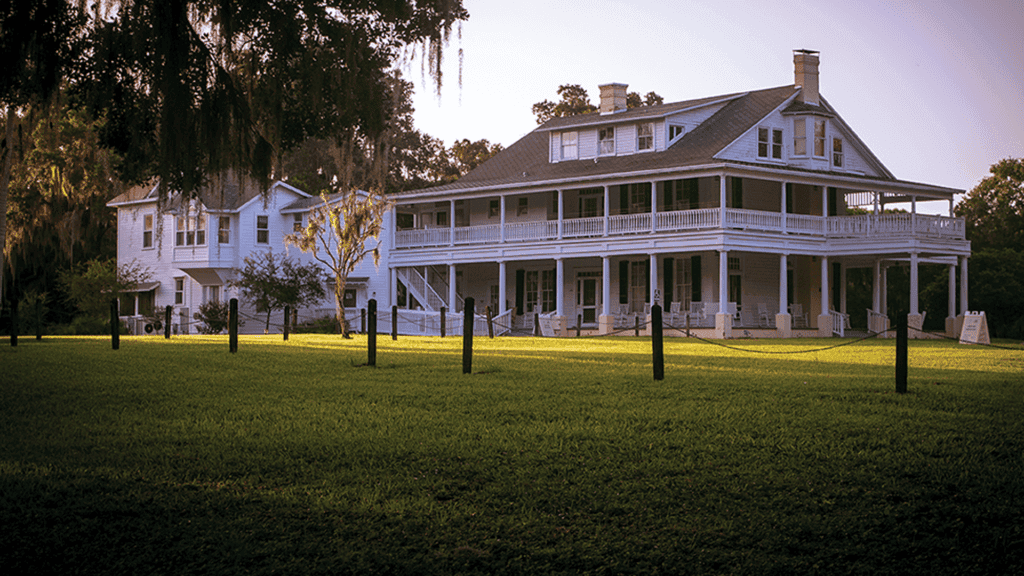
Chinsegut Hill gives Hernando County something rare: a weekend house tour that opens into a much larger story about land, labor, memory and preservation. The Manor House sits about five miles north of Brooksville on one of Florida’s highest points, and the experience reaches beyond the rooms inside it into a 114.5-acre landscape that is still being managed as both a historic site and a living preserve.
A visit that starts with the house and expands outward
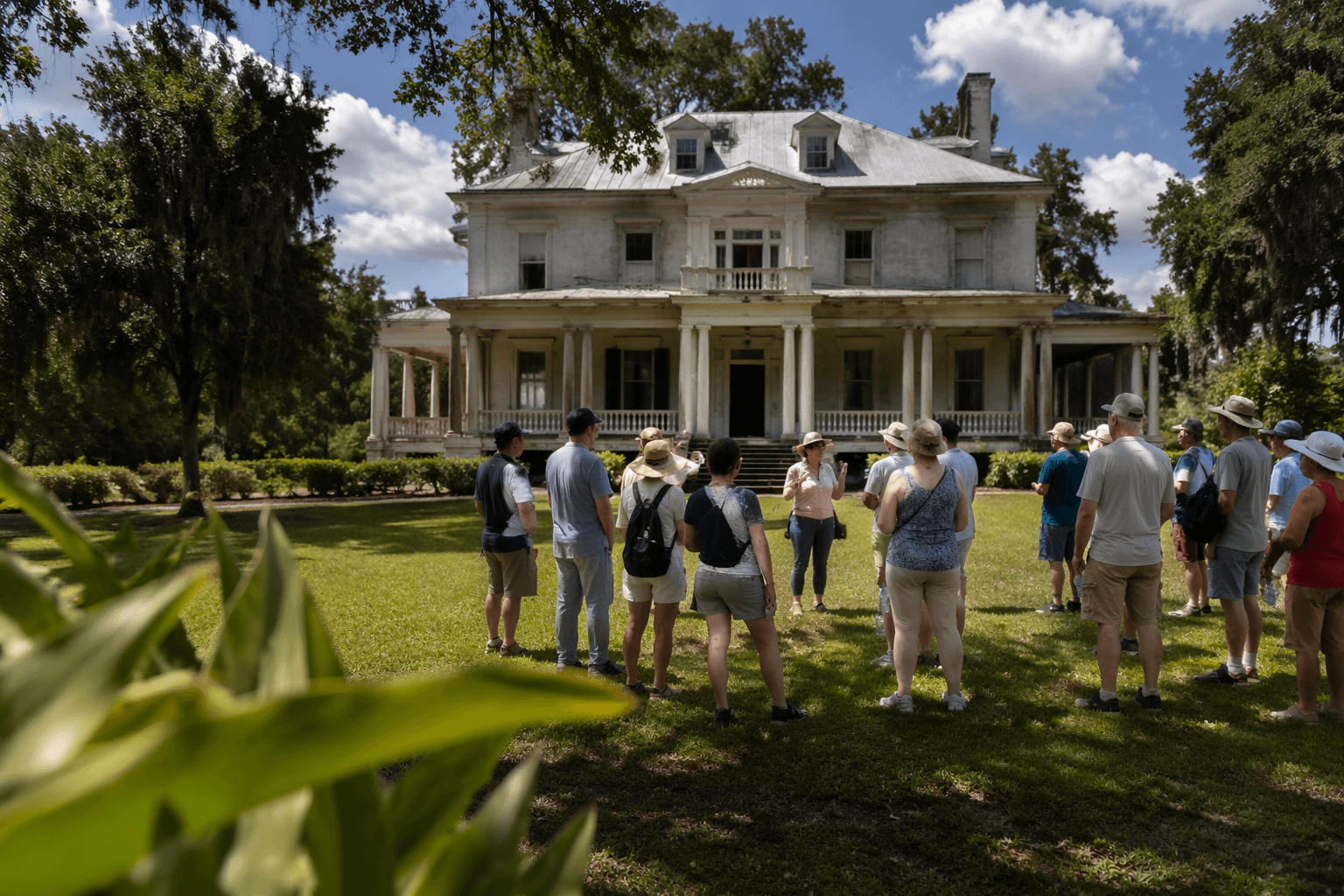
Weekend tours at Chinsegut Hill run Saturdays and Sundays at 10 a.m., noon and 2 p.m., and the guided visit lasts about 45 minutes. Admission is $10 for adults, $5 for children ages 6 to 12, and free for members and children 5 and under. Visitors do not just move through a preserved house museum; they also encounter scenic walking trails, broad views of the Florida landscape and artifacts and furniture that span different eras of the property’s long life.
That mix is what makes the site feel different from a standard historic home stop. The Manor House is part of a broader interpretive landscape where the building, the grounds and the public programming all work together, so a trip can be as much about the hill itself as about the house on it.
A property shaped by several eras of Florida history
The land’s documented history stretches back before the current name existed. Bird M. Pearson staked a claim on 5,000 acres in 1842 and called the place Tiger Tail Hill. He built the Manor House east wing in 1847, and later residents expanded it beginning in 1852, giving the house a physical record of the region’s changing uses over time.
In 1904, Raymond Robins and Margaret Drier Robins bought the property and renamed it Chinsegut Hill. The name came from an Inuit word meaning “a place where lost things are found,” a fitting description for a site that has held so many different lives. The Robinses turned the estate into a retreat for activism on behalf of workers, women and the poor, and their guests included Thomas Edison, Senator Claude Pepper, Marjorie Kinnan Rawlings, J.C. Penney and Helen Keller.
The property’s next chapters kept adding layers rather than erasing the old ones. During the Great Depression, the Robinses donated Chinsegut to the federal government and worked with the Department of Agriculture on an experimental station for Florida farmers. New Deal workers built two cabins in 1933, and the University of South Florida acquired the property in 1958 for use as a conference center. That sequence helps explain why the site has never fit neatly into a single category: it has been plantation land, a reformist retreat, an agricultural experiment, a conference center and now a public historic site.
Why the Manor House is nationally recognized
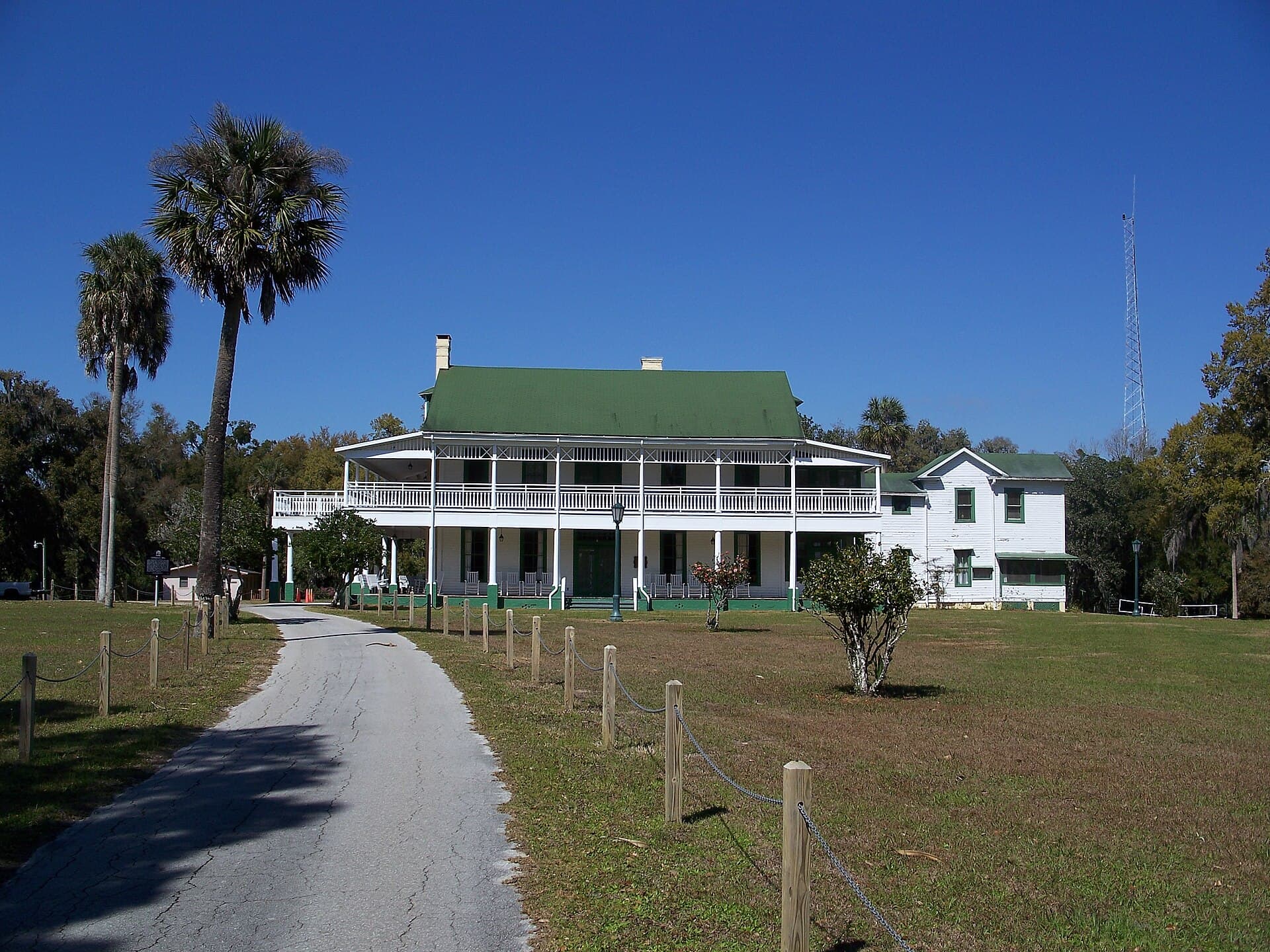
The Chinsegut Hill Manor House was listed on the National Register of Historic Places on November 21, 2003. The National Park Service entry identifies the property as significant for Exploration/Settlement and Architecture/Engineering, with periods of significance running from 1825 to 1974 and significant years including 1847, 1852 and 1878.
That designation matters because it confirms the house is not only locally meaningful but also part of a larger national record of historic places. The building’s age, its layered additions and its connection to major shifts in Florida settlement and land use are all built into its preservation status.
Preservation here is a working system, not a frozen display
Hernando County’s 2022 management plan describes Chinsegut Hill as a 114.5-acre property, with about 16 acres serving as the Retreat Center and the rest managed as natural areas and preserve land. The county says the state land lease expires May 31, 2063, which gives the site a long-term framework for stewardship rather than a short-term protective measure.
The plan also notes that the property contains three National Register sites, identified as #8HE496, #8HE673 and #8HE269. Habitat management is coordinated through a Memorandum of Agreement with the Florida Forest Service, and that agreement is automatically renewable through 2029. On the ground, that work includes invasive plant control, prescribed fire, tree thinning and mowing, along with ongoing habitat restoration and development of education hiking trails.
That approach places Chinsegut Hill inside Hernando County’s broader preserve system, where public lands are meant to protect natural resources and distinctive features while still allowing compatible recreation. It is the reason a visitor can walk a trail, tour a historic house and stand in a protected landscape all in the same visit.
How the county and history center share the work
The county’s license agreement with the Tampa Bay History Center gives the center responsibility for curatorial and interpretive services tied to the Manor House and related uses. Those duties include cataloging, condition assessment, curriculum materials and volunteer docent training, along with coordination around special events, cabins, the conference center and education buildings.
That arrangement is the reason the site reads as a community asset rather than a static display. It keeps the interpretive work active, gives volunteers and educators a place in the operation, and allows the property to serve multiple public functions at once. In practical terms, that means Chinsegut Hill is not just preserved for viewing; it is maintained for teaching, gathering and walking.
A site that still carries civic meaning
Chinsegut Hill also has become a place for public remembrance, including Florida Emancipation Day programming. The Tampa Bay History Center held an event there on May 18, 2024, with Dr. Gary Ellis, Rodney Kite-Powell and Dr. Michael Jones discussing the site’s significance and archaeological findings, and with free hourly tours in partnership with Pasco-Hernando State College. Florida officially emancipated its enslaved population on May 20, 1865, and May 20 is observed as Florida Emancipation Day.
That programming matters because it connects the site’s plantation era and its enslaved labor history to a present-day public conversation about freedom, labor and memory. Chinsegut Hill’s value in Hernando County now lies in that balance: visitors can see the house, walk the grounds and take in the views, while the county and its partners keep turning the property into a place where Florida’s past remains visible, usable and openly interpreted.
This article was produced by Prism’s automated news system from verified source data, official records, and press releases, then run through automated quality and moderation checks before publishing. The system is built and supervised by the people who set the standards it runs under. Read our full AI policy.
Know something we missed? Have a correction or additional information?
Submit a Tip