Hernando County commissioners oppose deep-well landfill leachate plan
Hernando commissioners unanimously opposed a landfill plan that could send leachate 2,100 feet underground, warning it could put the county’s drinking-water aquifer at risk.
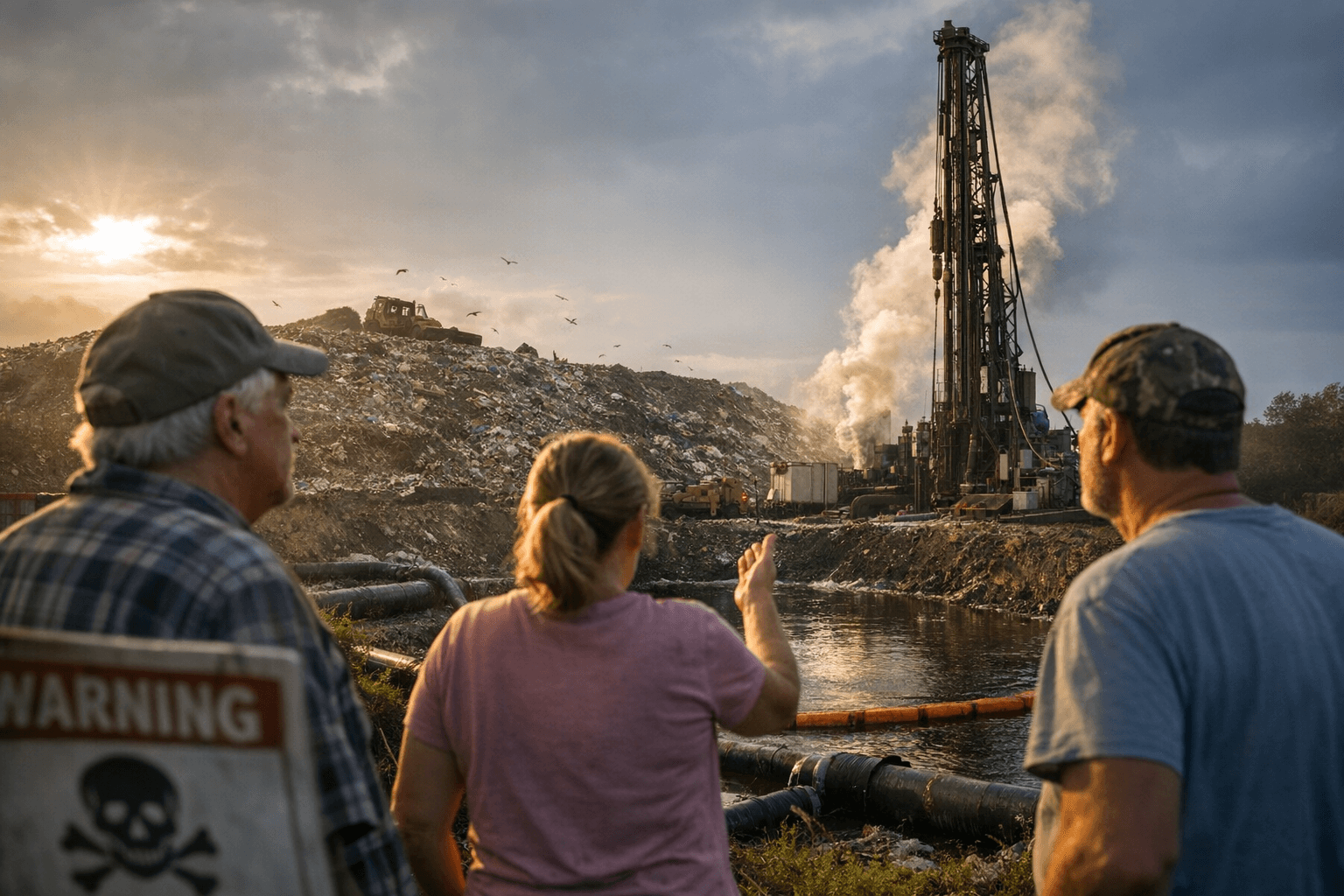
Hernando County commissioners unanimously opposed a plan tied to the Heart of Florida Landfill that would use deep well injection to dispose of landfill leachate, the contaminated water left after waste has been filtered. The board treated the issue as a regional drinking-water threat, not a routine permit matter, because the proposed well would go about 2,100 feet below the surface through multiple water layers and confining zones before reaching the injection area.
The concern in Hernando is straightforward: the county’s water system draws from the Floridan aquifer through deep wells, and county ordinance language says groundwater is the principal source of potable water in Hernando County. Officials also point to the county’s groundwater structure, where the superficial aquifer sits near the surface and the Upper Floridan aquifer lies deeper below, as reason to take the landfill proposal seriously even though the landfill itself is in Sumter County.
Florida’s Department of Environmental Protection says Class I wells are used to inject hazardous waste, nonhazardous waste or municipal waste below the lowermost underground source of drinking water, and the agency says there are more than 180 active Class I wells in Florida. Supporters of the concept say that kind of deep injection is the regulated method Florida allows when the well is designed to protect drinking water sources. Critics say that does not erase the risk to an aquifer that serves communities across central Florida.
Commissioner John Allocco was especially blunt, calling the idea hypocritical because it clashes with Hernando County’s public emphasis on protecting waterways and water quality. The board’s vote also reflected a broader local view that residents should not be asked to live under strict water rules while governments and companies pursue disposal shortcuts that could threaten the region’s drinking supply.
The landfill’s leachate problem is already significant. Agenda materials in Sumter County say the Heart of Florida Landfill handled about 12 million gallons of leachate in 2023 and previously stored it in 3.5-million-gallon bladders and 240,000 gallons of above-ground tanks before 2025. The City of Bushnell issued a formal notice on June 26, 2025, saying it intended to revoke the landfill’s construction and operating permit after permit-condition and regulatory violations were identified.
Sumter County Chairman Don Wiley has asked DEP Secretary Alexis Lambert to provide independent, fact-based information and to attend a June public meeting on the proposed injection well near Lake Panasoffkee. Rep. Samantha Scott also warned state officials that the well could endanger Florida’s underground aquifer, which she described as the area’s major source of drinking water. Hernando commissioners now plan to send their own letters to DEP, local lawmakers and neighboring governments, making clear that the county wants a say before any permanent disposal decision is finalized.
This article was produced by Prism’s automated news system from verified source data, official records, and press releases, then run through automated quality and moderation checks before publishing. The system is built and supervised by the people who set the standards it runs under. Read our full AI policy.
Did this article answer your question?