Hernando County honors problem-solving court team for May recognition
Hernando County recognized its problem-solving court team as Florida marked May for treatment-focused justice. The local Adult Drug Court and Veterans’ Treatment Court tied the ceremony to a statewide system handling thousands of cases.

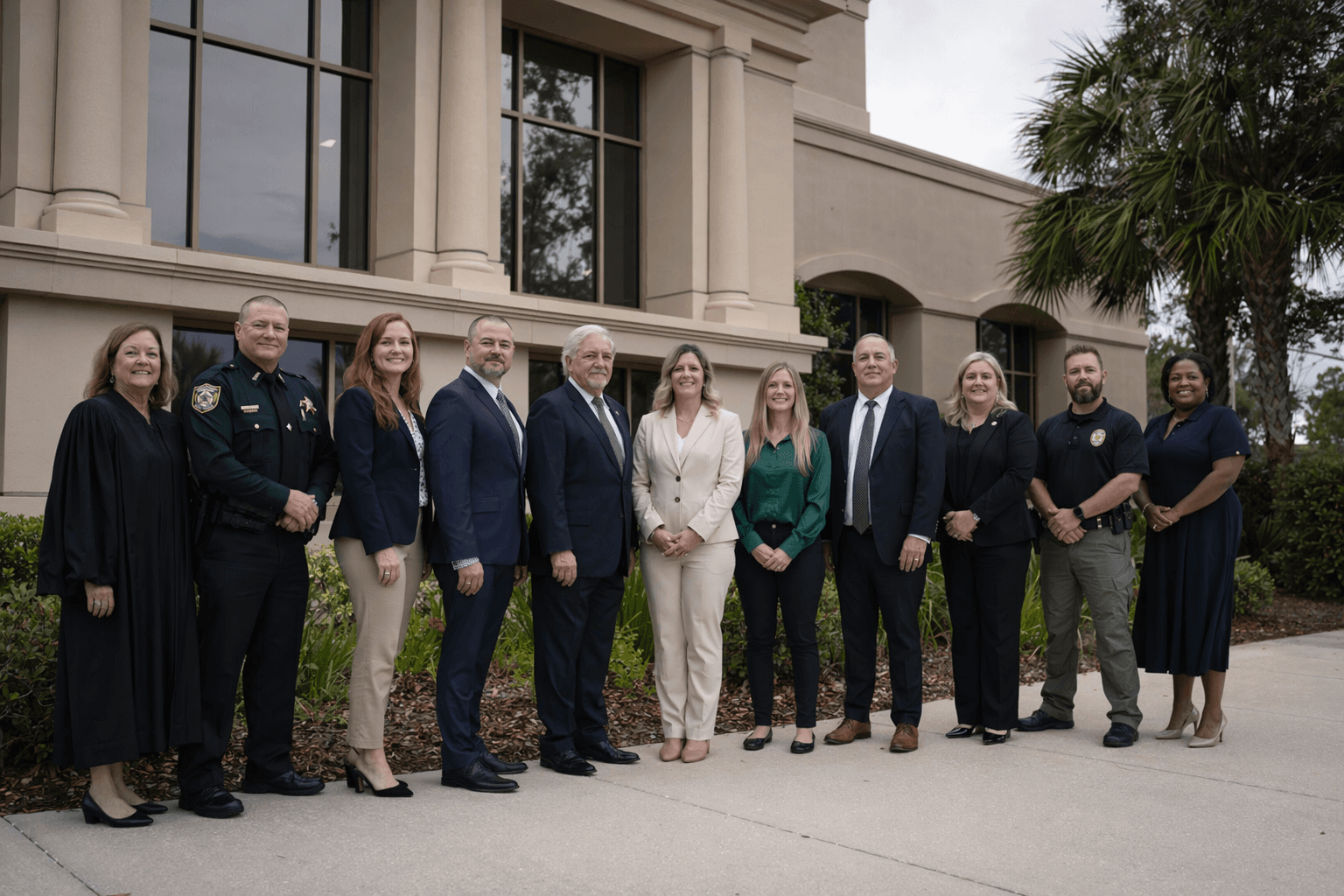
A proclamation from the Hernando County Board of County Commissioners put a spotlight on a corner of the local justice system that works far from the traditional courtroom model: the county’s problem-solving court team. Operations Manager Bryceann Twitty was recognized during the ceremony as Hernando County joined Florida courts in marking May as National Problem-Solving Court Month.
The observance carries more than symbolic weight. The Florida Supreme Court’s 2026 proclamation designated May as a month of recognition for problem-solving courts and a month of awareness, training and action around opioids, stimulants and related substance-use treatment and recovery. Across Florida, courts say the model is meant to respond to mental health and substance-use disorders with treatment, supervision and accountability rather than relying only on prosecution and incarceration.
In Hernando County, that approach is built into the Fifth Judicial Circuit’s problem-solving court programs. Officials describe them as a structured, non-adversarial alternative for eligible non-violent defendants, with participants receiving evidence-based treatment, supervision and random drug testing. The Hernando County Adult Drug Court runs as a four-phase program that normally lasts 15 to 24 months, with regular court appearances, random drug screens, counseling and peer support group attendance all built into the process.
The county also operates a Veterans’ Treatment Court for people whose military service is tied to mental illness, substance abuse or other mental health conditions. That program reflects a broader shift in how courts handle cases where behavior is linked to trauma, addiction or untreated illness, giving judges, treatment providers and supervision teams a shared role in trying to stabilize lives while holding participants accountable.
The local recognition came as Florida courts reported 49 adult drug courts, 13 juvenile drug courts, 13 dependency drug courts and four DUI courts in operation as of March 2026. Florida’s drug courts admitted 3,324 participants in fiscal year 2024-25, underscoring how widely the model is being used statewide. Its roots go back to 1989, when the first problem-solving court in the United States was created in Miami-Dade County in response to the crack cocaine epidemic, a history that gives the Hernando ceremony added significance well beyond Brooksville.
This article was produced by Prism’s automated news system from verified source data, official records, and press releases, then run through automated quality and moderation checks before publishing. The system is built and supervised by the people who set the standards it runs under. Read our full AI policy.
Did this article answer your question?