Hernando DOGE cites data delays, transparency gaps in spending review
A Brooksville merchant said event road closures cut revenue by 25 percent, as DOGE found 12.8 percent of county transactions still lack a named spender.

A Brooksville merchant said road closures tied to Brooksville Main Street events cut revenue by 25 percent, while Hernando County’s efficiency reviewers flagged 12.8 percent of transactions that still arrive through Bank of America without identifying who actually spent the money.
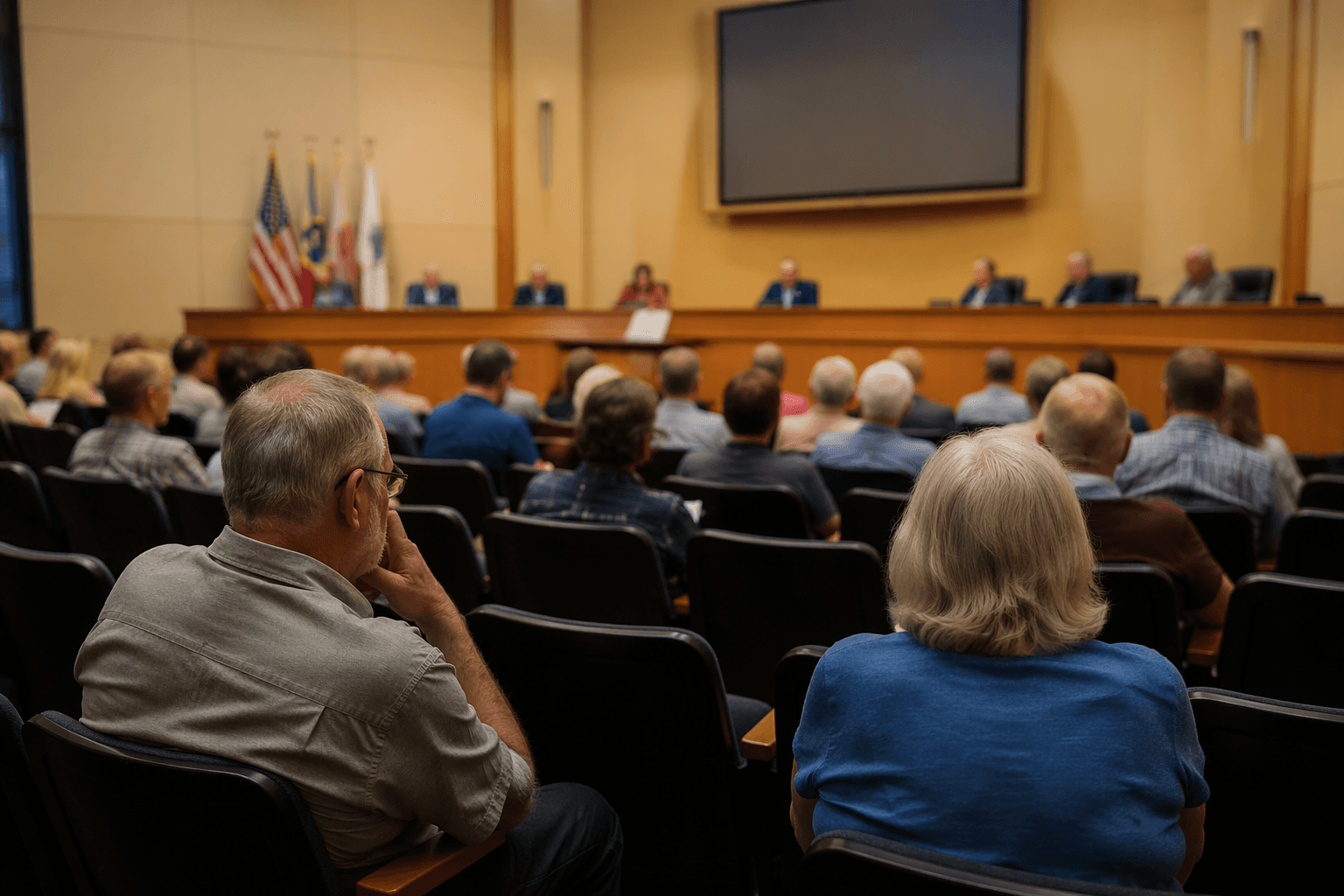
Those two findings capture the first real test of the Hernando County Delegation on Government Efficiency, the nine-member volunteer advisory committee commissioners created on a 5-0 vote in April 2025 to look for waste, unnecessary spending and better taxpayer value. The committee met with county commissioners on April 28 and came back less with instant savings than with a warning: the county’s financial picture is still too hard to read cleanly.
Chairman Paul Passarelli said the review has been slowed by data logjams and by the county’s Tyler software conversion. County Clerk of Court and Comptroller Doug Chorvat said the new system is still being implemented and is expected to be fully operational in 2027. That means DOGE is trying to evaluate spending while the accounting tools underneath it are still in transition.
The committee’s transparency concern centered on the 12.8 percent of transactions being reported only as processed by Bank of America, with no clear identification of the person or department that made the purchase. For taxpayers, that is more than a bookkeeping problem. It makes it harder to trace where money went, who authorized it, and whether repeated purchases point to waste or simply poor reporting.
Passarelli also raised the return on investment for Brooksville Main Street events, saying one merchant reported a 25 percent revenue loss during closures tied to those events. That is the kind of local tradeoff county leaders will have to confront if they want events downtown to keep public support. DOGE suggested a zero-baseline model, meaning future events should prove their worth with private backing rather than automatically drawing county dollars.
The committee also questioned sponsored initiatives and business incubators, including the Innovation Collective, arguing that future funding should come only after tighter vetting and measurable performance standards. That recommendation could matter if it leads to a harder line on outside programs that have relied on county support without clear benchmarks.
No decisions were made at the meeting and no follow-up date was announced, so the immediate effect is political and procedural. Still, the early movement on the county’s efficiency push is now clear: taxpayers should watch first for better transaction data, stricter funding rules for events and incubators, and whether the county can finish the software overhaul before DOGE’s next round of recommendations turns into actual budget cuts or service changes.
This article was produced by Prism’s automated news system from verified source data, official records, and press releases, then run through automated quality and moderation checks before publishing. The system is built and supervised by the people who set the standards it runs under. Read our full AI policy.
Did this article answer your question?