Low Dissolved Oxygen Recorded at Weeki Wachee Springs Raises Local Concerns
The Southwest Florida Water Management District posted water-quality readings for Weeki Wachee Springs on Jan. 8, 2026, showing a dissolved oxygen level of 1.74 mg/l alongside other baseline parameters. The reading highlights ongoing ecological pressures on the first-magnitude spring and has potential implications for wildlife, recreation and local water management decisions.
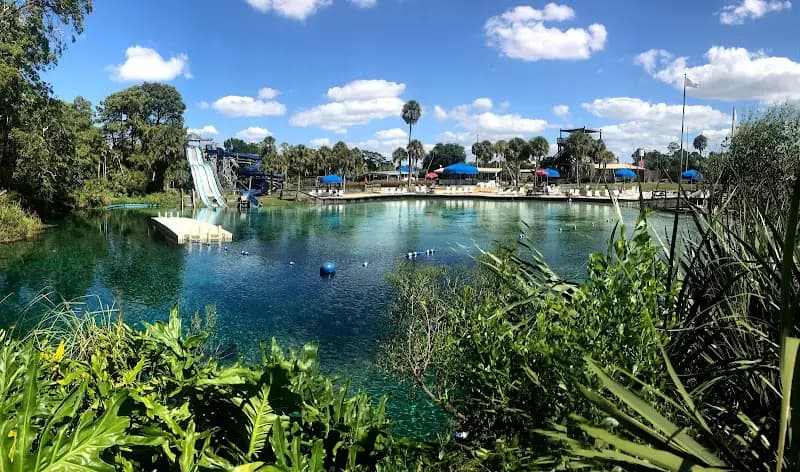
The Southwest Florida Water Management District (SWFWMD) updated its Weeki Wachee Springs page on Jan. 8, 2026, reporting current hydrologic and water-quality readings taken at 4:37 p.m. Those readings show a water temperature of 75° F, pH of 7.49, specific conductance of 375 µS/cm, salinity of 0.18 parts per thousand and dissolved oxygen of 1.74 mg/l.
Dissolved oxygen at 1.74 mg/l is markedly low by common ecological standards for freshwater systems and is a key metric for assessing stress on fish and invertebrate communities. The SWFWMD page also notes broader ecological challenges facing the Weeki Wachee system, including nitrate enrichment, sedimentation and changing salinity. Those stressors can interact to reduce oxygen levels and degrade habitat quality in springs-fed rivers that are central to Hernando County’s environment and economy.
Weeki Wachee is a first-magnitude spring, a classification for springs with very high flows that make them regionally significant for biodiversity, recreation and tourism. The river and spring system support recreational activities such as tubing, kayaking and wildlife viewing that draw locals and visitors. Lower water quality and compromised aquatic habitat can affect those uses as well as fisheries and the health of downstream seagrass and estuarine environments.
Institutionally, the SWFWMD maintains the monitoring page and links to detailed monitoring data and the Weeki Wachee River Surface Water Improvement and Management (SWIM) Plan. That plan and the ongoing monitoring program are the primary local tools for assessing conditions and guiding management. The District’s published readings provide residents and decisionmakers with current measurements to track changes over time.

For Hernando County residents, the readings underscore policy decisions ahead: nutrient management in the spring basin, control of sediment sources, evaluation of groundwater pumping and responses to salinity changes all fall within the suite of actions that affect spring health. Continued, transparent monitoring is essential to distinguish short-term fluctuations from persistent trends and to guide investments in septic upgrades, stormwater improvements and land-use controls.
The SWFWMD springs page provides the data and links to the Weeki Wachee River SWIM Plan for those who want to review measurements and management notes. Monitoring is ongoing, and residents should review the posted data and participate in public processes to ensure local priorities are reflected in management actions.
This article was produced by Prism’s automated news system from verified source data, official records, and press releases, then run through automated quality and moderation checks before publishing. The system is built and supervised by the people who set the standards it runs under. Read our full AI policy.
Did this article answer your question?