PHSC nursing programs post exceptional licensure success, boost workforce
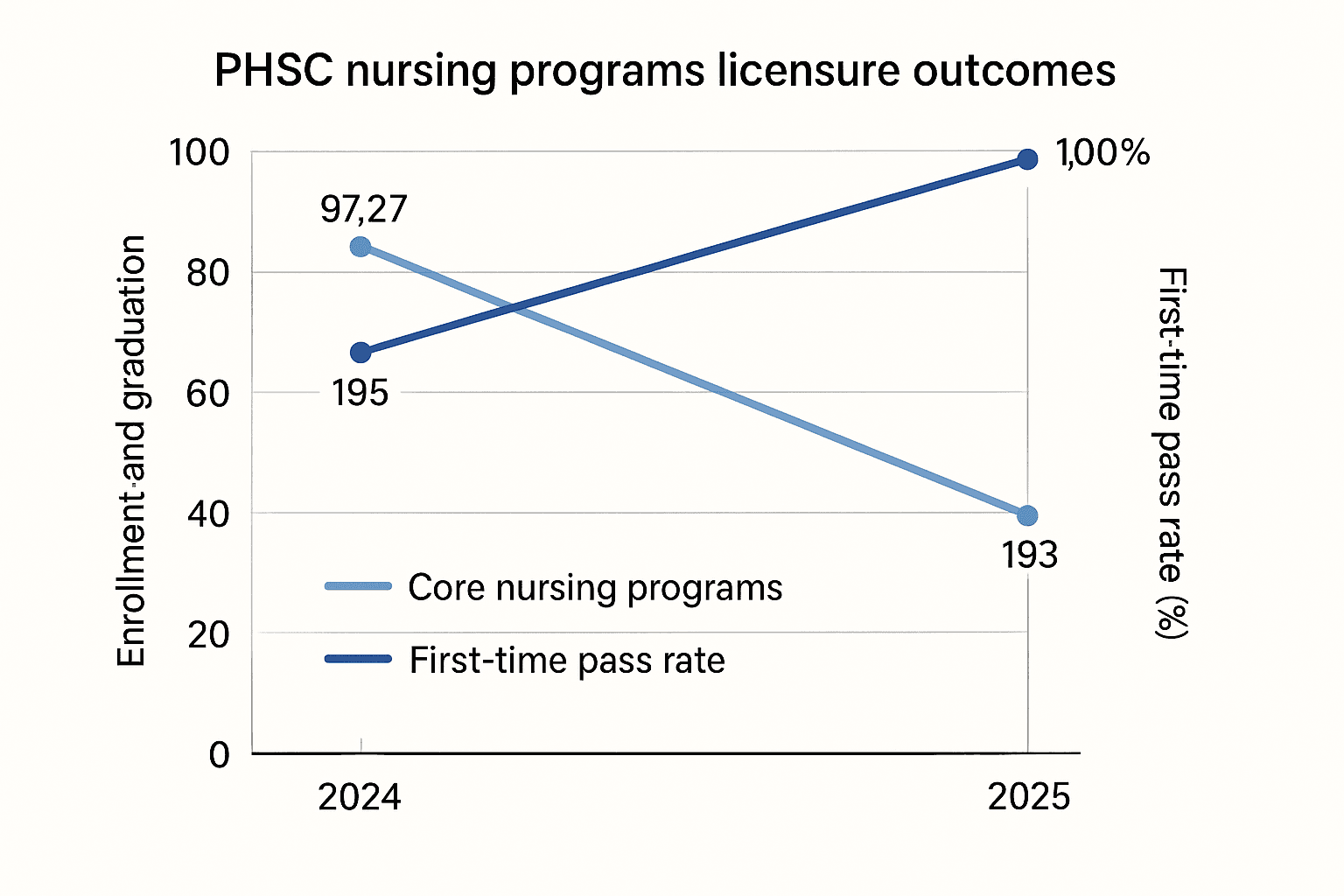
Pasco Hernando State College reported exceptional nursing licensure pass rates on November 19, 2025, with the ADN RN program achieving a 97.27 percent first time NCLEX pass rate and the practical nursing program reaching a 100 percent first time pass rate. The results matter to Hernando County residents because they represent a growing local pipeline of trained nurses ready to address regional staffing needs and improve access to care.

Pasco Hernando State College announced on November 19, 2025 that its nursing programs delivered strong licensure outcomes for the 2024 to 2025 academic year. The college reported a 97.27 percent first time NCLEX pass rate for its associate degree in nursing to registered nurse program and a 100 percent first time pass rate for its practical nursing program. Those results were released as part of an update that included program enrollment and graduation figures.
During the year, PHSC enrolled 409 students across its core nursing programs and graduated 195 nursing students. The college also noted continued enrollment at the start of the new academic year, with 327 students in core nursing programs. PHSC framed the outcomes as a contribution to meeting regional healthcare workforce needs, and the announcement credited faculty and students for the strong performance. PHSC President Eric Hall offered praise for those efforts in the college statement.

For Hernando County the results carry practical implications. Local hospitals, clinics and long term care facilities have been recruiting nurses to keep up with population growth and the health needs of older residents. Increasing the number of locally trained nurses can help reduce vacancy driven strain on providers, shorten recruitment timelines and keep more of the workforce living and working in the community. High licensure pass rates also suggest graduates are better prepared for clinical responsibilities from day one, which can improve patient safety and continuity of care in underserved settings.
The outcomes intersect with broader public health and policy priorities. State and regional workforce planners have highlighted the need to expand training capacity and remove barriers to entry for underrepresented learners. Sustained enrollment and graduation at PHSC supports that objective, but systemic inequities in access to education, childcare and transportation remain obstacles for many prospective students. Local leaders and health systems can build on PHSC results by partnering on clinical placements, offering financial support and creating career pathways that prioritize retention in Hernando County.
As hospitals and community providers continue to assess staffing needs, PHSC graduates will represent a measurable increase in the local talent pool. The college provided the enrollment and graduation figures in its announcement, underscoring the role of community based education in addressing regional health workforce shortages.
This article was produced by Prism’s automated news system from verified source data, official records, and press releases, then run through automated quality and moderation checks before publishing. The system is built and supervised by the people who set the standards it runs under. Read our full AI policy.
Did this article answer your question?