Shoulder health matters for Hernando County’s active older adults
In Hernando County, where more than 57,000 residents are 65 or older, shoulder care can be the difference between staying active and losing independence.
Why shoulders matter so much in Hernando County
Shoulder pain is not just a nuisance for Hernando County’s older adults. It can make the difference between getting through a work shift, finishing a round of golf, lifting groceries, or simply reaching for a cup on a high shelf without help. With an estimated 218,150 residents in July 2024 and about 26.1% of them age 65 and older, the county has a large share of people whose daily routine depends on staying mobile and pain-free.

That matters in a place where recreation and everyday chores overlap. Golf, pickleball, swimming, fitness classes, yard work, travel, and the simple motions of lifting, pushing, and reaching all ask more of the shoulder than many people realize. Florida’s older-adult population is large too, with 5,004,016 residents age 65 and older in 2024, about 22% of the state population. In a county like Hernando, protecting shoulder function is really about protecting independence.
What makes the shoulder so vulnerable
The shoulder is the most mobile joint in the body, and that freedom is also what makes it easy to injure. The American Academy of Orthopaedic Surgeons explains that what most people call the shoulder is actually several joints working together. That design gives people a wide range of motion, but it also leaves the area vulnerable to instability, impingement, pain, and wear over time.
Orthopaedic specialists see a wide range of problems in this area, including rotator cuff tears, bursitis, tendonitis, arthritis, AC joint injuries, fractures, and muscle strains. The American Academy of Orthopaedic Surgeons groups most shoulder problems into four main categories: tendon inflammation or tendon tear, instability, arthritis, and fracture. Millions of people seek care for shoulder problems each year, which is a reminder that this is not a rare complaint and not something older adults should simply try to tolerate.
The warning signs that deserve attention
A shoulder problem often starts small. A sore joint after a game of pickleball, discomfort while putting on a shirt, or a dull ache after yard work may feel manageable at first. But when pain keeps returning, limits range of motion, or makes ordinary tasks harder, it is time to pay attention before the problem becomes a longer-term mobility issue.
Shoulder arthritis can be especially disruptive because it can turn basic motions into painful chores. Brushing hair or reaching for a high shelf can become difficult, and that kind of limitation affects more than comfort. Research on community-dwelling older adults has found that shoulder pain is linked with worse health-related quality of life and lower physical function. For people trying to keep working, caregiving, volunteering, or traveling, that can become a serious quality-of-life issue fast.
How local habits can help or hurt
The rise of pickleball is part of why shoulder care is such a timely issue. Participation in the sport grew from about 4.2 million players in 2020 to more than 24 million in 2025, and the game’s popularity has brought a matching increase in overuse injuries. Florida Orthopaedic Institute notes that shoulder bursitis can occur with overuse and can show up alongside rotator cuff tendinitis, including in sports such as pickleball.
Golf carries its own demands. The National Golf Foundation says it has surveyed Americans about golf participation every year since 1986 and now tracks both on-course and off-course participation, along with regional profiles on participation rates and rounds played. For golfers, shoulder trouble is often tied not just to the swing itself but to stiffness in the trunk and chest that forces the shoulder to compensate. In other words, the shoulder is often the place where problems show up, even when the root issue starts elsewhere.
Daily habits that protect the joint
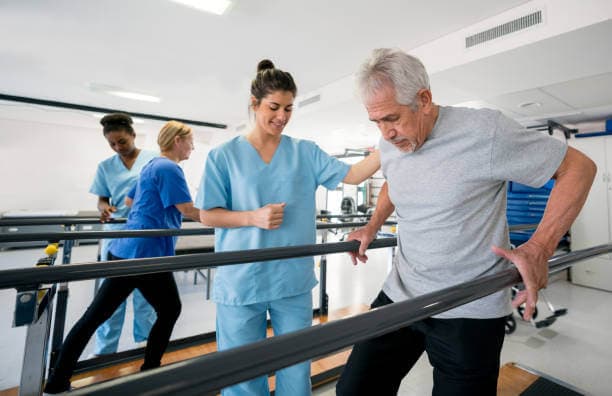
The safest approach is not to stop moving. It is to build shoulder care into the routine the same way older adults might think about blood pressure, balance, or hydration. A structured rotator cuff and shoulder conditioning program can help people return to daily activities and sports after injury or surgery, and it can also help prevent future setbacks.
A useful routine can be done two or three times a week, or as a warm-up before sports or strenuous work. The key is to keep the resistance light, move slowly, and use controlled form rather than trying to power through a workout.
Helpful exercises include:
- Internal rotation
- External rotation
- Rows
- Extension
- Forward flexion
- Abduction
- Adduction
- Shrugs
These movements are not about building bulk. They are about restoring strength, improving control, and keeping the shoulder resilient enough to handle the demands of a walk on the course, a session on the court, or a day of hauling mulch and tools around the yard.
How to stay active without overdoing it
People who play golf or pickleball need to think about more than the shoulder itself. If the chest, back, and trunk are stiff, the shoulder has to take on extra stress. That is one reason warm-ups and flexibility work matter so much. It is also why a gradual return after time off is safer than jumping straight back into a full schedule.
Pickleball players in particular should warm up, increase court time gradually, and avoid pushing through repeated overhead shots when the shoulder is already sore. The American Medical Association has warned that the sport’s explosion in popularity has come with injury risk, especially when people ignore soreness and overuse. The lesson is straightforward: consistency protects the shoulder better than weekend bursts of intensity.
When treatment can preserve independence
Shoulder pain does not always require surgery, but it should not be ignored when it begins to limit daily life. Treatment can range from rest, guided exercise, and activity changes to medical evaluation and more advanced orthopaedic care when needed. The goal is not just pain relief. It is to preserve the ability to dress independently, work, travel, and stay involved in the community.
That matters in Hernando County, where more than one in four residents is already 65 or older and many people want to keep living actively rather than scale back because of a preventable injury. Shoulder health is part of that equation. For older adults who want to keep moving, the best strategy is simple and practical: strengthen early, warm up before stress, respect pain signals, and treat the shoulder as a daily-use joint that deserves regular care.
This article was produced by Prism’s automated news system from verified source data, official records, and press releases, then run through automated quality and moderation checks before publishing. The system is built and supervised by the people who set the standards it runs under. Read our full AI policy.
Did this article answer your question?