Turkey guide notes tough opening as spring birds turn wary in Hernando County
Spring gobblers have turned cautious in Hernando County, forcing hunters to scout harder, change timing, and work within tight Florida rules.
Tough opening, quick adjustments
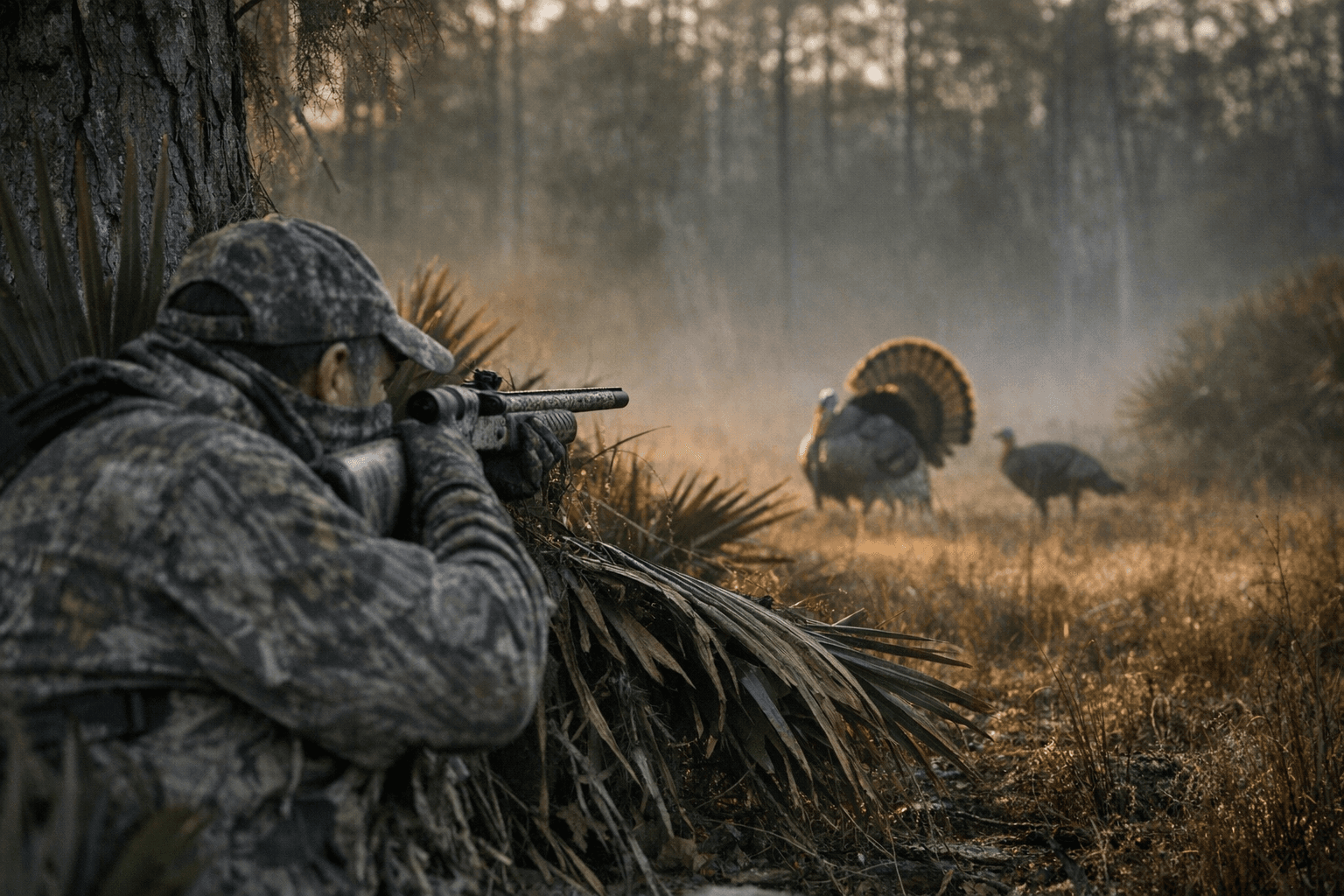
When spring turkeys go quiet early, every hunt gets harder. Toby Benoit says the week has been rough because birds were already showing less activity by opening day in parts of Hernando County, a reminder that the spring woods can change faster than a hunter’s plan.
That matters here because Hernando County sits inside a season that runs on a tight schedule and even tighter rules. In Florida, the spring window south of State Road 70 opened March 7 and runs through April 12 outside the wildlife management area system, while the season north of State Road 70 opened March 21 and runs through April 26. For many local hunters, that means the calendar is already pushing toward the end of the hunt, just as birds are getting wiser.
Why the birds are acting different
The Florida Fish and Wildlife Conservation Commission says wild turkey populations often rise and fall from year to year because of weather, habitat quality, predation, and hunting pressure. That is part of what hunters are feeling on the ground now: birds that were vocal or predictable can suddenly go thin on the ground, move less, or stop responding as quickly as they did earlier in the season.
FWC tracks those changes with habitat and abundance models, which is one reason spring turkey advice can shift from one year to the next. In a place like Hernando County, where hunting often happens on rural land, private tracts, and wooded pockets that still feel wild, that kind of variability is not an abstract wildlife note. It changes when people wake up, where they set up, and how long they sit still waiting for a gobbler to make a mistake.
There is also a Florida-specific reason the season carries extra weight. The Osceola, or Florida wild turkey, lives only on the Florida peninsula. That makes every spring hunt feel a little more local, because these birds are not just part of a pastime. They are part of the state’s outdoor identity.
What hunters are changing right now
When birds turn wary, the adjustments are mostly about patience and precision. The old formula of going to the same spot, calling the same way, and expecting the same response does not work once turkeys start ignoring pressure.
Hunters are making a few practical shifts:
- Scouting earlier and more carefully, especially in areas where birds have gone quiet.
- Reworking timing, because a gobbler that answered at daylight one week may not move the same way the next.
- Cutting down on noisy setups and paying closer attention to wind, cover, and travel routes.
- Being willing to leave a spot and come back later instead of forcing a hunt that is already stale.
Those changes sound small, but they can decide whether a spring morning becomes a long sit or a successful bird. In a county where hunters often plan around weekends, work schedules, and family time, a tougher opening can mean more than lower odds. It can mean more fuel burned, more guide hours spent, and more pressure on the short season to pay off.
The rules matter more when the birds are reluctant
Florida’s turkey rules are strict, and they matter most when success is already hard to earn. Outside wildlife management areas, hunters may take only bearded turkeys and gobblers. The daily bag limit is two, and the season and possession limit is two. Legal shooting hours run from one-half hour before sunrise to sunset.
A hunting license and turkey permit are required unless a hunter is exempt. FWC also prohibits hunting turkeys with dogs, using recorded turkey calls or sounds, or shooting turkeys on the roost. Those limits are not just legal fine print. They shape how local hunters can work a bird, especially when that bird is already acting cautious and not giving many second chances.
Nonresident hunters face another change in 2026. FWC says they cannot hunt wild turkey during the first nine days of the zonal spring turkey season at several wildlife management areas, and they must buy a nonresident annual hunting license rather than use a 10-day nonresident hunting license during spring turkey season. For outfitters, visiting hunters, and families bringing in someone from out of state, that is more than a paperwork detail. It changes trip planning, licensing costs, and the timing of the hunt itself.
A Hernando County season with family at the center
The photo with the column adds a human side to all of this. Frank Pazos and his 11-year-old son Frankie are identified after Frankie harvested his first turkey while hunting with Toby. That kind of moment explains why hunters keep at it even when the birds get smarter and the mornings get harder.
A first turkey is more than a success story. It is a memory tied to a place, a season, and a method that only works when someone is patient enough to wait for it. In Hernando County, where hunting remains part of the outdoor rhythm for many families, those first-bird moments help keep the tradition alive even when the season starts slow.
What this spring means for local hunters
This spring is a reminder that turkey hunting in Hernando County is not about forcing nature into a schedule. It is about reading the land, adjusting fast, and accepting that one quiet week can change the whole outlook for the rest of the season.
For hunters in the county, the practical lesson is simple: expect birds to move differently, hunt smarter than the last setup, and pay close attention to the limited window Florida gives you. With the southern season already moving toward its close, the hunters who adapt fastest are the ones most likely to make the remaining mornings count.
This article was produced by Prism’s automated news system from verified source data, official records, and press releases, then run through automated quality and moderation checks before publishing. The system is built and supervised by the people who set the standards it runs under. Read our full AI policy.
Did this article answer your question?