Hidalgo County Courthouse marks Lordsburg’s rise as county seat
Lordsburg’s courthouse is more than an old building: it still anchors county government at 300 South Shakespeare Street and recalls the railroad town that became Hidalgo County’s seat.
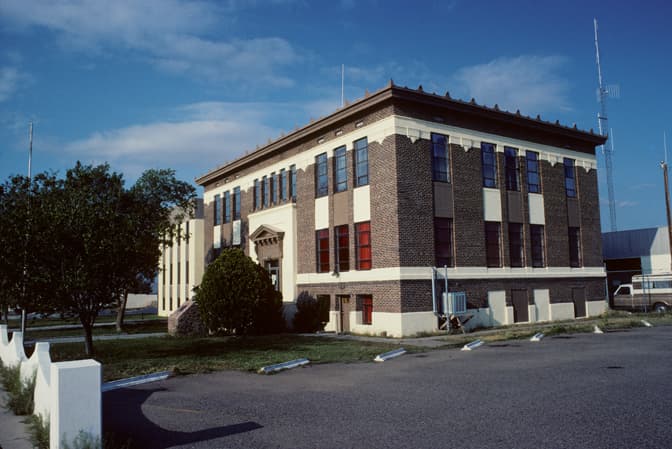
At 300 South Shakespeare Street, the Hidalgo County Courthouse still tells the story of how Lordsburg became the center of county life. The 1926 Neo-Classical Revival building is more than a preserved landmark, because it remains tied to active county administration and court business in the heart of town.
From railroad camp to county seat
Lordsburg’s rise began in 1880, when the Southern Pacific Railroad came through from the west and the first camp took shape around the line. The town grew quickly with railroad workers, freighters, miners, cowboys, ranchers, gamblers and merchants, the mix of people that turns a rail stop into a working community.
Another county history account ties that growth to a specific name, Delbert Lord, a railroad supervisor who chose the site halfway between El Paso, Texas, and Tucson, Arizona. That detail matters because it explains why Lordsburg was not a random settlement on the map, but a planned point on a major transportation corridor, one that naturally developed into the place where county business could be gathered and managed.
A courthouse in that setting was never just a building for files. In a young railroad town with a widening population, it became the place where public records, legal matters, elections and county administration could be handled under one roof. That is what made the courthouse central to Lordsburg’s identity as the county seat, and why the structure still carries more civic weight than nostalgia alone.
The architecture was meant to announce permanence
The National Register nomination identifies the courthouse as a 1926 Neo-Classical Revival-style building, and another verified source describes it as a two-story Neoclassical courthouse designed by Thorman & Frazier. Those details place the building in a familiar tradition for public architecture, one that used classical forms to signal stability, order and authority.
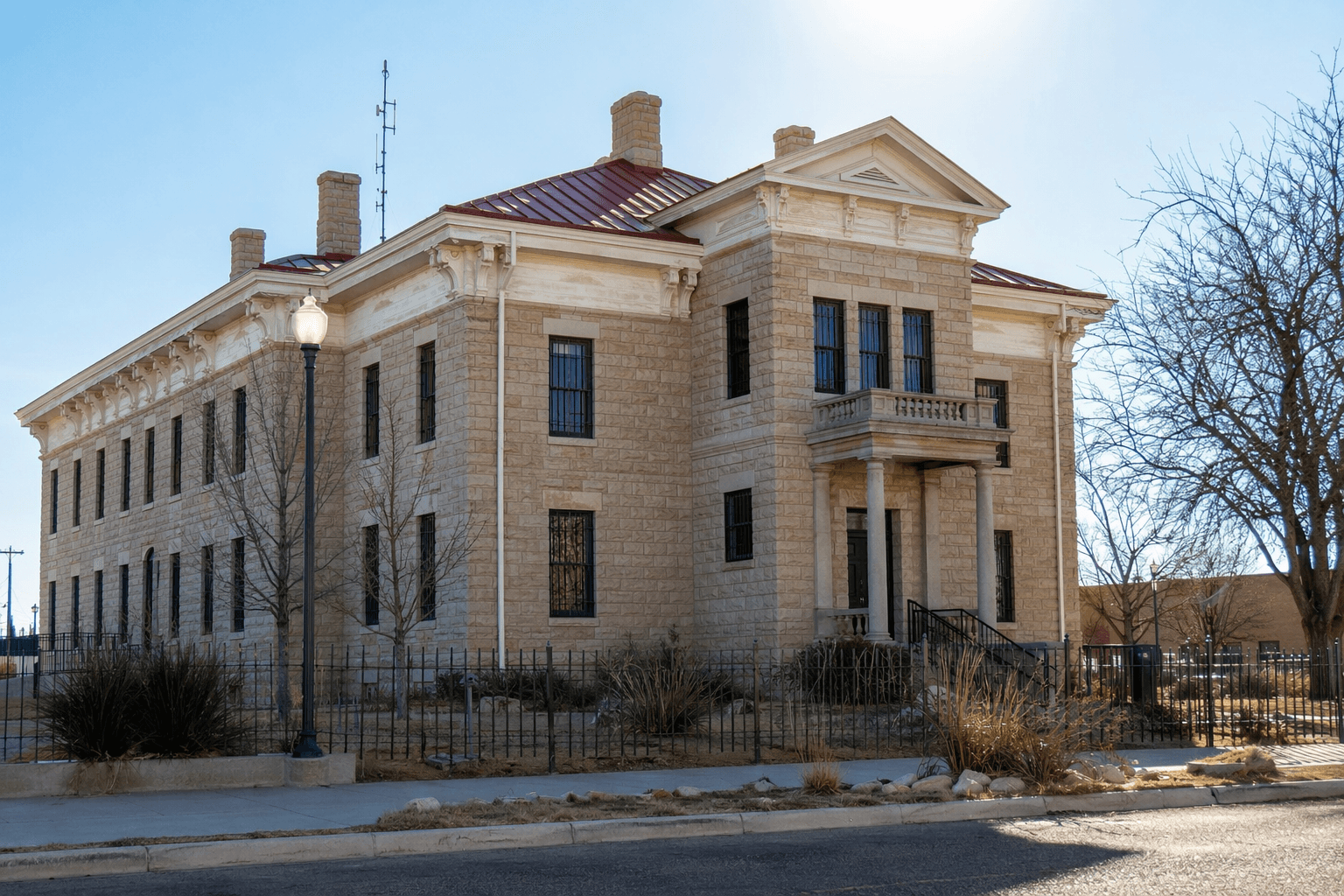
That choice was especially meaningful in Hidalgo County. A border county with a railroad-town origin needed more than a functional office block to represent local government. The courthouse had to communicate that county authority was established, durable and intended to last, even in a place shaped by movement, trade and transit.
The building’s documented location at 300 South Shakespeare Street gives residents a fixed civic address in downtown Lordsburg. It is the kind of structure people can still point to when they talk about where the county seat lives in practical terms, not just on a map or in a history book.
What residents still use today
The courthouse remains part of active county government, not a museum piece. Hidalgo County’s clerk office is still listed on the county website, and the Sixth Judicial District lists the Hidalgo County District Court docket for Lordsburg, showing that the courthouse area remains connected to current public business.
That ongoing use is what makes the building useful beyond its age. People still rely on the county seat for documentation, court access and the routines of local government, so the courthouse continues to serve as a working anchor rather than a decorative relic. In a smaller county, that kind of continuity matters because it keeps public services visible and central instead of scattered or easy to overlook.
The building also helps define downtown Lordsburg by concentrating civic activity in one recognizable place. When a courthouse remains active, the surrounding blocks benefit from the steady traffic of county business, and the town keeps a visible center for the institutions that shape everyday life.
Why upkeep is a county priority, not just a preservation issue
The National Register nomination lists the owner as the Hidalgo County Commission, which means the courthouse remains a county asset. That ownership is important because it places the building’s future in the hands of current local government, not in the abstract care of memory.
For residents, that makes maintenance a practical question about priorities. If the county keeps the courthouse in active use and respects its historic character, it preserves both a working public building and a landmark that reflects Lordsburg’s place in Hidalgo County history. If the building were neglected, the county would lose more than an old façade; it would lose one of the clearest public signs of where civic authority took root in town.
The courthouse’s value comes from that overlap of function and identity. It is still where county government shows up in Lordsburg, and it still marks the point where a railroad camp became a county seat with a lasting physical center.
A landmark that still defines the town
Hidalgo County is a geographically large border county, and that makes a courthouse in Lordsburg especially significant. In a place shaped by rail lines, distance and frontier settlement, the courthouse stood for the presence of county and state government in one of the county’s most important towns.
That is why the building matters in the present tense. Its 1926 design, its county ownership, its downtown location and its continued connection to clerk and court functions all show that the courthouse is still part of how Lordsburg explains itself. The building does not merely remember the county seat; it keeps proving what the county seat is for.
This article was produced by Prism’s automated news system from verified source data, official records, and press releases, then run through automated quality and moderation checks before publishing. The system is built and supervised by the people who set the standards it runs under. Read our full AI policy.
Did this article answer your question?