Hidalgo County warns ranchers about New World screwworm threat
Hidalgo County told ranchers to watch horses, cattle and pets for screwworm wounds, maggots and swelling as border fly releases ramp up.
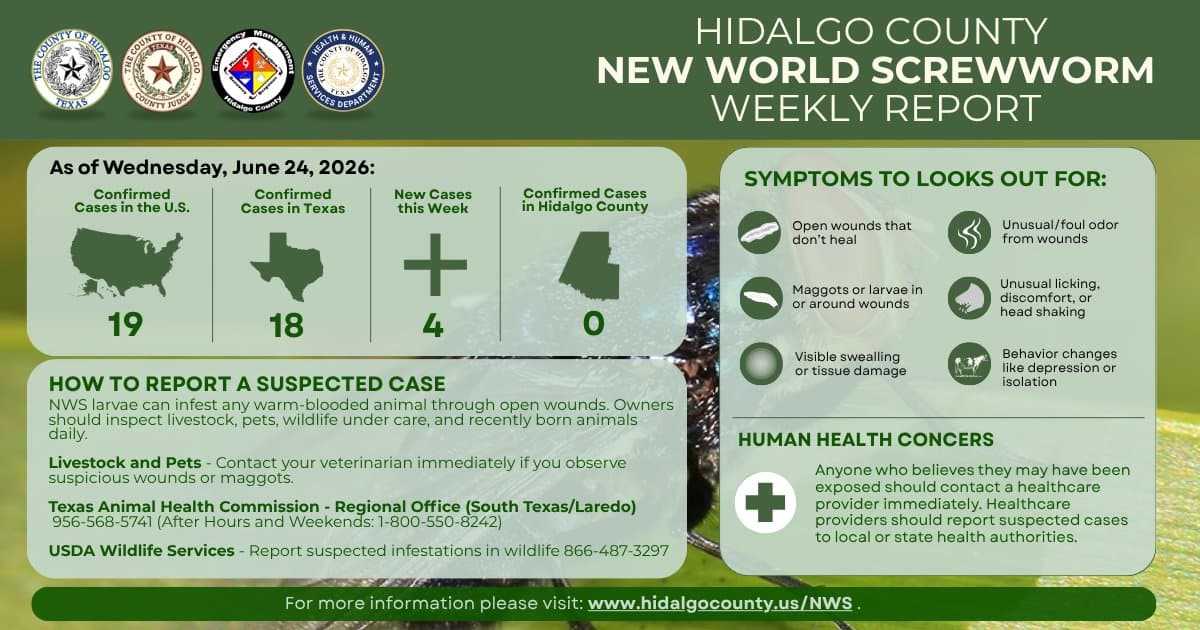
Hidalgo County Office of Emergency Management urged ranchers to check animals for New World screwworm wounds, maggots and swelling, and to report suspicious cases immediately as the parasite moved closer to the Rio Grande Valley. The county posted signs, reporting steps and prevention guidance on its website, putting the warning directly in front of cattle producers, horse owners and pet owners who could be the first to spot a case.
Screwworm larvae hatch within 12 to 24 hours and burrow into living tissue in open wounds, which can turn a minor cut into a life-threatening infestation if treatment is delayed. Untreated animals can die, and a missed case can mean emergency veterinary care, lost work time on a ranch and damage to the county’s livestock economy. The parasite also threatens wildlife and pets, and public risk in the United States remains very low.

The warning came after USDA confirmed the first U.S. animal case in the current outbreak in Texas on June 3, 2026. CDC activated a Level 3 emergency response on June 11, while New Mexico confirmed its first case in a dog in Lea County on June 6. By June 16, the Lea County case was inactive and the dog had recovered successfully.
USDA’s current status page, last modified June 24, shows confirmed detections in the United States, Mexico and Central America in a dashboard sorted by county, state, species, confirmation date and status. Federal and state officials are urging rapid reporting, wound treatment and surveillance, and New Mexico agencies have opened a one-stop screwworm information site for producers and veterinarians.
USDA shifted sterile-fly dispersal toward the U.S.-Mexico border, and the effort can reach 100 million sterile flies a week. The agency completed a U.S.-based sterile fly dispersal facility at Moore Air Base in Edinburg on Feb. 9 and announced a construction contract for a separate sterile fly production facility there on March 9.
This article was produced by Prism’s automated news system from verified source data, official records, and press releases, then run through automated quality and moderation checks before publishing. The system is built and supervised by the people who set the standards it runs under. Read our full AI policy.
Did this article answer your question?