Hidalgo County website guides residents to key services in Lordsburg
Hidalgo County’s website points residents to the right office fast, from Hope Haven’s benefits hub to dispatch, roads, the library, and county officials in Lordsburg.
A website built for the next errand
Hidalgo County’s main website works best as a practical map for everyday problems: paying a bill, finding the right office, reaching the county, or figuring out where to go in Lordsburg. Instead of sending residents through a maze of departments, the homepage steers people toward the places most likely to solve a real need, especially when the issue involves food assistance, health benefits, recovery support, or a time-sensitive public safety call.
That matters in a county with 4,178 residents spread across 3,438.6 square miles of land. In a place this rural, a wrong turn is not just an inconvenience. It can mean another long drive, another phone call, or another day waiting for help.
Hope Haven puts several services under one roof
The clearest example is Hope Haven in Lordsburg, where the county says several public services are now housed together. The building includes the Income Support Division, the New Mexico Department of Health, Women, Infants, and Children, known as WIC, and the Recovery Management Center. For someone dealing with food assistance paperwork, a health-related question, or recovery support, that clustering can cut down on trips and confusion.
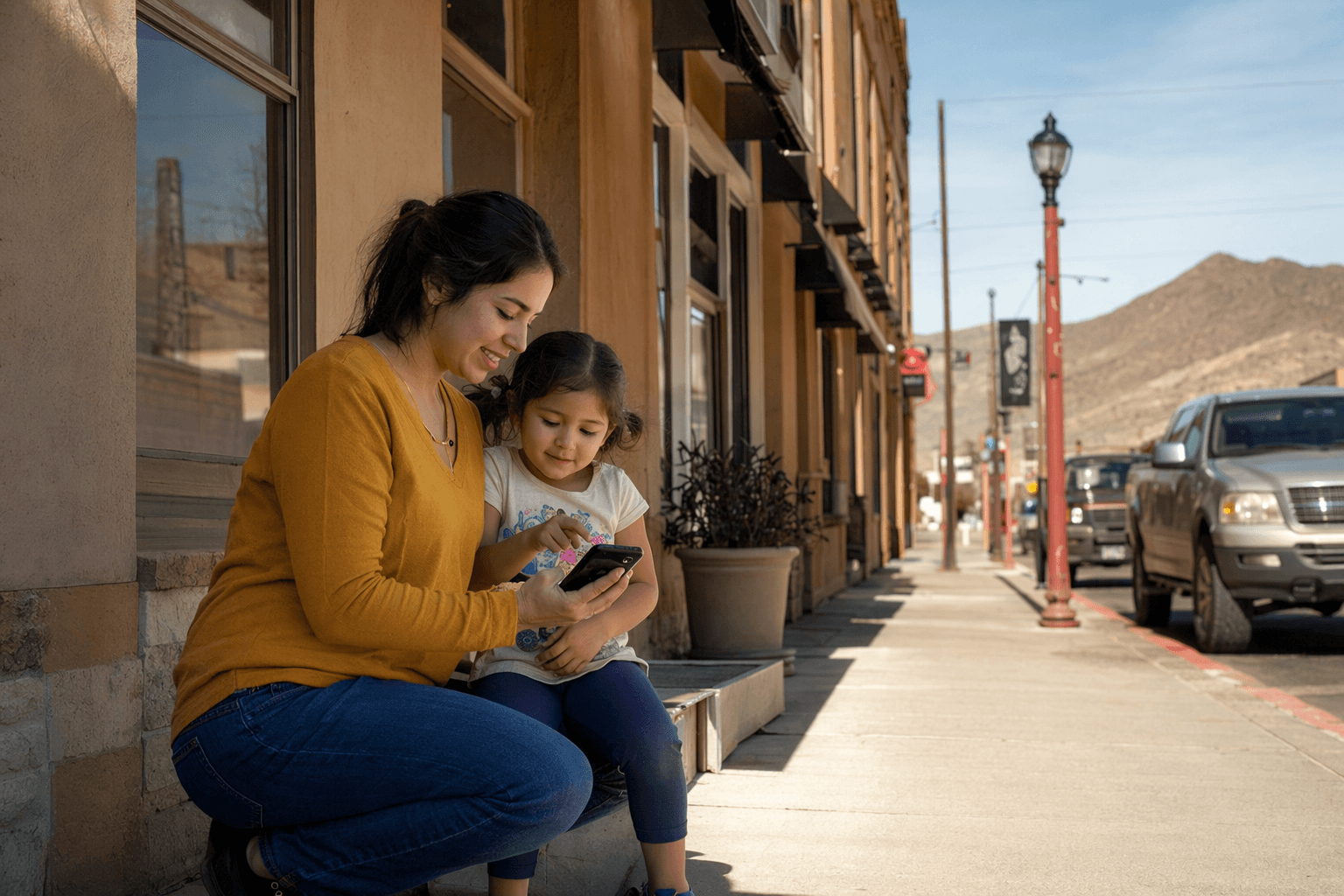
The county describes Hope Haven as newly renovated, and state health officials marked the Hidalgo Hope Haven and Recovery Center with a ribbon-cutting and luncheon in April 2022. Governor Michelle Lujan Grisham said the facility would improve access to critical support services for the Bootheel community, which is exactly the point of a service hub like this one: it puts multiple offices in the same building so residents do not have to chase answers across town.
Where the county sends people for local help
The website also points residents to the Lordsburg-Hidalgo Library, which has long been part of the county’s civic life. The library was built by the Works Progress Administration and finished in 1937, and Hidalgo County says it has housed the library ever since. It remains a steady public resource in a county where the nearest useful answer is often the most valuable one.
The county lists the library at 3rd Street in Lordsburg and says it is open Monday through Friday from 10 a.m. to 6 p.m. That makes it more than a place for books. It is a familiar public stop for information, education, and community access, especially for families who need a nearby place to start looking for help.
Public safety starts with the right call
Hidalgo County’s website also makes clear where emergency and non-emergency calls go. Dispatch handles 911 and non-emergency calls for law enforcement, medical, rescue, and fire response. The county says dispatch uses computerized telephone and mapping systems, and that staff must know county boundaries and every road in the area to send help efficiently.
That is where the 911 Addressor or Emergency Manager comes in. The county says that office makes sure streets and roads have place names, signs, and are entered according to 911 calling standards. In a county with scattered communities and a large road network, that kind of basic infrastructure is not administrative trivia. It is what helps an ambulance, deputy, or fire crew get to the right place without delay.
The county’s public-safety directory also identifies the Detention Center and the Sheriff’s Department, giving residents a straightforward path to the offices most likely to matter in an urgent situation. For people in Lordsburg, Animas, Rodeo, Cotton City, and the surrounding Bootheel, the website serves as a first stop when the question is not abstract policy but who answers the phone.
Roads, miles, and the county’s physical reach
The Road Department is another place where the county’s website saves time by being specific. Hidalgo County says it maintains 480.7 miles of roads, broken into three sections: A, B, and C. The A Section includes 42 roads totaling 168.8 miles. The B Section has 12 roads totaling 19.5 miles. The C Section covers 105 roads totaling 292.5 miles.
Those numbers matter because roads are part of public service in a county this spread out. The department is not just a list of roads on paper. It is part of how residents move to school, work, health appointments, and county offices. By spelling out the road system in sections, the county gives residents a clearer sense of which roads fall under its care and how extensive that network really is.
A county government centered in Lordsburg
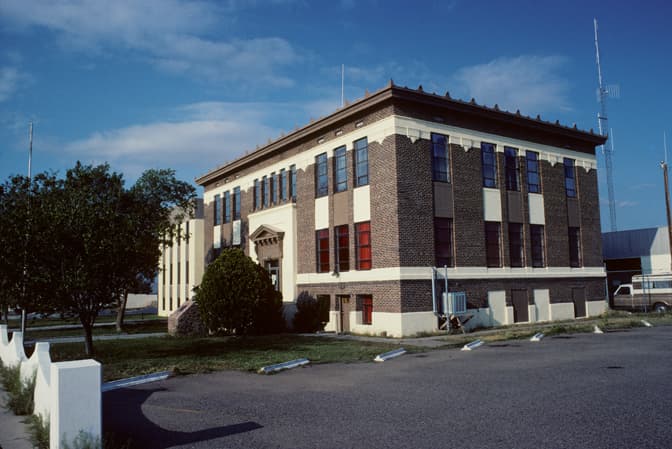
The county’s administrative address is 305 Pyramid St., Lordsburg, New Mexico 88045, and managers’ office hours are Monday through Thursday from 7:30 a.m. to 5:30 p.m. That gives residents a concrete place and schedule for county business, which is often what people need most when they are trying to resolve a tax question, a property issue, or a general county matter.
The county website also identifies the people running the government: County Clerk Alyssa Esquivel, Treasurer Leslee Rudiger, Probate Judge Dusti Conover, Assessor Martin Neave, Commissioner Kelly Peterson, Commissioner Joel Edwards, and Commission Chair Art Malott. Naming those officials helps residents connect the site’s service pages to the offices and elected leaders behind them. It is a practical reminder that county government is not an abstraction. It is a set of specific offices with specific duties in one central place.
A small county with a long public footprint
Hidalgo County was created by a bill passed on February 25, 1919, and took effect at the beginning of 1920. That makes it one of New Mexico’s younger counties, but its public footprint is still broad: roads, emergency response, libraries, health services, income support, and recovery support all flow through the county seat in Lordsburg.
The county’s DWI program fits into that same public-service structure. It operates under New Mexico’s Local DWI Grant Program, which the Legislature created in 1993 to reduce DWI, alcoholism, alcohol abuse, and alcohol-related domestic violence. In other words, the county’s DWI work is tied to a statewide prevention system, not just a local advisory effort.
For residents trying to get through a day’s business with as little wasted time as possible, that is the value of Hidalgo County’s website. It does not just describe government. It points to the office, the building, the road, or the phone line most likely to solve the problem and sends people there with fewer dead ends.
This article was produced by Prism’s automated news system from verified source data, official records, and press releases, then run through automated quality and moderation checks before publishing. The system is built and supervised by the people who set the standards it runs under. Read our full AI policy.
Did this article answer your question?