Hidalgo Medical Services expands coordinated care network across county locations
HMS now functions as a countywide care map, linking Lordsburg clinics, school-based sites, transportation, and specialty services so families can stay local longer.

A care network built to keep families close to home
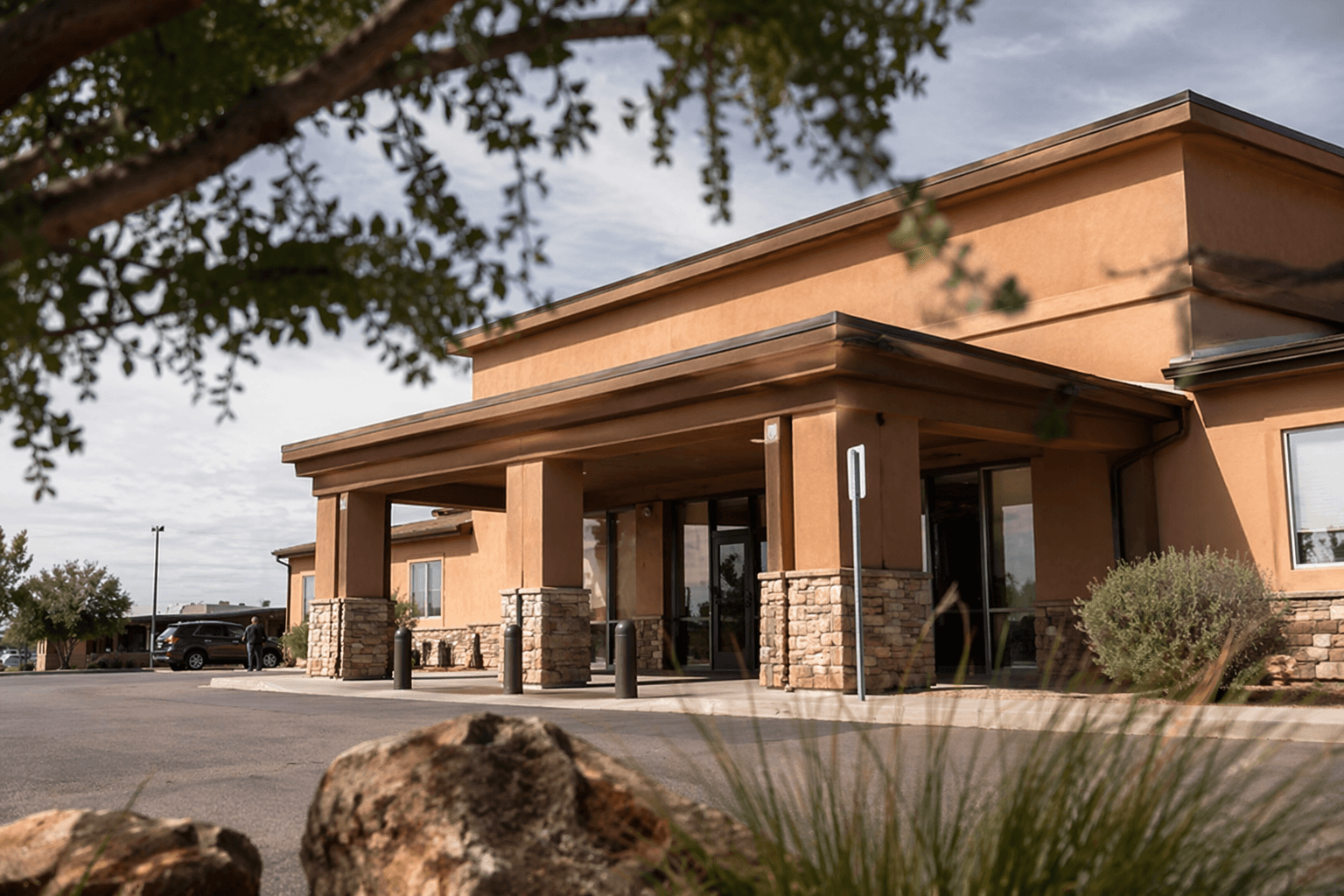
Hidalgo Medical Services is no longer just a clinic in Lordsburg. It now works as a countywide access network, moving primary care, behavioral health, dental care, transportation, telehealth, and specialty services across 22 locations in Hidalgo and Grant counties.
That matters most when life gets complicated. A parent with a sick child, a pregnant patient needing OB/GYN care, and a grandparent managing diabetes may all be able to stay inside the HMS system instead of making a long trip out of county for every need. HMS says it serves more than 70,000 annual visits with over 46 licensed providers and 175 associates, which gives the organization the scale to function like a coordinated local health map rather than a single office.
What HMS can handle before a trip becomes necessary
HMS describes its care model as a patient-centered medical home, with primary care providers coordinating treatment through a team that includes doctors, nurse practitioners, physician assistants, nurses, medical assistants, community health workers, care coordinators, behavioral health staff, and dental staff. Patients are part of treatment decisions, and services are available for all age groups.
That broad approach shows up in the services HMS lists: family medical care, acute visits, advanced-access scheduling, same-day appointments, chronic disease management for asthma, diabetes, and heart disease, minor procedures, preventive screenings, OB/GYN care, nutrition and dietetic support, and specialty services. HMS also provides home-safety evaluations and education for homebound patients, including help with geriatric safety, osteoporosis, dementia, advanced directives, and home-safety checklists.
For many households, that means the first stop is not an emergency drive elsewhere. It can be a same-day primary care visit, a chronic-care follow-up, a prenatal appointment, or a home-safety review that catches a problem before it becomes a crisis.
Where the network reaches beyond one building
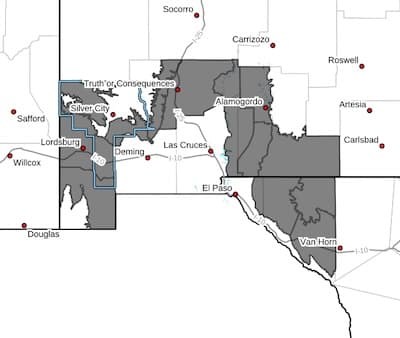
The scale of HMS is easy to miss if you only know the Lordsburg site. The organization says it operates 22 locations in Hidalgo and Grant counties, including 15 clinical sites, five senior centers, and two administrative locations. That spread is important in a rural region where distance can be a real barrier to routine care.
HMS also says medical services are available at many different locations within the two counties, including local school-based clinics. That makes the system more flexible for parents trying to keep a child in class, workers who cannot lose a day to travel, and older adults who need recurring care but do not want to wait until a condition worsens. In a county with no hospital, that local reach can be the difference between preventive care and an avoidable emergency.
How school clinics and mobile services widen access
HMS operates two school-based health centers in Grant County, one at Cobre High School and one at Silver High School. Those clinics provide primary care services including well-child checks, sports physicals, adult physicals, and treatment for injuries, illness, and allergies.
HMS has also partnered with Animas Public Schools to introduce behavioral health services, another sign that the organization is pushing care into settings where families already are. On top of that, HMS says it has a mobile clinic and launched a new mobile dental clinic in 2026 to expand access in underserved communities.
For some families, that can cut a round trip out of county entirely. A teen can get a sports physical at school. A parent can use a local clinic for a flare-up of asthma or a quick illness visit. A patient who needs dental care in an area with limited options may now have a mobile unit come closer to where the need is.
Transportation and telehealth fill the gaps between sites
Access is not only about where the exam room sits. HMS says it launched patient transportation services with one van serving Hidalgo County and another serving Grant County, specifically to reduce barriers to care across the region. Its transportation page says the service area follows both counties.
The organization also says its patient portal lets patients request appointments, receive reminders, view lab and imaging results, request refills and referrals, read billing statements, and access health records. When transportation is tight, the combination of rides, telehealth, and the portal can keep follow-up care from slipping through the cracks.
A practical example makes the system easier to see. Picture a Lordsburg household with three very different needs: a child due for a checkup, a mother needing prenatal care, and a grandfather managing heart disease and mobility concerns. The child can be seen at a local HMS site or through a school-linked clinic if applicable. The mother can use OB/GYN services and the patient portal for reminders and records. The grandfather can receive chronic disease management, a home-safety evaluation, and transportation support if travel is a barrier. That is the kind of coordination HMS is built to provide.
Why this matters in Hidalgo County
The county’s health landscape explains why this network carries so much weight. Hidalgo County is designated as having primary care, dental, and mental-health shortage areas, and county health data describes it as a hospital desert with no hospitals. New Mexico health-data guidance also uses a 3,500-to-1 population-to-primary-care-provider ratio as a key federal benchmark for shortage-area designation.
HMS says it is the only Federally Qualified Health Center in both Hidalgo and Grant counties, which places it at the center of local safety-net care. In that setting, the organization’s multiple clinics, school sites, transportation vans, mobile units, and telehealth options are not extras. They are the infrastructure that keeps routine care local and reduces the pressure to leave the county for basic health needs.
A system shaped by long local scarcity
The current version of HMS was re-founded in 1995 in Lordsburg after the earlier organization shut down in 1985 because it could not recruit providers into Lordsburg and Hidalgo County. HMS says the relaunch began with $35,000 in New Mexico Rural Primary Health Care Act funding and four family medicine physicians rotating in from Silver City.
That history helps explain the tone of the present-day network. It is built around access that had to be fought for and rebuilt. The organization’s role is not just to treat illness but to preserve a stable local pathway into care for a rural region that has long struggled to keep clinicians in place.
More services, more confidence, more reason to stay local
HMS says it averaged a 94% patient satisfaction rate in 2025 and year to date in 2026. It also says it received two separate grants totaling $1 million for behavioral-health and justice-involved-population access work. Those awards suggest the network is still growing in response to community needs, especially in areas where care gaps can quickly become public-health problems.
Taken together, the picture is bigger than a clinic list. HMS is functioning as Hidalgo County’s practical care map, connecting families to primary care, specialty services, school-based access, transportation, and mobile care in a region where the nearest safe option is often the one that stays closest to home.
This article was produced by Prism’s automated news system from verified source data, official records, and press releases, then run through automated quality and moderation checks before publishing. The system is built and supervised by the people who set the standards it runs under. Read our full AI policy.
Know something we missed? Have a correction or additional information?
Submit a Tip