High Winds, Blowing Dust Prompt Travel Warnings Across Hidalgo County
High winds and blowing dust cut visibility along the I-10 corridor from Lordsburg to Deming, with forecasters warning of dangerous noon–8 p.m. wind windows and gusts up to 65 mph.
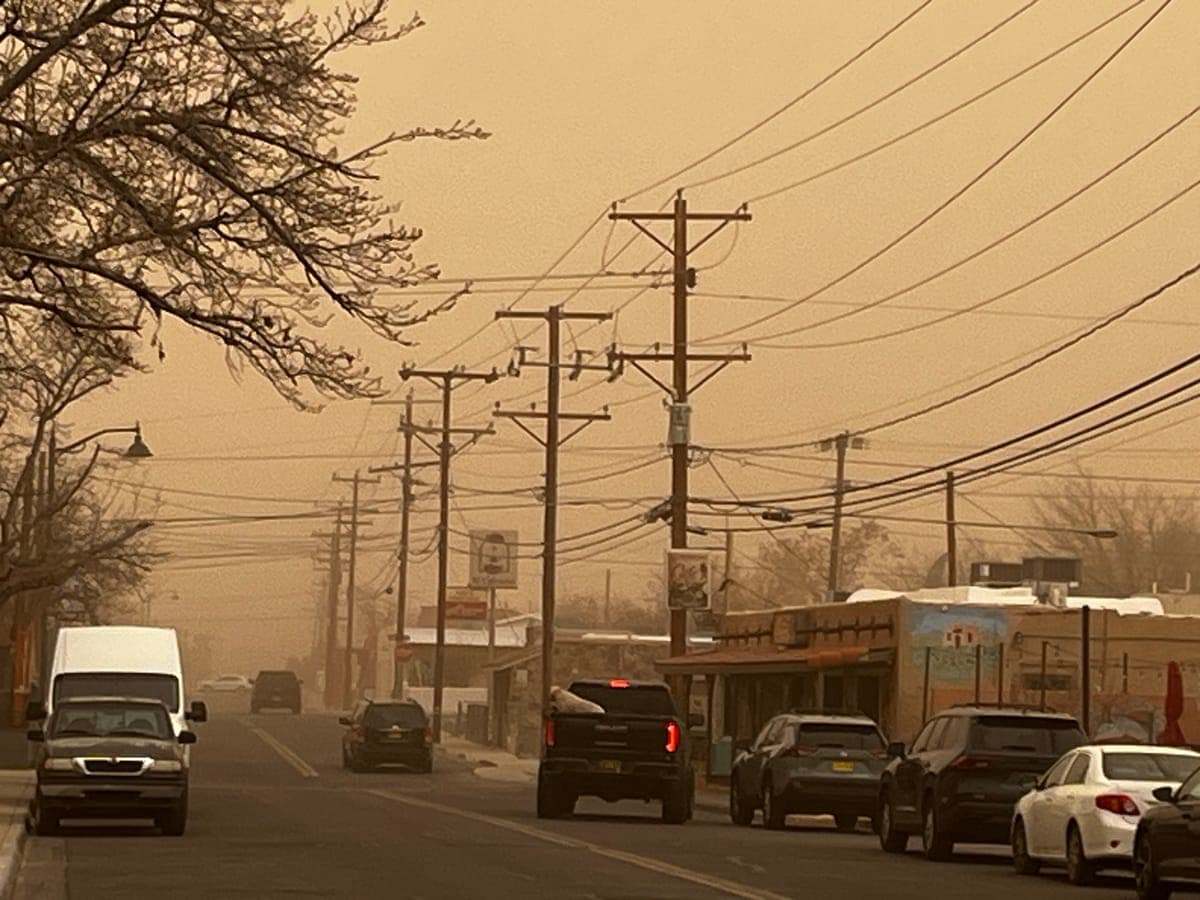
Reduced visibility from blowing dust along the I-10 corridor from Lordsburg to Deming prompted travel advisories across southern New Mexico, with forecasters warning the highest-impact window runs from noon to 8 p.m. each day. KRWG warned that “The I-10 corridor from Lordsburg to Deming and beyond becomes deadly during dust storms,” and multiple outlets relayed National Weather Service forecasts calling for sustained winds of 25 to 35 mph with peak gusts between 45 and 65 mph during the Feb. 17–20 advisory period.
Local forecasters and transportation officials began issuing warnings during the week of Feb. 16–18, 2026 as strong Pacific storm systems moved across western and southwestern New Mexico, producing gusty winds, blowing dust, and travel hazards. KRWG published its advisory on Feb. 16 at 4:16 PM MST and flagged daily noon-to-8 p.m. impacts for New Mexico and West Texas; KOAT and other local outlets repeated the same peak-impact window.
Officials and news partners repeated NMDOT and NWS safety guidance for motorists facing sudden dust-reduction events. State guidance reproduced by KOAT and KRWG advised drivers who are caught in a dust storm to pull completely off the roadway, turn off all vehicle lights, set the emergency brake, and remain inside the vehicle. The New Mexico Department of Transportation told travelers it would monitor roadway conditions with local law enforcement and that roadway advisories would be posted on the agency’s roadway-information site or by calling 511 for updates.
The hazard was part of a region-wide pattern of gusty, dry conditions. NASA reported wind gusts up to 70 mph measured across the Oklahoma and Texas panhandles on Feb. 17 and chronicled rapid fire growth on Feb. 18, noting the Ranger Road fire near Beaver, Oklahoma burned an estimated 145,000 acres by evening and, combined with nearby Stevens and Side Road fires, pushed total daily acreage burned to more than 155,000 acres. NASA also cited a deadly multi-vehicle pileup on Interstate 25 near Pueblo, Colorado as an example of how wind-blown dust reduced visibility and produced cascading traffic disasters.

A separate earlier advisory from the New Mexico Department of Transportation, issued March 12, 2025 for March 13–14, 2025, forecasted higher winds for southwest New Mexico, 35 to 45 mph sustained with southwest gusts of 65 to 75 mph, showing that the state has repeatedly faced severe wind-and-dust episodes that concentrate risk in midday and early evening hours.
NWS Albuquerque emphasized the persistence of windy conditions in a social post, writing, “Several days of windy conditions will likely result in areas of blowing dust across portions of central and eastern NM. Watch for sudden restrictions in visibility due to blowing dust over the next few days. #nmwx.” State transportation and weather agencies are monitoring conditions and posting advisories; the midday-to-evening wind windows remain the chief practical danger to travelers on the I-10 corridor and adjacent routes.
This article was produced by Prism’s automated news system from verified source data, official records, and press releases, then run through automated quality and moderation checks before publishing. The system is built and supervised by the people who set the standards it runs under. Read our full AI policy.
Did this article answer your question?