Lordsburg Chamber spotlights Hidalgo County museum, Shakespeare Ghost Town
Hidalgo County’s recreation guide turns museums, ghost-town streets, and a desert stop into a single Bootheel itinerary. The real draw is access: many of these sites are open now, low-cost, and rooted in local history.
The Lordsburg-Hidalgo Chamber of Commerce is doing more than promoting sightseeing. Its recreation page bundles museums, a ghost town, a desert stop, an art gallery, a mining district, and a WPA-era library into a county-wide map of places where Hidalgo County’s history still has economic value.
That matters in a rural place where attractions are scattered across Lordsburg, Rodeo, Shakespeare, and Virden. The chamber is essentially packaging memory as infrastructure, pointing residents and visitors toward places that are open, walkable, and tied to local businesses in the Bootheel region of New Mexico.
Lordsburg’s museum keeps the county’s record in one place
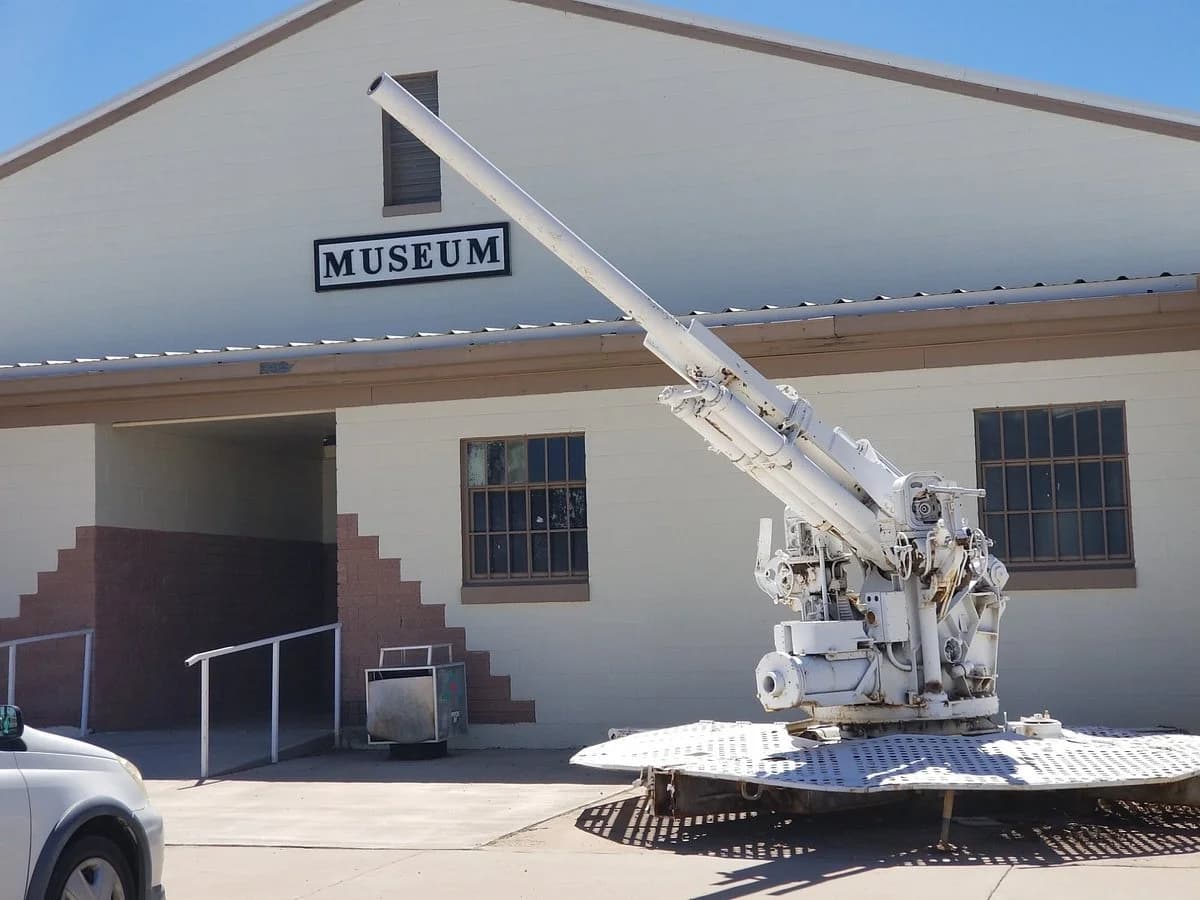
The Hidalgo County Museum, at 710 E. 2nd St. in Lordsburg, is one of the clearest examples of that strategy. The Chamber of Commerce describes it as a nonprofit museum that is partly volunteer-run, free or low-cost to visit, and open Monday through Friday, with chamber-listed hours of 10 a.m. to 2 p.m.
The City of Lordsburg identifies Marsha Hill as director, and the museum’s collections show how broad the county’s story really is. Its exhibits include the Lordsburg Internment/POW Camp, the John Johnson photo collection, the Baxter Collection, mining artifacts, a bottle collection, railroad history, airport history, antique tools, arrowheads, mineral and rock collections, ranching heritage, and military history.
That makes the museum more than a display room. It works as a living archive of rail lines, ranches, wartime detention, mining booms, and the daily material culture that shaped Hidalgo County from the late 19th century onward. For families, school groups, and travelers passing through Lordsburg, it offers one of the few places where the county’s layered history is gathered in a single, low-barrier stop.
The library shows how public memory was built, not just preserved
The recreation page also points to the Lordsburg-Hidalgo County Library, and its history is part of the same civic story. The library traces its roots to a library founded by the Lordsburg Women’s Club in 1919, a reminder that local women helped build public access to books and information long before the current building went up.
The permanent building, at 208 E. Third St. in Lordsburg, was constructed by the Works Progress Administration in 1936 and 1937. Later additions, including an adobe wall and donated stained-glass windows, gave the building a layered identity of its own.
Taken together, the museum and the library show how Lordsburg’s cultural assets are not luxury attractions. They are public institutions with relatively low barriers to entry, and that matters in a county where educational, historical, and civic resources can be far apart.
Shakespeare turns frontier legend into a preserved landscape
If the museum and library ground the county in civic history, Shakespeare Ghost Town gives it a frontier face. The site is listed on the National Register of Historic Places, and the Hill family has owned and preserved it since 1935.
Shakespeare began as a stagecoach stop, later became a silver-era mining town, and eventually turned into a ghost town after going through several name changes. The chamber guide encourages visitors to walk streets once traveled by Billy the Kid and John Ringo, and to follow a portion of the Butterfield Trail through the site.
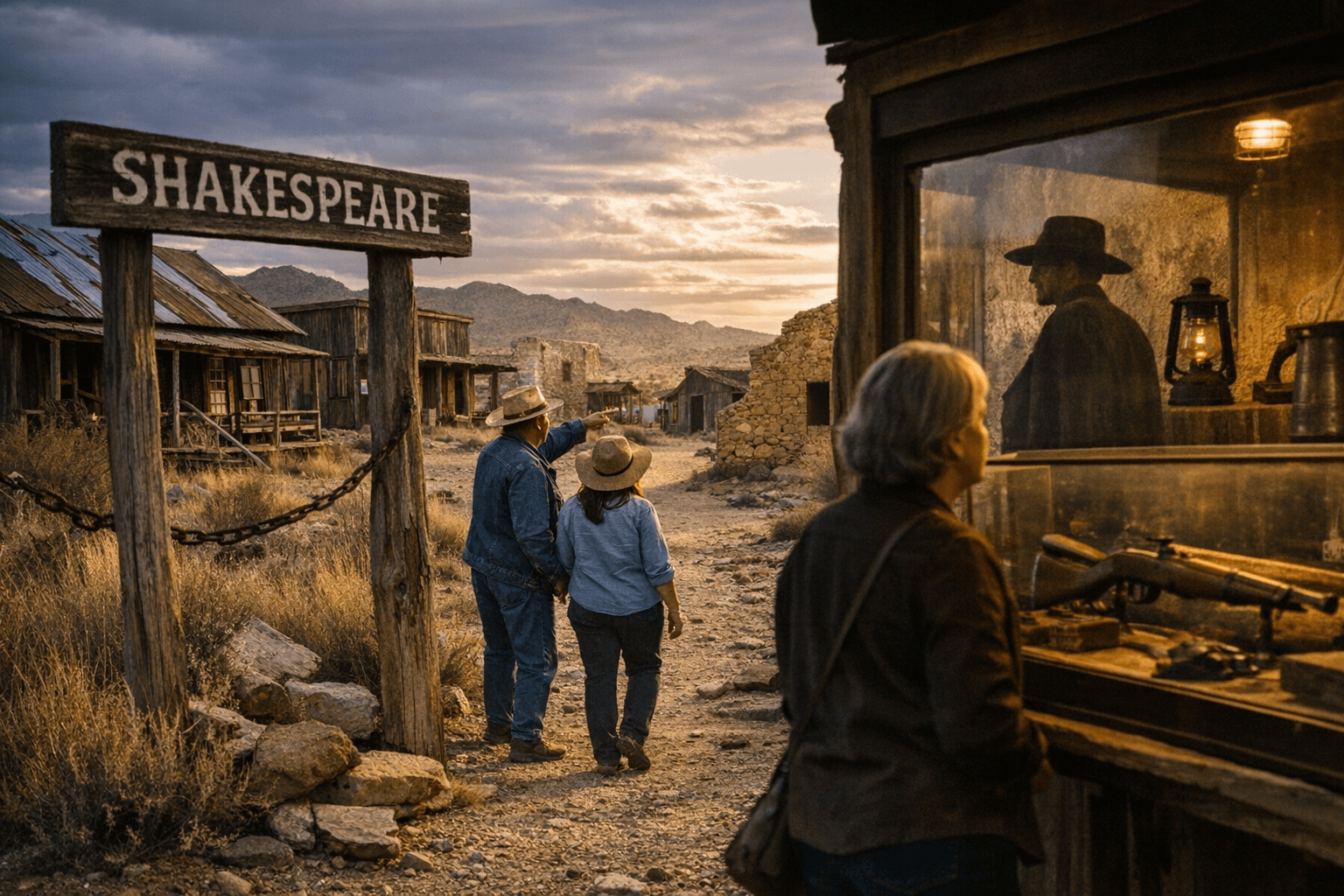
That blend of names, routes, and ruins is part of why Shakespeare remains one of the county’s most recognizable destinations. Other descriptions of the town note 28 points of interest, which gives the site a structure beyond folklore. It is not just a place to glance at old buildings. It is a preserved landscape that lets visitors move through the same streets tied to stagecoach commerce, silver-era mining, and the stories that still sell the Bootheel’s image to the outside world.
The preservation work also matters locally. Since the Hill family has kept the property for decades, the town has remained an asset instead of disappearing into private redevelopment. That kind of long-term stewardship is rare in rural New Mexico, where many historic places have no formal protection or public access at all.
The Bootheel’s desert stop adds wildlife and cultural history
In Rodeo, the Chiricahua Desert Museum broadens the county’s story beyond mining and railroads. The chamber calls it a standout destination in the Bootheel, and the museum’s own information shows it opened on April 1, 2009, after the project launched in 2006.
It is open daily from 9 a.m. to 5 p.m., closing only on Thanksgiving and Christmas Day. That makes it one of the most accessible stops on the chamber’s list for travelers moving through the southern edge of the county.
The museum’s draw is a mix of live reptiles, a desert garden, Apache history exhibits, and a Southwestern gift shop. That combination gives visitors both education and a purchase point, which is exactly the kind of pairing that can send spending toward a small community like Rodeo. It also deepens the county’s tourism identity by linking wildlife, Indigenous history, and desert ecology in one place.
Just down the road, the Chiricahua Gallery adds another layer. The nonprofit cooperative art gallery is housed in a historic 1910 building and tied to the New Mexico Fiber Arts Trail. For a small town, that means the cultural economy is not limited to heritage sites alone. Visitors who come for the desert museum can also encounter local art, handwork, and a building that carries its own early-20th-century history.
Virden’s mines widen the map of what Hidalgo County sells
The recreation guide also points readers toward Steeple Rock in Virden, and the draw there is scale as much as history. The district includes more than 60 mines, with a history stretching back to the 1860s and 1880s.
That mining past connects Virden to the same regional economy that shaped Lordsburg and Shakespeare. It also shows how the county’s tourism pitch depends on more than one famous stop. The chamber is building a broader circuit, one that folds mining history into the same heritage map as railroads, ranching, museums, and ghost-town lore.
For residents, the practical value is simple: the county’s most recognizable sites are not isolated curiosities. They are places with opening hours, street addresses, preserved buildings, and enough historical depth to support school trips, weekend visits, and local pride. For visitors, the route runs from 208 E. Third St. to 710 E. 2nd St., from Rodeo’s desert museum to Shakespeare’s preserved streets, and out to Virden’s mining district.
What the chamber is really selling is a county-wide story, one built from artifacts, public institutions, and preserved landscapes. The question for Lordsburg and the Bootheel is whether that story keeps translating into real foot traffic, local spending, and long-term support for the places that still carry Hidalgo County’s history in plain view.
This article was produced by Prism’s automated news system from verified source data, official records, and press releases, then run through automated quality and moderation checks before publishing. The system is built and supervised by the people who set the standards it runs under. Read our full AI policy.
Did this article answer your question?