New Mexico semi-open primary gives Hidalgo County independents ballot choice
Hidalgo County independents could pick either party’s primary ballot, a change that gave unaffiliated voters real leverage in a small electorate and exposed old local guidance that had not caught up.
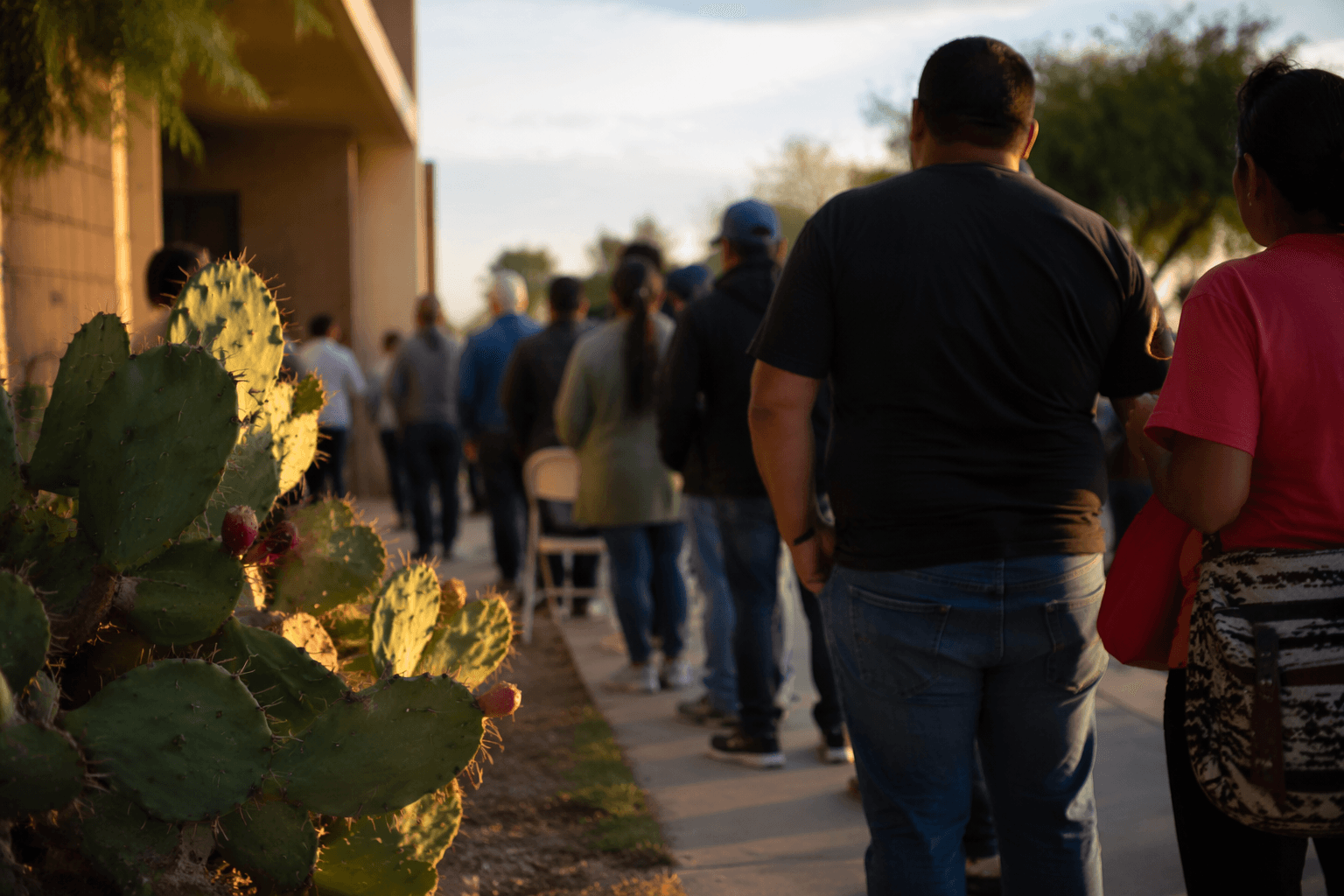
Hidalgo County independents had a new kind of power in New Mexico’s June 2 primary: they could walk into the polling place and choose either a Democratic or Republican ballot without changing their registration. In a county where a few dozen ballots can shift the balance in countywide and state races, that procedural change mattered as much as the top-ticket contests themselves.
The shift came after New Mexico’s semi-open primary rule took effect July 1, 2025. Under the new system, voters who are not registered with a qualified major or minor party can select a major-party ballot and vote without updating their registration. Voters registered with a qualified minor party could still change affiliation through same-day voter registration at a polling location. That meant the gatekeeping once attached to primary participation was loosened, especially for unaffiliated voters who had previously sat out party primaries.
The stakes were not limited to one race. The June 2 ballot included contests for governor, lieutenant governor, Congress, and a range of local and district offices, which made ballot choice more consequential for people deciding at the last minute how to use their vote. State officials said more than 181,900 eligible voters had already cast ballots by June 1, including more than 18,500 voters not registered with a qualified political party. Unofficial statewide results later showed 343,768 ballots cast out of 1,408,185 eligible voters, a turnout rate of 24.41 percent.
That broader participation came as unaffiliated registration had been climbing. Source New Mexico reported that roughly 25,000 more voters moved to “decline to state” between December 2024 and February 2026, while the state’s total registered-voter count barely changed. In rural counties like Hidalgo, where turnout swings are felt quickly by party leaders and candidates, that trend raised the possibility that independent voters could play a larger role than before in deciding which primary races mattered most.
Local election administration added another layer. Hidalgo County Clerk Alyssa Esquivel oversees voter registration and election administration from 300 Shakespeare in Lordsburg. The county clerk’s election page still carried older instructions saying voters had to register with a major party to vote in that party’s primary, a mismatch that could easily trip up residents checking local information at the end of the voting period. Polling places were open from 7 a.m. to 7 p.m. on Election Day, mailed ballots had to be received by 7 p.m., and state law allowed tabulation to pause at 11 p.m. on election night, all details that shaped how quickly Hidalgo County voters could make use of the new rules and how fast results would settle.
This article was produced by Prism’s automated news system from verified source data, official records, and press releases, then run through automated quality and moderation checks before publishing. The system is built and supervised by the people who set the standards it runs under. Read our full AI policy.
Know something we missed? Have a correction or additional information?
Submit a Tip