Historic Downtown Millersburg Draws Visitors with Shops, History, Charm
Millersburg’s square blends 1815 roots, family-owned shops and the 1847 Hotel Millersburg, giving Holmes County a walkable stop that keeps visitors spending downtown.
Historic downtown that still functions as a destination
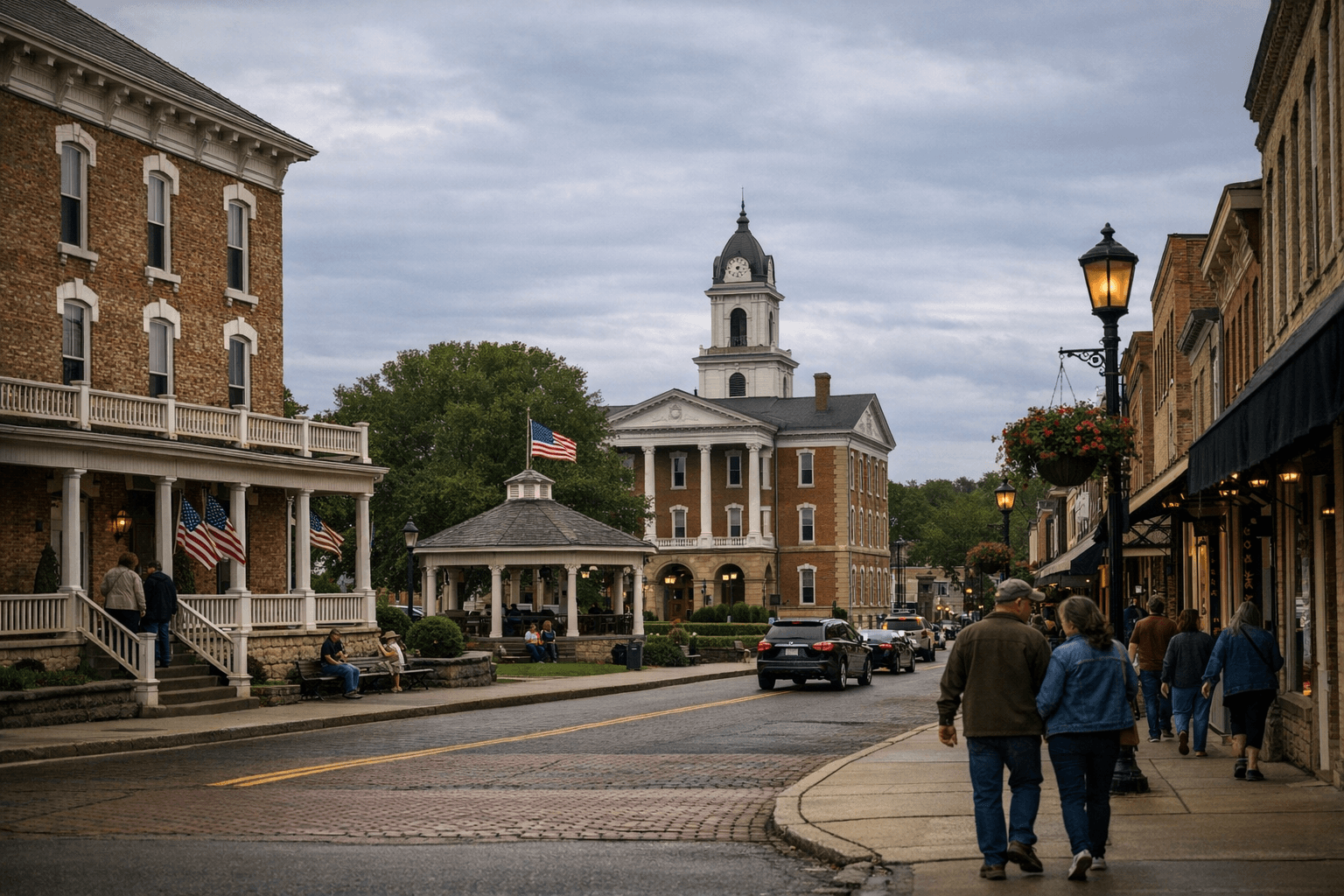
Historic Downtown Millersburg is more than Holmes County’s seat of government. It is a compact shopping and culture district where preservation and commerce work together, giving visitors a reason to slow down, walk the square and stay for the day.
That matters in a tourism-driven county. Instead of a strip of chain stores, downtown offers a setting built around locally owned businesses, history and the visual character of the square. The Holmes County Chamber of Commerce & Tourism Bureau describes the district as full of hidden treasures and family-owned character, and that is exactly what makes it economically useful: it keeps people downtown long enough to eat, browse, tour and spend.
A square with deeper roots than the storefronts
Millersburg’s original town layout dates to November 1815, when the old town was laid out by Adam Johnson and Charles Miller. That early design still shapes how the district feels today, with a center that rewards walking and discovery rather than fast in-and-out shopping.
The village also has formal recognition that reinforces its value as a place to visit. Historic Downtown Millersburg is listed on the National Register of Historic Places and is accredited by Main Street America and Heritage Ohio. Millersburg’s visitor information page says the downtown is a Heritage Ohio Main Street Community that is continually working on revitalization efforts, a sign that the district is being actively maintained as a living commercial center rather than treated as a museum piece.
Hotel Millersburg is the anchor that gives the district its long view
No building captures that mix of history and commerce better than Hotel Millersburg. The hotel’s history page says Sampson Bever erected much of the present building in 1847 and called it the Central Hotel. The Holmes County Chamber says the property has been operating since 1847 and is the third-oldest continuously operating hotel in Ohio.
That history is visible in the way the building sits in the center of the Millersburg National Historic District and in the details that accumulated over time. Hotel Millersburg says electricity arrived in Millersburg in 1888, brick paving followed in 1890, and water, sewer and fire hydrants came in 1895. The hotel was renamed the American Hotel in 1905 and took the Hotel Millersburg name after World War I.
Ohio tourism materials say the hotel has 32 historic guest rooms, which helps explain why it remains more than a landmark. It is still an active part of the district’s lodging economy, drawing overnight guests who can then walk to shops, restaurants and the rest of downtown.
Grover Cleveland adds a name people recognize
The hotel also has a human story that gives it wider appeal. Hotel Millersburg says former President Grover Cleveland stayed there in 1900, and the restaurant Grover’s Tavern honors that visit. That kind of recognizable name creates a built-in conversation starter for visitors and a memorable detail for anyone making a day of downtown.
In a place where many attractions compete for attention, a known historical figure can turn a hotel stay or meal into something people talk about later. It is the sort of fact that helps downtown Millersburg stand out beyond the county line.
What makes downtown different from chain-store shopping
Downtown’s value lies in what it offers that a chain store cannot. The district’s mix of small boutiques, culture stops, local food and drink, and historic architecture creates a shopping trip that feels tied to Holmes County rather than interchangeable with any suburban retail center.
That difference matters for foot traffic and local jobs. People do not just come for one purchase and leave. They linger for a meal, look in another shop, step into a museum or stop for an overnight stay at Hotel Millersburg. That kind of circulation supports more than retail sales. It supports hospitality workers, local shop owners, kitchen staff, museum operations and the service businesses that depend on visitors spending time downtown.
The district’s walkable layout also gives it an advantage that open-air commercial strips often lack. A visitor can park once and move from storefront to storefront, with the square itself acting as part of the experience. That longer stay is what turns a simple errand into a day trip.
Tourism, business support and the county’s front door
The Holmes County Chamber of Commerce & Tourism Bureau says its office is located in downtown Millersburg, and that placement is significant. It means the district is not only a place visitors pass through, but also the home base for the county’s tourism promotion and business support efforts.
From that office, the bureau helps steer visitors toward events, accommodations, dining and attractions across Holmes County. Downtown Millersburg benefits from that role because it sits at the center of the county’s visitor experience. A traveler can pick up information downtown, eat downtown, shop downtown and then use the square as a starting point for the rest of the county.
That makes the district an economic crossroads. It connects preservation work, tourism traffic and everyday business activity in one place. For a county known for handmade goods, food and hospitality, downtown Millersburg is one of the clearest examples of how those sectors reinforce each other.
Nearby institutions deepen the visit
The district’s appeal does not end at the square. The Holmes County Historical Society campus at 484 Wooster Road in Millersburg adds another layer to the downtown experience. The society preserves and archives county history and operates the Victorian House Museum, the Sieverdes Millersburg Glass Museum and the Castle Club.
Those institutions extend the amount of time a visitor can spend in and around downtown, which is important for local commerce. A shopper who comes for a museum stop may also eat lunch, browse another storefront or stay overnight. That overlap between culture and commerce is exactly what helps historic downtowns remain economically relevant.
Why the district still matters now
Historic Downtown Millersburg is not simply a preserved streetscape. It is a working business district with a long history, a recognizable hotel, a tourism office, museums nearby and a steady stream of reasons for people to linger. Its strength comes from the way each piece supports the others.
The square’s 1815 layout, Hotel Millersburg’s 1847 legacy, the district’s preservation credentials and the chamber’s tourism work all point to the same conclusion: downtown Millersburg still draws people because it offers something rare in Holmes County, a place where shopping, history and local spending all happen in the same walkable block.
This article was produced by Prism’s automated news system from verified source data, official records, and press releases, then run through automated quality and moderation checks before publishing. The system is built and supervised by the people who set the standards it runs under. Read our full AI policy.
Did this article answer your question?