Holmes County Amish weigh generative AI for work and business
Some Holmes County Amish businesses are using generative AI to save labor, but church-district rules and community values still set the limits.

Why Holmes County is the place to watch
Holmes County sits at the center of one of the most important Amish economies in North America, and that is what makes its AI debate matter beyond novelty. Elizabethtown College’s Amish Studies estimates the county’s Amish population at 40,435 in 2024 and 39,040 in 2025, the highest concentration of Amish in any U.S. county and the second-largest Amish settlement in North America. The Holmes County area is listed at 323 church districts in 2024 and 322 in 2025, a scale that gives local choices unusual weight in the wider Amish world.
That scale matters because Holmes County is not just a settlement. It is also a place where Amish business, non-Amish business, and tourism overlap every day. Ohio’s Amish settlement began in the early 1800s, and Holmes County has remained a major center of Amish life, business, and tourism ever since. When a new tool takes hold here, it can affect family work patterns, shop-floor efficiency, and the way local firms compete.
How generative AI is entering Amish work
The clearest sign of change is that some Amish families in Holmes County are now using generative AI for work and business tasks. Reporting on the county describes some sects as willing to use ChatGPT in carefully limited ways, not as a lifestyle shift, but as a labor-saving tool. That distinction is important in Holmes County, where the question is not whether technology exists, but whether it serves the household, the shop, and the church without pulling families away from those priorities.

Daniel Wengerd is one of the most visible examples. New York Magazine identifies him as running a manufacturing company in the heart of Holmes County, a business his father founded in the 1970s by welding horse-drawn plows for local farmers. The company later grew into a larger operation, which shows how Amish-owned firms in the county have long adapted their business models as customer needs changed. Generative AI is now entering that same pattern of practical adaptation, especially where it can speed up repetitive work or reduce the load on staff.
For operators like Wengerd, the appeal is straightforward: if a tool can cut time on routine tasks, it may help a local manufacturer stay competitive without forcing a broader break from community norms. In that sense, AI is being treated less like a cultural statement and more like another piece of equipment, useful only if it can be contained.
Where the limits are drawn
Amish scholars emphasize that the community does not reject technology outright. Instead, the standard question is whether a tool strengthens family and community life or undermines them. That framework explains why some Amish households and businesses may accept one form of digital assistance while rejecting another. A tool that saves labor without changing the shape of home life may be acceptable; one that introduces distraction, speed, or dependence may not be.
The rules are also not uniform across the county. Technology decisions are often made at the church-district level, which means practices can vary widely from one Amish group to another. In a county with more than 300 church districts, that creates a patchwork of acceptance and caution rather than a single countywide answer. One business may use AI for limited back-office work, while a neighboring shop may avoid it entirely.

That local variation is one reason Holmes County is so closely watched. It is large enough to show a trend, but fractured enough to show the boundaries of that trend. The result is a real-world test of how far generative AI can spread inside a community that is selective by design.
The numbers behind the pressure to adapt
The broader Amish population in North America was estimated at 400,910 in 2024 and 410,955 in 2025, and Amish Studies says the population roughly doubles every 20 years. That growth helps explain why questions about business efficiency matter so much. A population that is expanding quickly needs more housing, more shops, more services, and more businesses that can keep pace without losing the social structure that supports them.
Holmes County’s own numbers fit that larger pattern. Even with the 2025 estimate dipping from 40,435 to 39,040, the county remains the largest Amish concentration in any U.S. county and one of the most economically significant settlements in the region. The county’s blend of Amish and non-Amish commerce means productivity gains can ripple outward, touching suppliers, customers, and workers who are not part of the settlement itself.
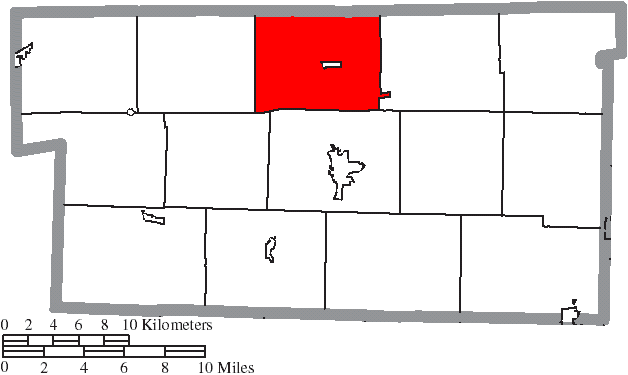
That is why generative AI is more than a curiosity here. If it helps a manufacturing company answer customers faster, organize information, or reduce clerical bottlenecks, it can become part of the quiet competitive edge that keeps small businesses viable. If it spreads too far or too fast, it could collide with the very values that make Amish enterprises distinct.
What local readers should watch next
The practical question in Holmes County is not whether AI will replace the Amish way of life. It is whether it will become one more selectively used tool in the county’s business culture. The early evidence suggests a careful yes, but only in forms that are tightly bounded by church practice, family expectations, and the economics of running a local company.
That makes Holmes County a rare place where the national conversation about AI can be seen at ground level. A manufacturing shop founded in the 1970s for horse-drawn plows is now part of a debate about ChatGPT and labor-saving software. In a county that has long balanced tradition with enterprise, the next competitive advantage may depend on how well businesses use new tools without letting those tools set the terms of community life.
Know something we missed? Have a correction or additional information?
Submit a Tip