Holmes County furniture industry drives local economy and evolves with demand
Mt. Hope's wholesale furniture market reveals the real business behind Holmes County's tourist image. Local builders, showrooms, and new designs keep the county's economy moving.
The furniture business in Holmes County starts at Mt. Hope, not the gift shop
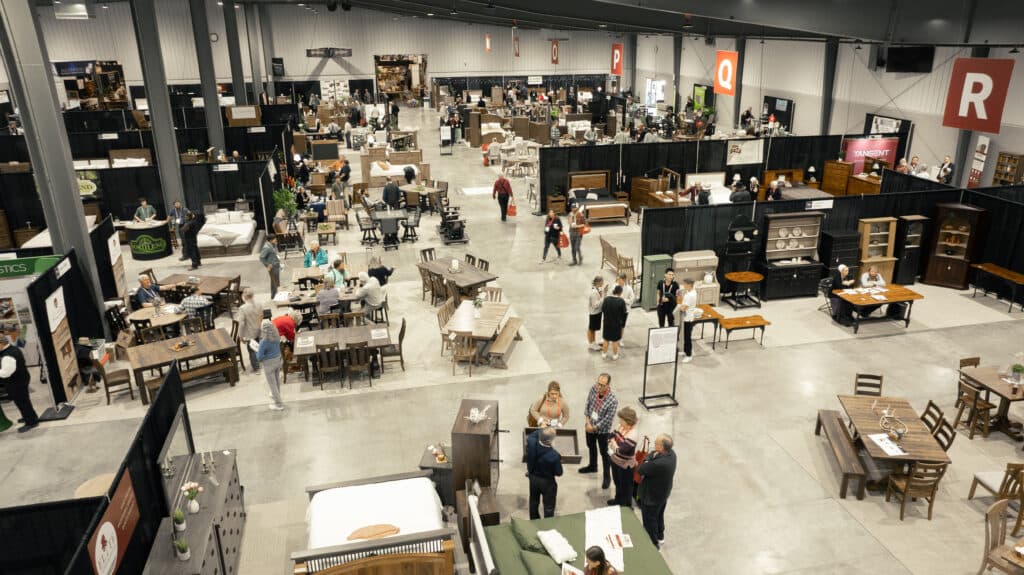
The biggest furniture event in Holmes County is not open to casual shoppers. Each year, the Ohio Furniture Market fills the Mt. Hope Event Center as a wholesale-only show for retail buyers, bringing store owners together with local builders, showrooms, and orders in one place. Depending on the year and the listing, the market has been described with 166 exhibitors across two buildings in 2024 and 190 exhibitors in 2026, a sign that the market remains active and still has room to grow.
That matters because the county’s furniture story is not a side note to tourism. It is a working part of the economy, with production, sales, finishing, and distribution linked to local jobs and wages. The Ohio Furniture Guild says it represents more than 240 small businesses, mostly in Holmes County, and describes the county as the largest concentration of hardwood furniture manufacturers in the nation.
How the local furniture network actually works
The Holmes County furniture economy runs through a tight web of builders, retailers, and repeat relationships. Retailers from across the country travel to Amish Country each spring to see what local makers are producing next, then come back to the same builders for orders and long-term supply. More than 180 area builders are tied into that market ecosystem, which helps explain why Holmes County has remained a destination for serious buyers rather than a simple retail stop.
Local showrooms make that system visible to everyday shoppers. Homestead Furniture and Berlin Furnishings each offer thousands of square feet of inventory, with pieces that range from classic hardwood dining sets to more contemporary looks. The showrooms do more than display furniture; they translate the county’s workshop culture into a format that buyers can compare, touch, and customize.
What makes Holmes County furniture distinct today
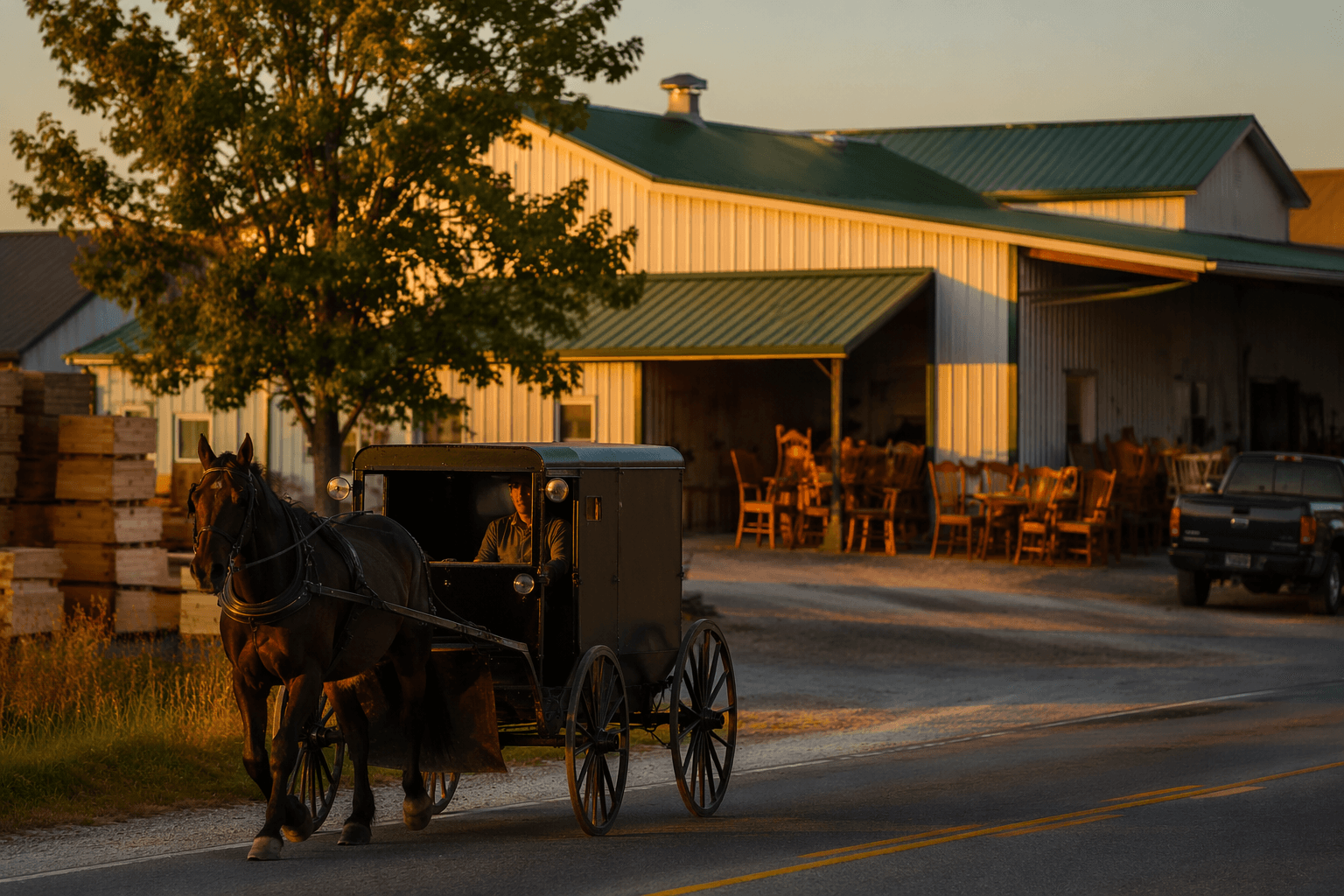
Holmes County’s furniture identity is rooted in Amish craftsmanship, but the market has clearly evolved with demand. Local builders still lean on traditional hardwood construction, but the product mix now includes live-edge slabs, unique finishes, upholstered details, and cleaner lines that fit newer homes and changing tastes. That flexibility is one of the sector’s biggest strengths. It keeps the county relevant to buyers who want craftsmanship without being locked into one style.
The rise of poly outdoor furniture is a good example. LuxCraft, based in the Sugarcreek area, has been named an early leader in that niche, showing how local makers are using new materials without abandoning the durability and pride that define the region’s furniture trade. In other words, Holmes County is not preserving a frozen museum piece. It is adapting a manufacturing tradition to fit what consumers actually want to buy.
- Traditional hardwood furniture still anchors the market.
- Live-edge tables and mixed-material pieces broaden the appeal.
- Upholstered details and cleaner silhouettes help local makers reach newer homes.
- Poly outdoor furniture extends the county’s reach beyond indoor living rooms and dining rooms.
Why manufacturing matters to the county’s economy
Holmes County’s furniture industry is powerful because it sits inside the county’s broader manufacturing base. The Holmes County Economic Development Council says manufacturing is the leading business sector by number of employment positions and by total annual compensation. That means the furniture trade is not just generating sales, it is supporting steady work and paychecks across the county.
The local labor force also helps explain the industry’s resilience. A 2024 public-media report said about half of Holmes County’s population is Amish, and that many Amish residents are small-business owners or work in manufacturing. That mix of ownership, skilled labor, and family-scale operations gives the furniture sector a depth that is hard to replicate elsewhere. It also ties the industry closely to the county’s identity, from Millersburg to Berlin to Mt. Hope and beyond.
The scale is larger than most visitors realize
The industry’s footprint reaches far beyond showroom walls. USDA Forest Service research estimated that the Holmes County Amish furniture cluster uses about 42 million board feet of hardwood lumber annually and is home to roughly 400 shops. Those numbers point to a dense production ecosystem, one that supports sawmills, suppliers, transport, finishing, retail, and custom production all at once.
The impact extends to the state level as well. Ohio ranks first in the nation in hardwood furniture production, and wood-furniture production contributed $4.6 billion in overall economic impact to the state in 2021, up from $3.5 billion in 2019. Holmes County is a major reason why. What looks like a local specialty on back roads and showroom floors is part of a statewide manufacturing advantage.
A mature cluster that has been building for decades
This economy did not appear overnight. A 2014 report said furniture and lumber businesses had already been employing a growing population in Holmes County since the early 1990s and beyond. A 2018 account said the Hardwood Furniture Builders Guild was formed about 11 years earlier to market Holmes County products, a reminder that local builders have long understood the value of working together rather than competing in isolation.
That long build is what gives today’s market its strength. The Ohio Furniture Market at Mt. Hope still serves as the annual meeting ground, but the real story is the countywide system behind it: Amish and Mennonite craftsmanship, local lumber use, wholesale trade, showrooms in Berlin and nearby towns, and buyers who return year after year because the product keeps adapting. Holmes County furniture is still a destination purchase, but it is also one of the county’s most important engines of business identity, employment, and long-term economic stability.
This article was produced by Prism’s automated news system from verified source data, official records, and press releases, then run through automated quality and moderation checks before publishing. The system is built and supervised by the people who set the standards it runs under. Read our full AI policy.
Know something we missed? Have a correction or additional information?
Submit a Tip