Holmes County library links open local family history records
Holmes County’s library links put obituaries, atlases, church records, and courthouse clues in one place for anyone tracing a name, a farm, or a vanished community.
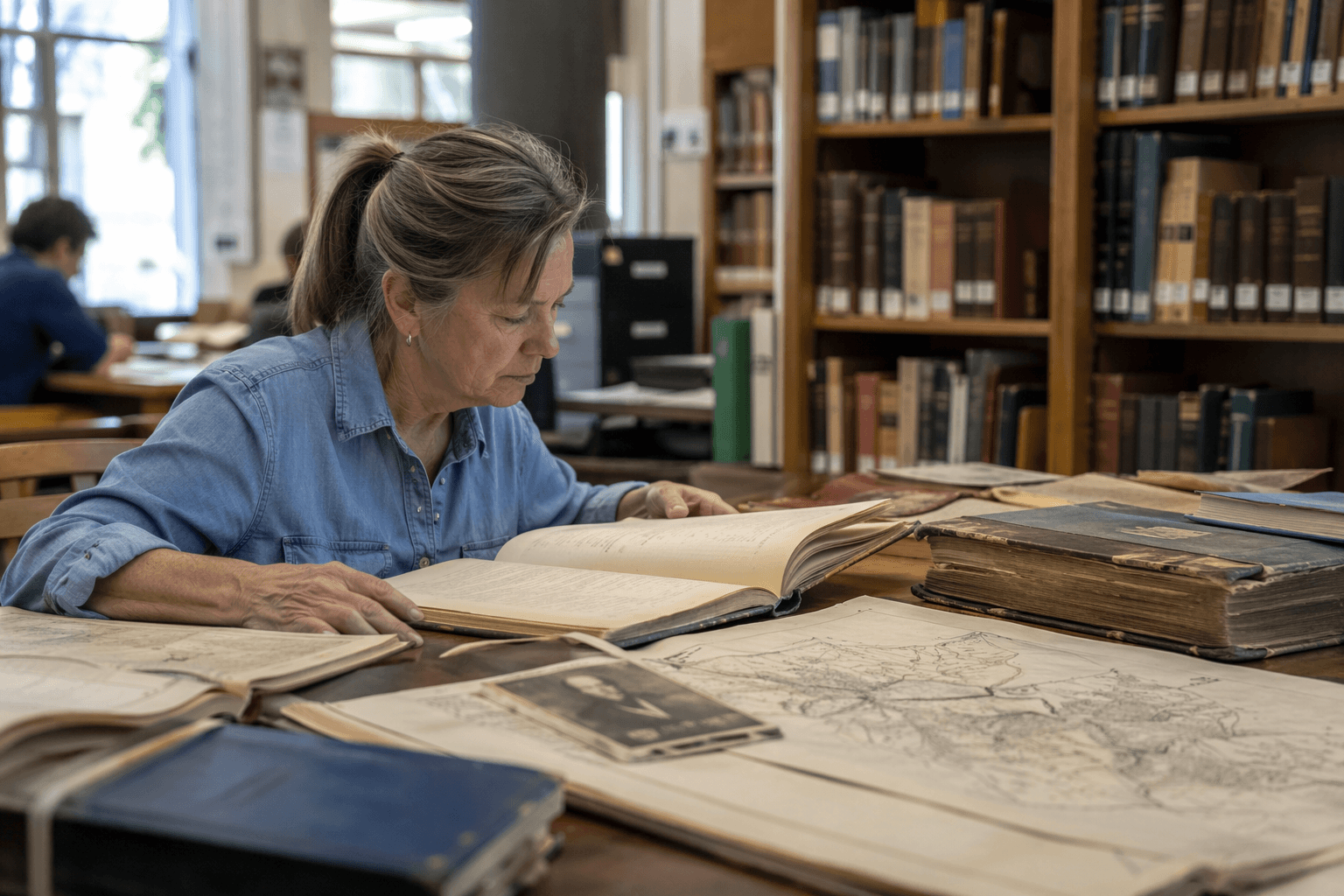
The RB Hayes Obituary Index covers more than 3,500,000 Ohio obituaries, death notices, marriage notices, and other sources from the 1810s to the present. On the Holmes County District Public Library’s genealogy and local history page, it serves as a practical roadmap for tracing a surname, tracking a church, or locating old town and railroad maps, while also showing where the library stops and the courthouse or state records begin.
Where to start your search
The obituary index is useful for building a family line across generations, especially when a name appears in one record but not another.
A good first pass is to search a surname broadly, then narrow by year and spelling. The index supports exact matches and searches that contain the letters you enter, which helps when a family name changed over time or was recorded differently in older notices.
A simple research path
1. Start with the obituary index to identify names, spouses, children, and dates.
2. Move to county-specific obituary links and the Holmes County atlas pages to place the family in a township or town.
3. Check church, land, and railroad links when a family story points to a congregation, a farm, or a line of business.
4. Use courthouse and state records when you need a marriage record, a death certificate, or a document the library does not hold.
What the library has, and what it does not
The genealogy room inventory includes deeds on microfilm from 1850 through 1984, newspapers on microfilm, Common Pleas Court civil records from 1826 to 1900, guardianship records from 1852 to 1900, wills from 1824 to 1938, marriage records from 1821 to 1955, and birth records from 1867 to 1956.
The library does not have death certificates and has very few marriage records, so marriage researchers are directed to Holmes County Probate Court for records from 1825 to the present and to the Ohio Department of Health for Ohio records.
The microfilm holdings are especially valuable for older property and court questions. Deeds, civil cases, guardianships, wills, marriages, and births create a paper trail that can connect a single household to land transfers, inheritance disputes, or family changes that never show up in a modern database.
Finding churches, railroads, and community maps
The local history links page also points researchers toward church materials, including Levi Stahl and pictures of Dunkard churches, along with railroad resources, land records, military service records, ship passenger arrival records, and naturalization records.
A church image can place a family in a denomination and a neighborhood; railroad references can explain where jobs, freight lines, and settlements developed; land records can show how a farm moved from one generation to the next.
The 1875 Holmes County Atlas is one of the most useful tools in that group. It includes biographical sketches of early settlers, a geological description of the county, and an advertising business directory of Millersburg and the townships, making it especially helpful when you need to match a household name to a place on the map. The 1907 Holmes County Atlas extends that map-based approach for later readers trying to locate roads, property lines, and town development.
Atlases of this kind can also include indexes, maps of the United States and Ohio, brief county histories, and biographies of early residents.

Why the countywide context matters
Holmes County was formed in 1824 from portions of Coshocton, Tuscarawas, and Wayne counties and organized in 1825, with Millersburg as the county seat. Some early records may be found in predecessor counties, and later records cluster around county government in Millersburg.
The Holmes County Historical Society’s historical gallery covers the history of the county’s 24 towns, and the society describes itself as the only countywide historical society in Holmes County. From its campus at 484 Wooster Road in Millersburg, it operates the Victorian House Museum and the Millersburg Glass Museum, giving researchers a place to move from paper records to local artifacts and exhibits.
The society’s history states that the first real factory in the county was built in Berlin in 1847 and made the first threshers manufactured in Ohio.
How to use the page for real questions
If the question is a family line, start with the obituary index and then check wills, births, marriages, and cemetery inscriptions in the local collection. If the question is an old church record, use the church links and then cross-check with marriage, land, or obituary records that place the family in a congregation or neighborhood.
If the question is a road, railroad, or town boundary, move straight to the atlases and railroad resources. If the question is a missing marriage or death record, go directly to Holmes County Probate Court or the Ohio Department of Health instead of assuming the library will have it.
This article was produced by Prism’s automated news system from verified source data, official records, and press releases, then run through automated quality and moderation checks before publishing. The system is built and supervised by the people who set the standards it runs under. Read our full AI policy.
Did this article answer your question?