Holmes County Pursues $3M Airport Terminal, Hangar Amid Funding Uncertainty
County commissioners met with the Holmes County Airport Authority and Tekton Engineering to align project scope and funding for a proposed new terminal and large hangar, targeting roughly $3 million. Officials discussed phasing and future expansion as they seek to keep the project feasible in the face of statewide property‑tax uncertainty that could affect local capital capacity.
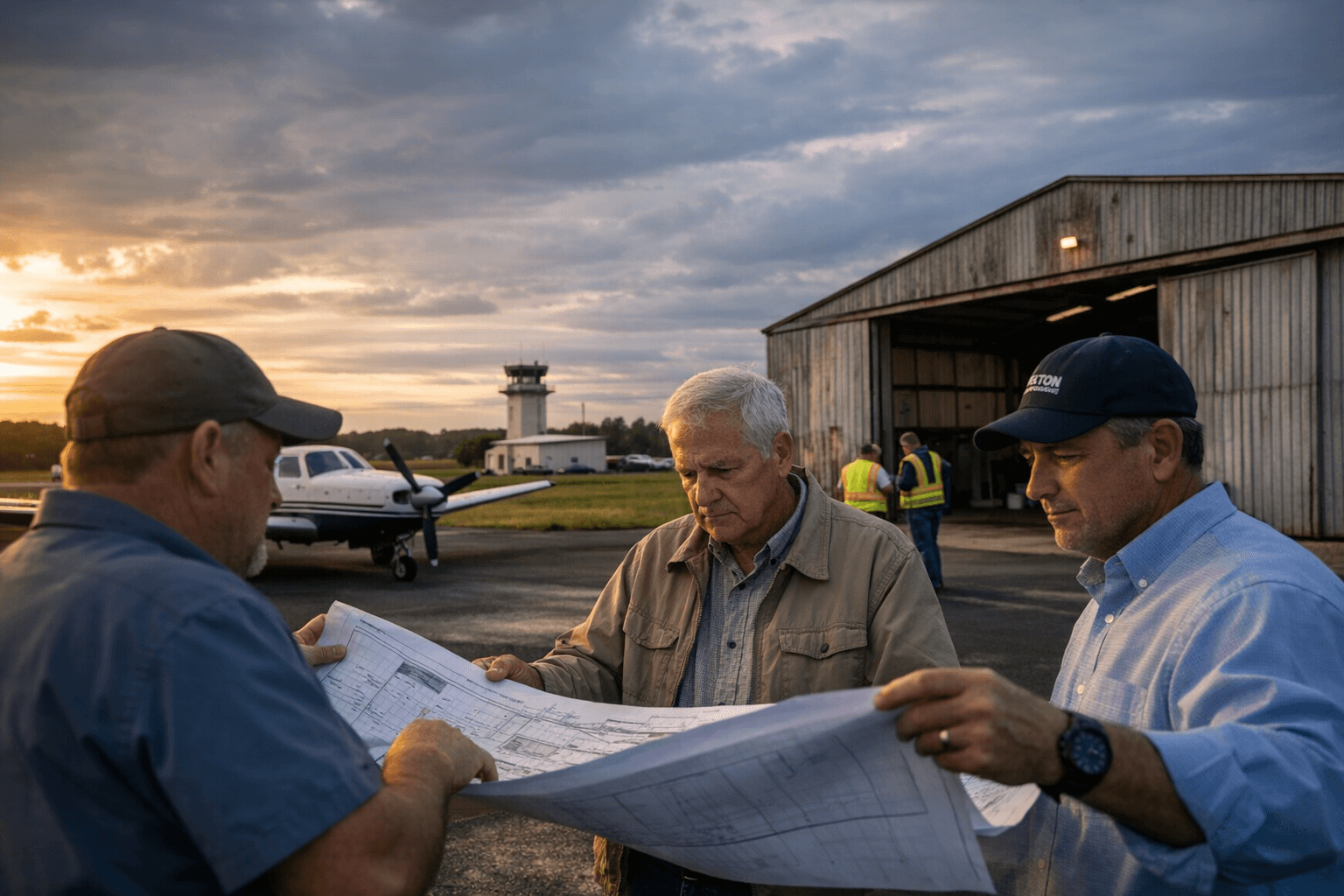
Holmes County leaders took a step toward a significant upgrade of local aviation infrastructure this week, meeting with representatives of the Holmes County Airport Authority and Tekton Engineering to refine plans and funding for a new airport terminal and a large aircraft hangar.
At the meeting, participants focused on aligning project scope with an estimated $3 million target and exploring how the work could be phased to match available resources. Tekton Engineering is supporting the planning process as county officials and the Airport Authority weigh near‑term construction needs against potential future expansion. The discussion emphasized keeping the project feasible amid uncertainty over statewide property‑tax policy that may affect local government revenue and borrowing capacity.
The proposed terminal and hangar are aimed at modernizing facilities at the county airport and accommodating larger or additional aircraft. Commissioners and airport trustees signaled they want a plan that advances necessary improvements while preserving flexibility to adapt to funding realities. Phasing was raised as a way to begin work within current fiscal constraints and add components later as funding becomes available.
The financing conversation comes at a time when county budgets nationwide are watching state policy changes closely. Holmes County officials cited the broader policy environment as a variable that could influence the county’s ability to fund capital projects through property‑tax receipts or debt instruments tied to local property valuations. That uncertainty influenced the meeting’s practical focus: defining what can be built now, what can wait, and how to structure the project to reduce fiscal risk.
For residents, the airport upgrade could have local economic and service implications. A modern terminal can improve visitor reception, support business travel, and enhance the airport’s role in attracting commerce and tourism. A larger hangar can increase capacity for based aircraft, maintenance activity, and potential tenant businesses. Those outcomes often translate into local job opportunities, greater connectivity for regional businesses, and expanded emergency or medical flight capabilities, though the direct economic effects will depend on final project scope, costs, and subsequent investment.
Institutionally, the meeting reflects the ongoing role of county commissioners in coordinating infrastructure priorities with appointed authorities and outside engineers, balancing technical recommendations with fiscal stewardship. The decision to target a $3 million scale and to plan for phasing indicates an effort to marry ambition with financial prudence.
Next steps include continued work between the commissioners, the Airport Authority, and Tekton Engineering to finalize the phased scope, identify funding sources, and move toward project approvals. As the planning proceeds, county leaders will face choices about grant applications, local funding allocation, and the timing of construction, decisions that will shape both the airport’s future and the community benefits it may yield.
Know something we missed? Have a correction or additional information?
Submit a Tip