Walnut Creek Cheese & Market — a long‑running Holmes County destination for food and local goods
Walnut Creek Cheese & Market has run from the site of Ohio's first Amish settler's farm since 1984, inside a 55,000-square-foot store anchoring Holmes County's 4-million-tourist economy.

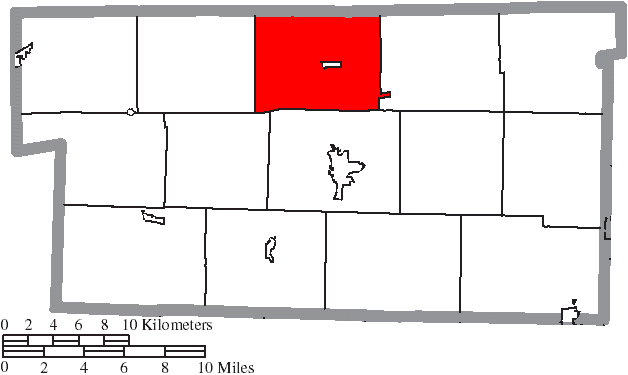
The 55,000-square-foot market at 2641 State Route 39 in Walnut Creek has been open since 1984, and the ground beneath it carries a distinction no other retail address in Holmes County can claim: it sits on land from the original farm established by Ohio's first Amish settler. That detail places Walnut Creek Cheese & Market at the literal geographic and cultural center of the largest Amish community in the world, a settlement spanning Holmes County and neighboring communities including Berlin and Walnut Creek, and one that draws roughly four million tourists per year.
What the market is and what it sells
The operation at (330) 852-2888 functions as several stores in one. The main floor runs through a fresh-food market, deli, bakery, and bulk-foods section, with a kitchenwares and décor department occupying approximately 12,000 square feet on its own. Shelves carry a mix of locally produced cheeses, smoked meats, preserves, jams, canned goods, and bulk pantry items alongside national name-brand products. The store explicitly works to "offer items that showcase the hard work and integrity of local Amish and Mennonite people," per Ohio's Amish Country tourism listings, making the product selection something between a curated specialty shop and a functional rural grocery.
Signature items include Baby Swiss cheese and Trail Bologna, both tied to the founding story of parent company Walnut Creek Foods. The house brand Uncle Mike's Meat Snacks is stocked in-store and stands out as one of the most accessible locally-branded grab-and-go items. Pennsylvania Dutch and Amish Country specialties round out the shelves: fry pies, homemade jellies and jams, and a range of smoked and cured meat products that draw repeat purchases from locals and first-time visitors alike.
Five local products worth picking up
- Baby Swiss cheese: the founding product tied to Walnut Creek Foods' original route salesman story and produced in the Holmes County region
- Trail Bologna: a cornerstone Holmes County product sold here since the earliest days of the business
- Uncle Mike's Meat Snacks: the market's house brand, positioned for grab-and-go purchases
- Homemade jellies and fry pies: baked and preserved goods from local Amish and Mennonite producers
- Bulk pantry items: dry goods, spices, and baking staples available in bulk quantities that tend to undercut urban grocery and convenience-store pricing significantly
Upstairs: Mudd Valley Café & Creamery
The building's upper floor houses Mudd Valley Café & Creamery, which serves meat and cheese sandwiches, stacks, fresh burgers, and homemade custard. For anyone arriving mid-trip through Holmes County, the café handles lunch without leaving the property. The homemade custard draws repeat visitors specifically and pairs naturally with a pass through the kitchenwares section on the way out.
The corporate parent and recent rebrand
Walnut Creek Cheese & Market operates under Walnut Creek Foods, headquartered in Millersburg, Ohio. The company recently updated the retail store name and logomark, describing the change as designed "with the goal of preserving the company's heritage in Holmes County while also modernizing the logomark." Matt Keeler, Vice President of Sales and Marketing at Walnut Creek Foods, said in the announcement: "The new logo not only signifies our ongoing commitment to improvement, but also embodies our core company values of respect, stewardship, and growth."
The founding story, told on both the market's site and the Walnut Creek Foods corporate site, centers on a route salesman who loaded a truck with Baby Swiss cheese and Trail Bologna and drove across northeastern Ohio selling to retail stores. That origin as a regional food distributor still shapes what the market does: it gives local Amish and Mennonite producers retail shelf space and direct access to out-of-area buyers who would not encounter those products otherwise.
When to visit and how to shop
Spring and summer weekends are the peak-traffic windows, and the parking lot on State Route 39 fills quickly on Saturday and Sunday afternoons. The clearest path to a quieter visit is a weekday morning, when both parking and in-store crowds thin considerably. Three shopping options are available: in-store, in-store pickup, and curbside pickup, the last of which is a practical choice for local residents who want to stock up without navigating peak-weekend congestion. Combining the stop with nearby Berlin makes sense for a half-day itinerary; the market's position on State Route 39 puts it within easy reach of other Holmes County destinations, and the deli and Mudd Valley Café handle food needs for the full outing.
The economic backdrop: why a market this size exists here
Holmes County's tourism numbers explain the scale of the operation. The county draws approximately four million visitors per year, generating a direct economic impact of roughly $154 million annually as of 2012. In 2017, Holmes County ranked second on the list of most popular tourist destinations in all of Ohio. The Amish community constitutes nearly half the county's total population, the highest Amish population density anywhere in the world, and the broader Holmes County-centered Amish settlement is the largest in the world. Promotional efforts by what is now the Holmes County Chamber of Commerce and Tourism Bureau date to the 1950s, and the county today draws visitors from Cleveland, Columbus, and Pittsburgh on day trips as well as travelers from across North America and as far as Australia.
Against that backdrop, a 55,000-square-foot specialty market operating continuously since 1984 on the site of Ohio's first Amish settler's original farm is not a coincidence. It is one of the region's most durable commercial anchors, built to capture visitor spending while also serving the practical shopping needs of a rural county where large supermarket alternatives are limited. The rebranding updates the name on the sign; the role the market plays in Holmes County's food economy and tourism supply chain has been accumulating for more than four decades.
This article was produced by Prism’s automated news system from verified source data, official records, and press releases, then run through automated quality and moderation checks before publishing. The system is built and supervised by the people who set the standards it runs under. Read our full AI policy.
Did this article answer your question?