Arcata celebrates phase one completion of wastewater treatment upgrade
Arcata finished phase one of its wastewater overhaul at 600 South G Street, adding treatment upgrades meant to improve Humboldt Bay discharge and keep the plant compliant.
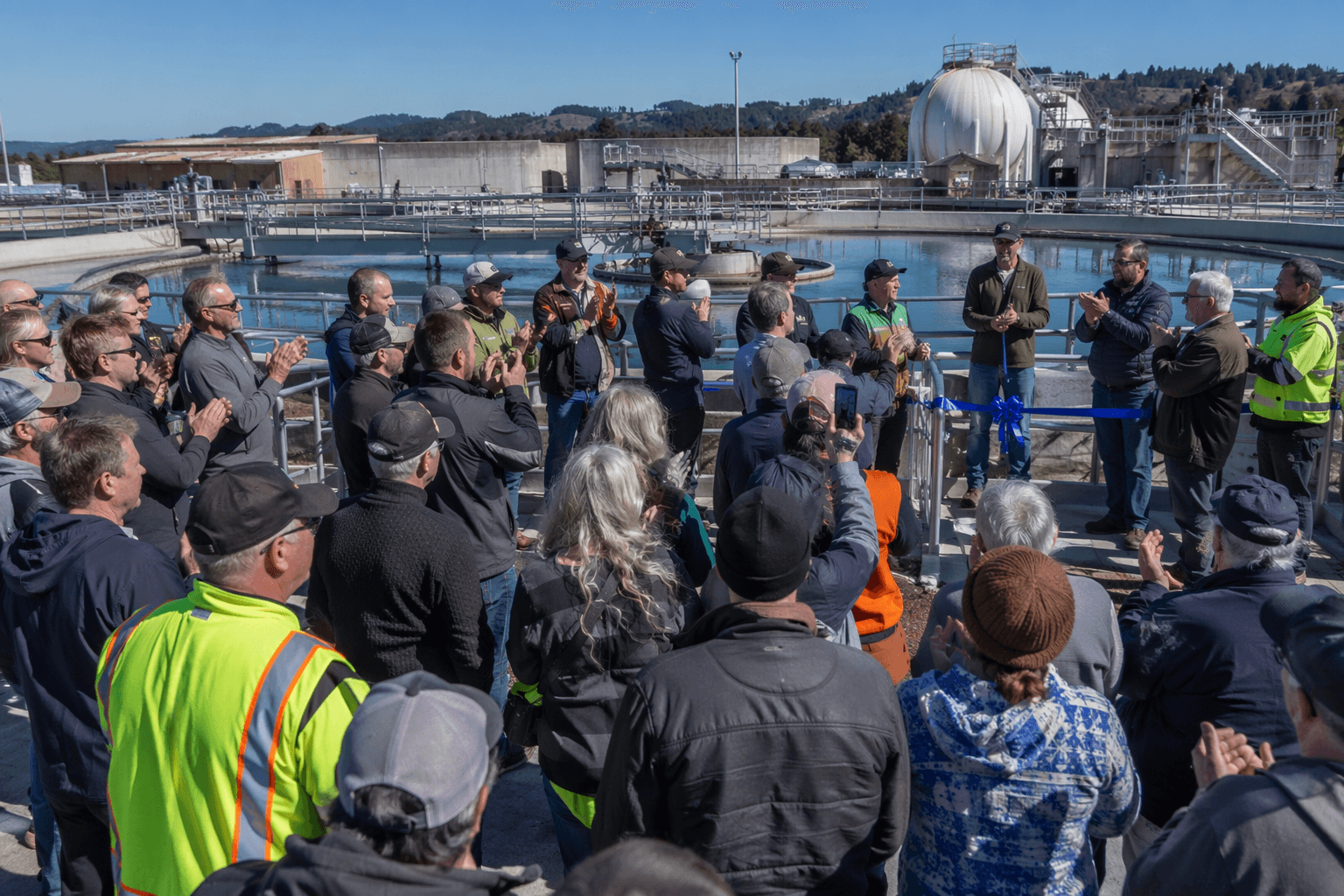
Arcata’s wastewater plant at 600 South G Street finished the first major stage of its overhaul on June 10, giving the city a more reliable treatment backbone for a system that has served the community for decades. Phase one of the Arcata Wastewater Treatment Facilities Improvements Project is meant to replace aging infrastructure, improve treated effluent quality discharged to Humboldt Bay and keep the facility in compliance with North Coast Regional Water Quality Control Board Order No. 1-2019-0006.
The changes matter because Arcata’s system is not a conventional plant tucked behind industrial fencing. It is a hybrid setup built around two oxidation ponds, six wetland treatment marshes and three enhancement marshes in the Arcata Marsh Wildlife Sanctuary, where wastewater treatment and coastal habitat have been linked for years. City project materials say the upgrade includes oxidation pond and wetland improvements, a parallel oxidation ditch treatment system, UV disinfection and a revised discharge path that can send flows to the Brackish Marsh before release.
More than three years of work by city staff, consultants and Wahlund Construction led to the milestone. CEQA background work started in 2015 and 2016, the city published a wastewater facilities plan in May 2017, and the North Coast Regional Water Quality Control Board received the formal certification application on May 28, 2021. The board’s certification said phase one was proposed to begin in 2022 and be completed in 2025, a timeline that shows how long the city has been working to move the project from planning into construction.
The price tag has also been significant. The city’s bid notice listed an engineer’s estimate of $30 million to $35 million for phase one, while a separate 2022 local report described it as the city’s largest capital improvement project at an anticipated $54 million in construction costs. Funding for the first phase came in part from HUD Community Development Block Grant money, the California Clean Water State Revolving Fund program and the city’s sewer fund.
The work is not finished, even after the ribbon cutting. Arcata is also studying sea-level-rise vulnerability and longer-range options for the wastewater facility, with a feasibility study funded through a State Water Resources Control Board Clean Water State Revolving Fund grant. Public workshops were held on Nov. 14, 2024, and Aug. 28, 2025, and the City Council received a wastewater facility overview on Jan. 21, 2026. Friends of the Arcata Marsh says the system serves about 16,000 people, underscoring how much of Arcata’s environmental future still runs through the marsh and the plant behind it.
This article was produced by Prism’s automated news system from verified source data, official records, and press releases, then run through automated quality and moderation checks before publishing. The system is built and supervised by the people who set the standards it runs under. Read our full AI policy.
Know something we missed? Have a correction or additional information?
Submit a Tip