Arcata House Partnership extreme-weather shelter filled to capacity during cold snap
Arcata House Partnership’s extreme-weather shelter reached full capacity during a mid-February cold snap, AHP director Darlene Spoor told reporters as staff grappled with funding cuts and layoffs.
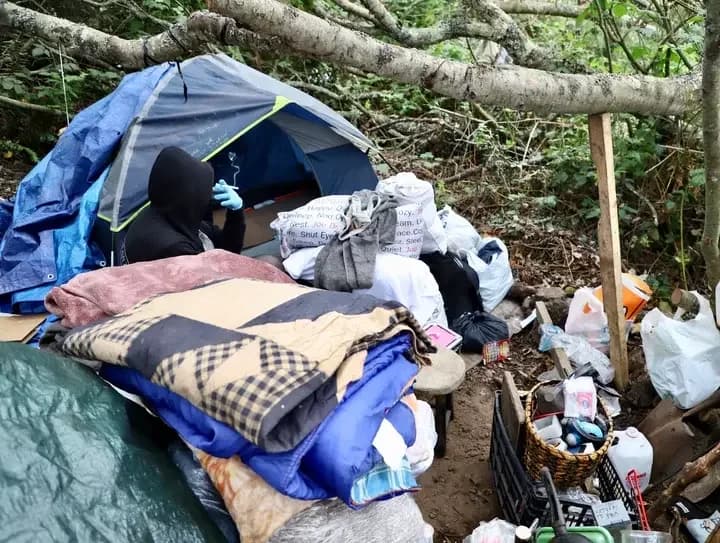
Arcata House Partnership’s regional extreme-weather shelter was pushed to full capacity during a mid-February cold snap, AHP executive director Darlene Spoor told reporters, forcing staff to stretch limited resources during one of Humboldt County’s toughest winter weeks. The pressure coincided with the period around Feb. 20, 2026, when local warming and overnight sheltering protocols were activated to house people sleeping outside.
AHP’s public materials note that its day warming center and emergency overnight sheltering are activated only when specific conditions are met and when AHP has the capacity and bed availability. During the recent activation, staff operated facilities that include family shelters, an adult shelter and two apartment complexes, one in Eureka and one in Arcata, while the Annex One-Stop at 501 9th St., Arcata served as a focal point for outreach and donations.
The shelter strain comes amid a fiscal squeeze: more than $2 million in anticipated federal funding disappeared last year, and AHP laid off 18 employees as a result, reducing operational capacity. Florence, quoted by AHP-affiliated reporting, said, “We’re less accessible and have had to pare back services. It’s just less possible to provide all we want to provide,” and added that HUD funding priorities appear to favor transitional housing over permanent housing. Florence also urged community support, saying, “If you can financially support, we always appreciate that.”
Operational staff scrambled to keep clients housed despite the cuts. AHP personnel reportedly worked to place eight households into new accommodations in a short period to preserve stability for those families. The organization’s publicly posted annual service totals underscore scale: 51,200 meals served across programs, 33,400 bed nights provided through shelter programs, and 800 people served at the Annex and by the outreach team in a single year.

AHP’s website also displays a press release headline announcing a $2.5 million grant to connect Humboldt County families with shelter and critical services; the site excerpt does not specify the grant’s source, restrictions, or whether it offsets the $2 million in lost federal funding. In public statements and website appeals, AHP is emphasizing diversification of funding beyond federal and state sources to shore up services going forward.
Community support is being directed to concrete needs. AHP’s donation request lists cold-weather clothing, especially men’s jackets and pants, sweatpants, underwear and socks, plus non-perishable snacks and food, with drop-offs coordinated through the Annex One-Stop at 501 9th St., Arcata. The organization’s messaging on the site reads, “We’re collecting cold-weather clothing ... and non-perishable snacks and food to help keep our neighbors warm, dry, and nourished.”
Pressure on shelter systems is not unique to Humboldt County; other regions have reported record-low temperatures that forced shelters to expand capacity, with one shelter reporting intake of an additional 156 people in one week during a recent cold snap. For AHP, the combination of activated extreme-weather operations and the staffing and funding shortfalls raises immediate questions about bed counts, staffing levels on cold nights, and how the newly posted $2.5 million grant will be applied to winter response and longer-term housing work.
This article was produced by Prism’s automated news system from verified source data, official records, and press releases, then run through automated quality and moderation checks before publishing. The system is built and supervised by the people who set the standards it runs under. Read our full AI policy.
Did this article answer your question?